
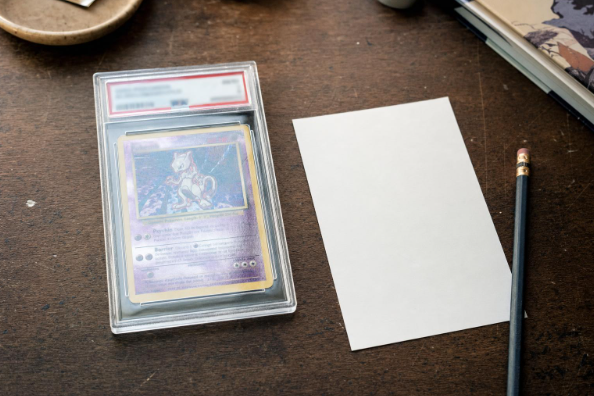
There is a quiet kind of joy in holding a graded card that means something to you. Maybe it is the art, a favorite character or a set tied to a good memory.
This guide is about buying graded Pokemon cards online in a calm, careful way. Mindful collecting means slowing down, checking what you are buying and choosing cards that spark real joy instead of chasing hype.
Before you open a tab, take a breath. These mindfulness ideas can help you treat collecting as self-care rather than a rush.
Start With Your Why
Name one or two reasons you want a graded card. It might be a favorite illustration, a character that comforts you or a memory tied to a set.
Write a simple intention before you shop: I want one card that makes me smile. This friendly anchor helps you notice when you are buying from joy instead of pressure.
What Graded Actually Means
A graded card is sealed inside a tamper-evident case, often called a slab. The label shows a certification number that connects the card to the grader’s records.
PSA grades trading cards on a 10-point scale. A PSA 10 Gem Mint card must meet PSA’s near-perfect standard, including front centering of about 55/45 and back centering of about 75/25.
Population reports show how many copies of a card exist at each grade, including PSA’s official record for items graded by PSA.
A slab offers protection and a shared condition standard. It is not a promise about future value.
PSA vs CGC Cards vs BGS in Plain Words
Three grading names come up often. Each uses its own label style, grading scale and verification tools.
- PSA: widely used for Pokemon cards, with a 10-point scale and published grading standards.
- CGC Cards: uses a 10-point scale from 10 Pristine to 1 Poor and no longer offers subgrades. Some items include images through its Verify tool.
- BGS (Beckett): shows four condition subgrades on the label and uses a half-point scale from 1 to 10. A Black Label means a perfect 10.
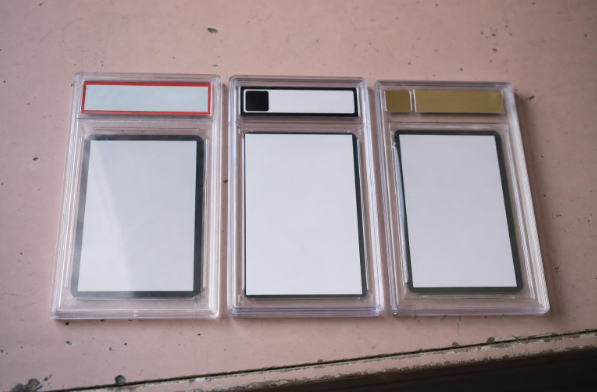
None of these graders is automatically better for every collector. Pick the format that fits the cards you love and the information you want on the label.
Verify Every Slab in About a Minute
Verification is one of the most useful habits you can build. Use this simple flow before you buy.
- Match the label to the grader’s own website.
- Enter the certification number in that grader’s tool.
- Confirm that the card title, set and grade match the slab.
- View the images if the tool provides them.
- If anything feels off, walk away.
PSA offers a public Cert Verification tool. CGC provides a Verify Certification tool to help confirm that a holder is genuine and untampered.
PSA warns that checking a cert number does not remove all risk, and it recommends caution with certain peer-to-peer marketplaces. Verification is a strong step, not a force field.
Shop With Guardrails
Buyer protections make mindful shopping easier. Before comparing prices, check how the platform handles authentication, returns and disputes.
eBay’s Authenticity Guarantee for trading cards partners with PSA and accepts PSA, SGC, CGC and BGS graded cards. Eligible items are shipped to a U.S. authentication facility, so look for the badge.
TCGplayer Direct fulfills cards from its Authentication Center and offers free shipping on U.S. Direct orders over $50. Reputable stores should have clear return policies.
If you are shopping from Australia, you can browse graded pokemon cards for sale from PSA, CGC and BGS holders on a curated collection page. Treat any listing as a starting point, verify the cert yourself and read the seller’s policies before you commit.
Budget and Pacing
Money and mindfulness can work together. Try an envelope method or a monthly cap so collecting stays a pleasure, not a strain.
Before a bigger purchase, pause for 24 hours. If the card still feels right tomorrow, you can move forward with more confidence. If the urge fades, you learned something useful.
To sanity-check price, look at recent results. PSA’s Auction Prices Realized provides auction results for PSA-graded items with daily data updates, and TCGplayer Market Price offers another reference point.
Passing on a card is a valid win. A calm no is part of the practice.
Quick Red Flags and Green Flags
A short mental checklist can keep you steady when a listing tugs at you.
Red flags: sellers who refuse fresh photos, cert lookups that do not match the slab, no returns and pressure to decide fast.
Green flags: clear front and back photos of the slab, a cert that matches the grader’s database, consistent population and variant details and platform-level protections.
If the seller resists simple verification, that resistance is your answer.
The Mindful Buy Checklist
- Intention named
- Cert verified on the grader’s site
- Population and context checked
- Price sanity-checked against recent results
- Return policy saved
- You still want it tomorrow
Six small steps can protect both your budget and your joy.
Frequently Asked Questions
What grade is good enough for display versus value?
For display, choose the grade that looks good to you, even if it is lower. For value, higher grades such as a PSA 10 can matter, but always verify the cert and check recent sales.
Mindful collecting is not about buying the most. It is about buying with clarity, verifying with care and choosing cards that still make you smile long after the tab is closed.
Should I buy only PSA 10 cards?
No. Pick the grade that fits your display goal, budget and joy.
What should I check before paying?
Check the cert, seller policy, recent results and your own comfort level.