
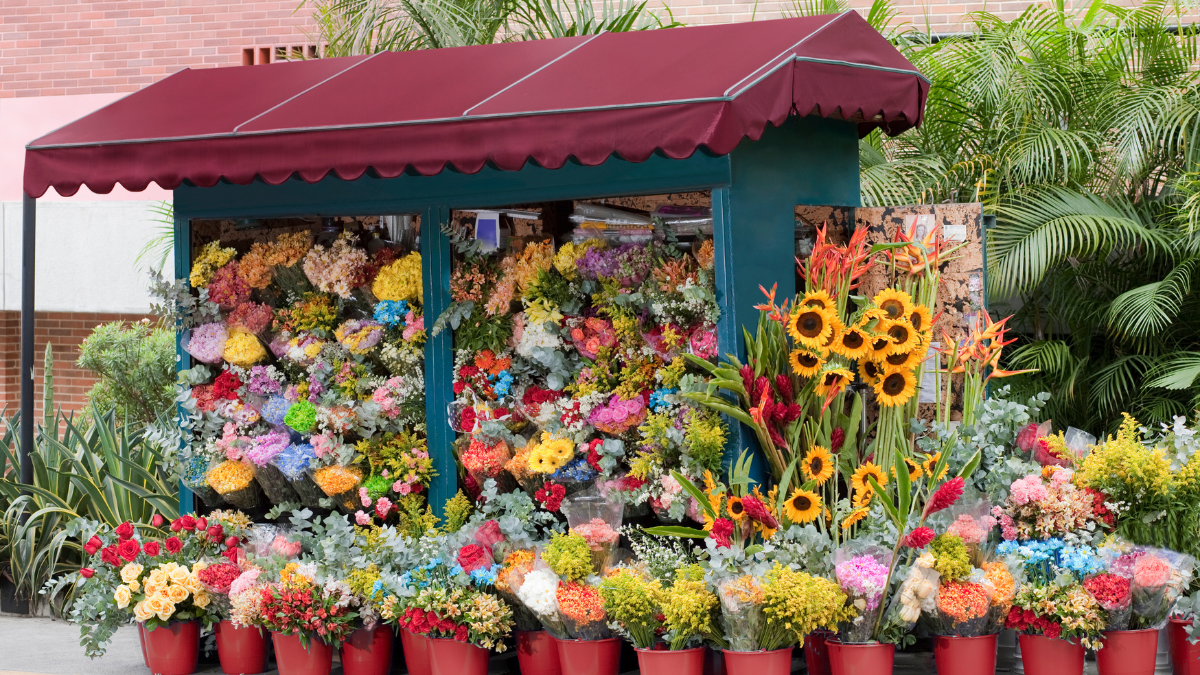
Walk past any flower shop in Manila on the Thursday before Valentine’s Day and you get a quick education in how much work happens before a bouquet reaches a customer. The owner has usually been at the Dangwa flower market since four in the morning, sorting through arrivals, making decisions about what’s fresh enough and what isn’t. By the time the shop opens, there’s water everywhere, stems are trimmed, and the work of designing and assembling begins. It’s physical, skilled, and mostly invisible to the person who shows up to buy something at noon.
The local philippines flower shop doesn’t typically come with a PR budget or a social media team. What it has is a specific kind of expertise built over years of working with the same growers, the same suppliers, and the same communities.
What Actually Happens at Dangwa
Dangwa in Sampaloc has been Manila’s wholesale flower market for decades, and it’s where most independent flower shops in the city source their inventory. It opens around two in the morning, peaks before dawn, and winds down by mid-morning. The flowers coming through there are largely from Benguet, specifically from the mountain areas around La Trinidad and Baguio, where the cool climate produces cut flowers that supply the majority of Metro Manila’s market.
A local flower shop owner who has been buying at Dangwa for ten years has developed relationships and instincts that matter in ways that aren’t obvious to the outside. They know which vendors have the freshest arrivals. They know which chrysanthemum growers are consistent and which ones cut corners in heavy-demand weeks. They know that the week after a major holiday, supply drops and quality can slide, so they adjust what they offer and what they charge. None of this knowledge shows up in an app.
When you order online flower delivery Philippines-wide from a larger aggregator platform, you’re often ordering from a service that partners with various local shops anyway, with a margin extracted at each layer. The flower was grown by a farmer in Benguet, moved through Dangwa, sold to a local shop, resold through an aggregator, and delivered to your door. Every intermediary takes something out. The local shop that you order from directly keeps more of what you spend.
The Economics Are Personal
A Philippines flower shop at the independent end of the market is typically a family operation or close to it. The owner works in the shop. Their staff are often from the same neighborhood and have been there for years. When business is good, it circulates in a very local loop: wages spent at nearby food stalls, rent paid to a local landlord, early morning Dangwa runs that keep the wholesale market viable.
When you spend at a chain or a large delivery platform instead, the margin structure is different. More of it leaves the neighborhood, the city, sometimes the country. This isn’t a moral condemnation of those businesses. It’s just a description of how the money moves differently.
Flower delivery Manila Philippines from a local shop, done directly, is often not more expensive than the aggregator platforms once you compare equivalent quality. The aggregator pricing model sometimes makes local shops look cheaper, sometimes more expensive, and the quality comparison is the part that the platform can’t really show you. You don’t know how old those roses are in the photograph.
What You Get That Algorithms Don’t Track
The thing a local florist does that no aggregator platform has figured out is substitution intelligence. You order white lilies and they’re not available that day. A good local florist knows what you were probably trying to achieve, calls you, and suggests something that serves the same purpose. They might ask who the flowers are for, and use the answer to make a recommendation you wouldn’t have thought to request.
This sounds like a small thing. On an anniversary delivery, or when flowers are going to a hospital room, or when someone has just lost a person they loved and you’re trying to say something with a bouquet, it’s not small at all.
Sympathy flowers have conventions around colour, flower type, and scale that matter to the people receiving them. A local florist with experience in this area knows those conventions and works within them. An aggregator platform shows you photographs and a price. The two experiences are not comparable in the moments when the delivery actually matters.
The Skills Don’t Reproduce Themselves Without Support
The craft of floristry in the Philippines has specific traditions. Arrangements for church events look different from those for weddings. Funeral florals differ from sympathy florals differ from celebration florals. The skills required to work in these different contexts are specific, and they’re transmitted through the shop environment as much as any formal training.
A florist who has been working at the same Philippines flower shop for seven years has absorbed an enormous amount of practical knowledge from the owner and from the work itself. That knowledge doesn’t exist outside of a working shop. When local shops close because the economics don’t work, those skills don’t move somewhere else. They largely disappear.
Online flower delivery Philippines platforms serve a genuine purpose. They make ordering easier, they extend reach, they work for customers who don’t have a relationship with a local shop and need something arranged quickly. That’s real value. But when the convenience of the platform comes at the cost of the local shop that was its underlying product, the platform eventually runs out of product.
How the Relationship Changes the Quality
The most practical argument for having a relationship with a specific local flower shop, rather than using delivery platforms as anonymous one-off transactions, is that the relationship changes what you can expect.
A florist who knows you’re sending flowers to the same person every anniversary remembers what worked and what didn’t. They can tell you that the tulips you sent last year arrived in perfect condition but that the lilies in February tend to be inconsistent because of how they’re shipped from Baguio at that time of year. They can call you when something exceptional comes in that they think you’d want to know about.
This level of service requires a relationship. It doesn’t scale. But it produces an experience of sending flowers that’s genuinely better than anything an optimised platform can deliver, for the simple reason that the platform treats every order as a new transaction and the local florist treats you as someone they’ve decided to take care of.
That’s worth something. Most things worth something take a bit of time to build.