

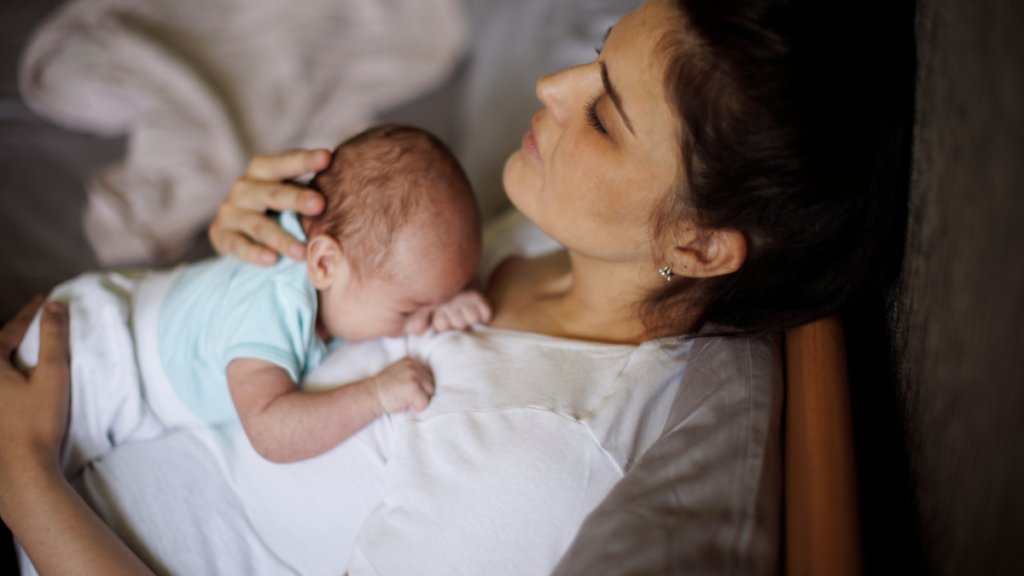
Postpartum exhaustion is already a lot. Your body is healing, your hormones are doing something completely new, and you are running on fragments of sleep. Now add ADHD or anxiety into the mix, and something as simple as eating breakfast can start to feel impossible. You know you are hungry. You know you probably skipped a meal already today. But between the baby, the noise in your head, and the mental load of figuring out what to make, food keeps sliding to the bottom of the list.
If this is you, you are not failing at basic self-care. You are dealing with two very real conditions that make eating during an already overwhelming season even harder.
This article is not about a diet plan or a list of rules to follow, but about understanding why mealtime feels so hard right now, and finding a few low-effort ways to fuel yourself that easily fit into your real life.

How ADHD and Anxiety Affect Eating Habits and Energy During Postpartum Recovery
ADHD and anxiety do not just affect your mood or your focus. They affect how your body signals hunger, how your brain plans and starts tasks, and how much bandwidth you have left over for something as ordinary as making a sandwich.
For many people with ADHD, hunger cues get missed entirely. You can go hours without realizing you have not eaten, especially when you are hyperfocused on the baby or juggling a dozen small tasks at once. Then, all at once, you hit a wall. You are suddenly starving, shaky, and irritable, and by that point cooking anything feels impossible, so you reach for whatever is fastest, which is often not very filling.
Executive function, the mental skill set that helps you plan, start, and follow through on tasks, is already strained by ADHD. Postpartum sleep deprivation makes it worse. Deciding what to eat, remembering what groceries you have, and actually following the steps to prepare a meal all require executive function you may simply not have much of right now. This is not laziness or a lack of willpower. It is a brain working with less fuel than it needs, trying to run demanding tasks anyway.
Anxiety adds its own layer. When your nervous system is in a heightened state, digestion and appetite naturally take a back seat, since stress hormones prioritize alertness over anything else. Some new moms feel too anxious to eat much at all. Others reach for constant snacking as a way to self-soothe or stay busy. Anxiety can also make ordinary decisions like what to make for lunch feel disproportionately stressful, especially when you are worried about doing everything right for your new baby.
The part worth remembering is that skipping meals or relying on sugar and caffeine to get through the day does not just affect your energy. Blood sugar swings can intensify the very symptoms you are trying to manage, making focus harder, mood more unstable, and anxiety more intense. It becomes a loop. Low blood sugar worsens ADHD and anxiety symptoms, and those symptoms make it even harder to eat consistently.
This is why so many new parents feel like standard postpartum diet advice does not quite fit their brain. Almost none of it accounts for what it is actually like to feed yourself when executive dysfunction and a nervous system on high alert are both part of the picture.
Let’s take a look at how research connects maternal diet with postpartum mental health more broadly. A systematic review looking at maternal dietary patterns during pregnancy found that women who ate more fruits, vegetables, and quality protein, and less processed food, generally reported fewer symptoms of postpartum depression. Other peer-reviewed research has documented a two-way relationship between maternal diet and postpartum mood, meaning eating patterns and mental health can influence each other in both directions.
A separate study following postpartum mothers found that a diet higher in vegetables, fruit, and fish was associated with meaningfully fewer symptoms of postpartum anxiety. None of this means food alone controls how you feel, but it does mean what you eat is part of the picture, not separate from it.
Simple, Low Effort Postpartum Nutrition for ADHD and Anxiety
Remember, the goal here is not a meal plan. It’s a shift in how you think about food right now, from what you should be eating to what is actually realistic for you today.
Protein First, Always
When you do manage to eat, prioritize protein over anything else. Protein keeps blood sugar steadier for longer, which means fewer energy crashes and mood swings later in the day. Hard-boiled eggs, Greek yogurt, string cheese, a handful of nuts, or leftover rotisserie chicken all count. You do not need a full meal built around protein. You just need some protein present, even in small amounts, every time you eat.
Keep No Prep Foods Visible and Within Reach
ADHD brains respond well to what is visible and struggle with what requires multiple steps. Keep a basket of grab-and-go items on the counter instead of tucked in a cabinet you have to dig through. Think fruit, granola bars, cheese sticks, nut butter packets, and pre-cut vegetables. If it is not visible, it may as well not exist on a day when your executive function is running low.
Batch What You Can, Even in Tiny Amounts
You do not need to meal prep a week of dinners. Even hard-boiling a dozen eggs at once, or making a big batch of overnight oats that lasts three days, removes decision-making from days when you have none left to give. Easy postpartum meals are less about elaborate cooking and more about removing steps between you and food.
Pair Carbs With Protein or Fat
If anxiety has your appetite suppressed and all you can manage is toast or crackers, add peanut butter, cheese, or avocado. This slows digestion and helps prevent the blood sugar spike and crash that can make anxious energy feel worse an hour later.
Set Gentle Eating Reminders
Because ADHD often means missing hunger cues entirely, a phone alarm every few hours labeled simply eat something can be genuinely useful. This is not about strict eating windows. It is an external prompt for a brain that may not reliably send an internal one right now.
Let Go of Perfect
This is not about perfect nutrition. A granola bar eaten standing up while rocking a baby is a completely valid meal. The goal is consistency and enough fuel to function, not an idealized version of postpartum food for new moms that you see online. Anxiety and nutrition have a two-way relationship, and pressure to eat correctly can become its own source of stress, which defeats the purpose entirely.
Do Not Forget Water
Dehydration alone can worsen fatigue, headaches, and irritability, all of which mimic or intensify ADHD and anxiety symptoms. Keeping a large water bottle wherever you spend the most time with your baby, whether that is the couch or the nursing chair, removes one more decision from your day.
None of these strategies require discipline. They simply lower the number of steps between you and nourishment, because right now, steps are expensive.
When to Consider Professional Support for Nutrition and ADHD Treatment
Small strategies help, but there is a point where outside support makes a real difference, and there is no shame in reaching for it.
If you are chronically undereating, losing weight rapidly without trying, or noticing that fatigue and brain fog are getting worse rather than better as postpartum recovery continues, it is worth talking to your doctor or a postpartum nutritionist. A professional who understands the postpartum period can help you build an eating rhythm that fits your specific circumstances, whether you are breastfeeding, managing another health condition, or simply trying to figure out what your body needs right now, without adding pressure or rigid rules to your plate.
It is also worth paying attention to whether what you are experiencing goes beyond typical new parent exhaustion. ADHD postpartum can intensify significantly due to hormonal shifts, sleep deprivation, and the sheer executive load of caring for a newborn, even in women who managed their symptoms well before pregnancy. If you are finding it hard to function, if forgetfulness or overwhelm is affecting your ability to care for yourself or your baby, or if you suspect ADHD for the first time after giving birth, it is worth exploring online ADHD treatment or speaking with a provider who understands perinatal ADHD specifically.
Anxiety that feels constant, physical, or comes with racing thoughts you cannot slow down deserves attention too, especially if it is interfering with sleep, bonding with your baby, or basic daily functioning. ADDitude Magazine has reported that mothers with ADHD face a meaningfully higher risk of postpartum mood and anxiety disorders than mothers without ADHD, which makes early support especially valuable rather than something to push through alone.
Reaching out for support is not an admission that you are not managing. It is recognizing that ADHD, anxiety, and postpartum recovery are all demanding on their own, and together they can be genuinely hard to carry without help. Getting support for one piece, whether that is nutrition, ADHD, or anxiety, often makes the others easier to handle too.
Conclusion
If you take nothing else from this, take this. You do not need a perfect diet right now. You need enough food, often enough, to keep your body and brain from running on empty. Some days that will look like a real meal. Other days it will look like crackers and cheese eaten one-handed while your baby naps on you, and that is genuinely fine.
Postpartum nutrition for ADHD and anxiety is not about optimization. It is about small, sustainable choices that meet you where you actually are, not where a diet chart says you should be. You are already doing the hardest part, keeping a tiny human alive on very little sleep. Feeding yourself, even imperfectly, is enough right now.