
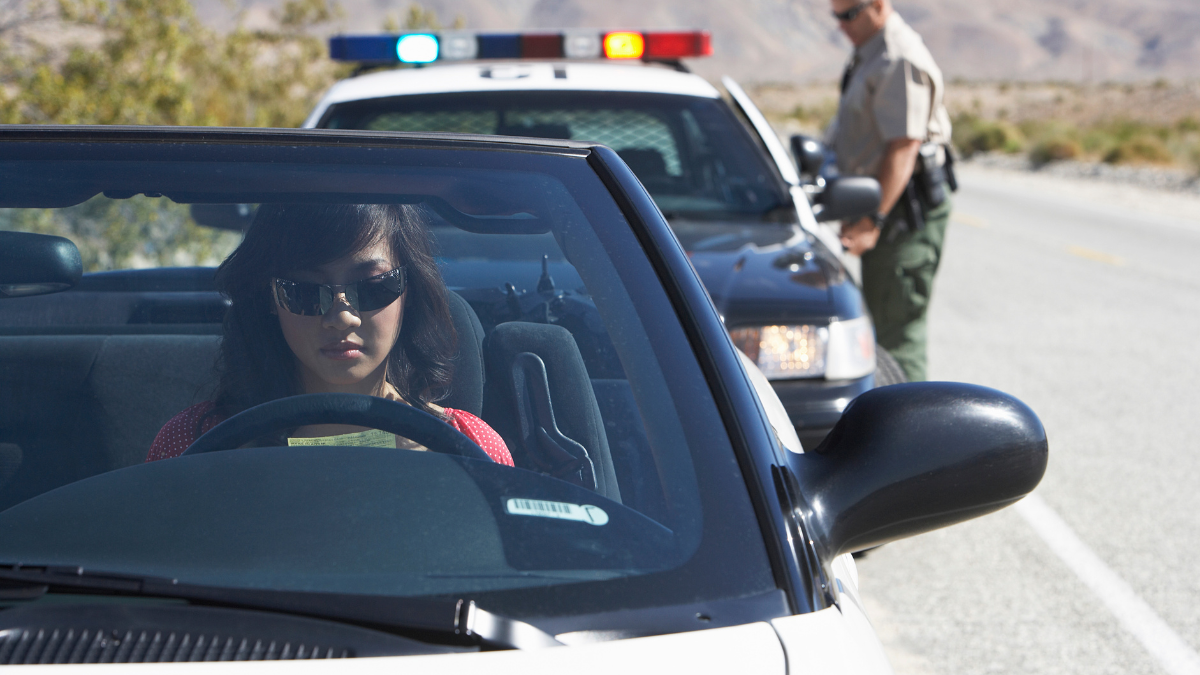
That first glimpse of red and blue in the rearview mirror triggers something almost instinctive. A quick internal calculation, how far to the next exit, is there somewhere better to pull over, maybe just a few more seconds before actually slowing down.
That hesitation feels harmless in the moment, just buying a little time, finding a safer spot, nothing dramatic. But those extra seconds carry more weight than they seem to, shaping how the entire rest of the encounter is likely to unfold from that point forward.
Understanding what’s at stake in avoiding the police in California, even briefly, matters considerably more than most drivers realize in that split second of flashing lights and quick decisions.
Those Extra Seconds Can Matter
Continuing to drive after an officer signals a stop, even for what feels like a reasonable amount of time, changes how the encounter reads from the other side. What looks like a search for a safe pull-off spot can read very differently from behind.
Officers don’t have access to a driver’s internal reasoning in that moment. They see a vehicle that isn’t stopping, and that observation alone starts shaping their approach to the entire rest of the interaction before a single word gets exchanged.
An otherwise routine stop can shift character considerably based purely on those first seconds, turning a simple traffic matter into something the officer is approaching with noticeably more caution and scrutiny than they would a driver who pulled over immediately.
A Traffic Stop Can Become Something Bigger
Whatever originally prompted the stop, a broken taillight, a rolling stop, a minor speed issue, exists as its own separate problem. Actions taken after the stop begins can potentially create additional legal issues layered right on top of that original, often minor, reason.
That layering matters considerably, since a driver who might have walked away with a simple citation for the original issue can end up facing a genuinely more serious situation because of decisions made in the moments immediately following those first flashing lights.
None of this means every delay leads to serious consequences automatically, but it does mean the original, often minor problem stops being the only thing on the table once additional behavior gets factored into how the situation actually plays out.
What Officers See From Behind
From an officer’s perspective, speed, direction, and general driving behavior after activating lights all communicate something, whether or not the driver intends any particular message by them. Slowing gradually reads differently than maintaining speed or changing direction unexpectedly.
Signal use matters too, along with any apparent attempts to turn away from an obvious path toward a safe stopping location. Eventual compliance, once it happens, gets read against everything that came before it, not evaluated entirely on its own.
This interpretation shapes the officer’s approach considerably, sometimes influencing caution level, backup requests, or overall tone going into the interaction, all based on behavior observed during those crucial initial seconds after the lights first appeared.
The Original Problem Doesn’t Disappear
It’s tempting to imagine that avoiding or delaying an encounter somehow makes the underlying issue go away, buys time, creates an opportunity to think things through. In practice, it usually just compounds the original problem rather than resolving it in any way.
Whatever prompted the stop in the first place is still sitting there, waiting, entirely unaffected by any delay in actually pulling over. The delay itself simply adds a new layer of complication on top of a situation that was already going to require addressing directly.
Recognizing this matters considerably, since the instinct to delay or avoid rarely produces the outcome it seems to promise in that anxious first moment, and usually just makes an already uncomfortable situation meaningfully more complicated than it needed to be.
Conclusion
A split-second decision made the instant flashing lights appear can substantially reshape everything that happens next, far more than most drivers realize while they’re caught in that brief window of hesitation and quick, anxious calculation.
Understanding how those first seconds get read, and how they can compound rather than resolve the original issue, helps clarify why pulling over promptly tends to be the far safer path, even when it doesn’t feel that way in the moment.
Recognizing that the underlying problem never actually disappears through delay reframes the whole situation, making clear that cooperation from the very start tends to serve everyone’s interests considerably better than any attempt to buy extra time.