
Repeating the same squats and counting every repetition can make a home workout feel dull. A small change may sound more inviting than another ambitious plan.
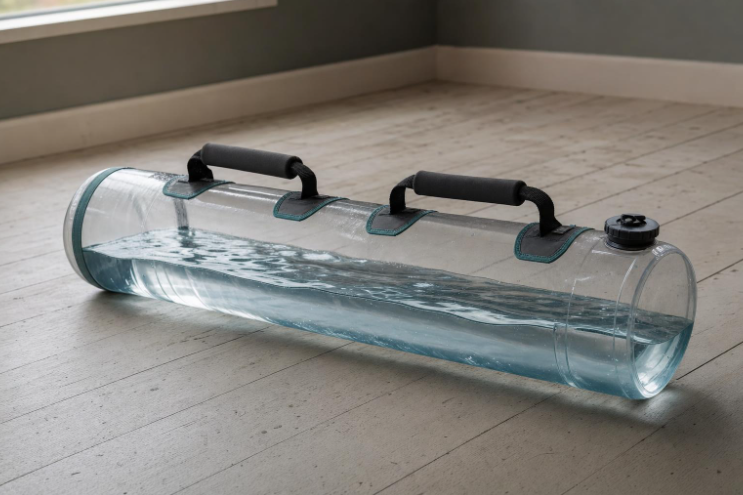
Water-filled exercise bags offer a different feel during familiar movements. You can use them for small movement games built around exercises you already know, with the emphasis on enjoyment and control.
Key takeaways
- Start with movements you already know and can do comfortably.
- Keep the load light enough to control. A bag’s maximum capacity is an equipment limit.
- Move slowly, pause whenever you want, and stop if an exercise causes pain.
What Makes Water-Filled Weights Different?
A water-filled weight is a handheld bag that you fill with water and lift by its handles. The water stays inside the bag while you exercise on a dry floor. These bags are different from hanging punching bags and pool equipment.
A moving load. Water shifts within the bag as you move, changing how it feels in your hands. That difference doesn’t establish that it works better than other equipment. Whether you enjoy the sensation is a matter of preference.
Fluid X describes its bags’ resistance as adjustable by adding or removing water. Its Tank 15 lists a maximum water weight of 15 kg and two sets of neoprene handles. The round Boba 13 holds up to 13 kg and has a deflation valve for packing away.
Equipment is optional. The NHS defines a strength exercise as an activity that makes your muscles work harder than usual. The American College of Sports Medicine’s March 2026 guidance prioritizes regular participation for most adults over complicated programming. A water-filled bag is one way to vary familiar movements; bodyweight exercises remain an option.
Set Up for Steady, Comfortable Movement
Choose a manageable shape. Compare handle arrangement, bag size and maximum capacity. A cylinder like the Tank 15 offers two sets of handles; a round bag like the Boba 13 has a different shape to hold. Start with an amount of water you can lift and lower smoothly, rather than aiming for the listed maximum.
Follow the filling instructions. Fluid X’s FAQ specifies cold or room-temperature water. Follow your model’s instructions for filling, inflation and closure, since products may differ. Check the closure before every session.
Make room to move. Clear a dry patch of floor and wipe up any drips. Warm up with easy marching on the spot and gentle arm circles, then practise your chosen movement without the bag before adding weight.
Keep movements smooth throughout. Healthline’s home-strength guide advises steady, controlled movement, and Sanford Health’s older guidance warns against jerking or throwing weights into position. Mayo Clinic advises stopping any strength exercise that causes pain. If you’re comparing an aqua training bag, Fluid X lists shapes, handle options and maximum water weights to help you assess which model you could manage comfortably.
Turn Familiar Moves Into Small Games
These are ideas for adding variety, rather than a tested program or a complete, balanced workout. You can try the card and music games without equipment, using familiar bodyweight movements.
- Pick a familiar move. Write movements you already do comfortably on slips of paper, such as a squat, a curl or a step forward and back. If you’re using a bag, choose only movements and grips you already know how to perform with it. Fluid X’s adjustable water load lets you reduce the resistance before you begin. Shuffle, draw a card, and do a few slow repetitions. Put the bag down before drawing again. Skip any exercise you’re unsure about, or choose a familiar bodyweight movement instead.
- Let music set the mood. Put on a song you like and let it play in the background while you move at your own pace. There’s no need to lift to the beat or keep going until the track ends. Pause whenever you want, breathe normally, and resume only if you feel comfortable.
- Try the quiet-water challenge. Choose a movement you know well, hold a lightly filled bag, and move slowly enough to notice whether the water settles between repetitions. Focus on control without trying to keep the water perfectly still. Keep the bag low and close to your body, with no overhead reaching or swinging. Breathe throughout the movement. If anything hurts, set the bag down and stop. If an injury, a health condition or a balance concern affects how you exercise, get advice tailored to you first.
Keep the part you enjoyed. After a session, jot down which idea you’d repeat. You can use that note to choose your next session’s game. Over time, those notes can help you shape gentle wellness routines around the movements you actually look forward to. There’s no need to try every variation at once.
Conclusion
A playful session can be simple: choose a familiar movement, keep the load manageable, and leave room to pause. The goal is to find a routine you enjoy returning to, with comfort and curiosity guiding each choice.
FAQs
Do I need to fill the bag completely?
No. Follow your model’s filling instructions and use an amount of water you can control. The listed maximum is the equipment’s capacity, not a recommended starting load.
Can I try these ideas without buying equipment?
Yes. Use familiar bodyweight movements for the card game or music idea. You can also practise slow, controlled repetitions without a bag.
Do I need access to a pool?
No. The water stays inside the bag. These activities take place on a dry floor at home.
What should I do if a movement hurts?
Stop that movement. Mayo Clinic advises stopping a strength exercise if it causes pain. If pain persists, seek individual advice rather than pushing through.