
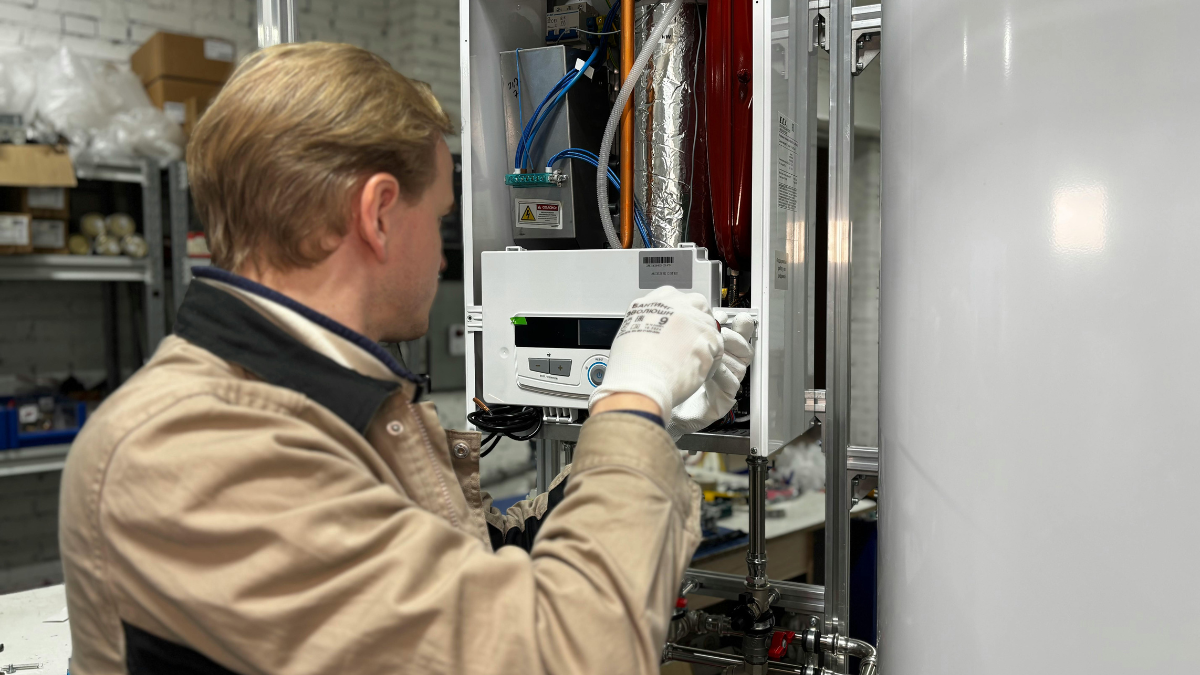
Your furnace will run more hours in the next three months than it did in the previous nine combined. That single fact explains why February is the month when most heating emergencies happen, and it is also the reason a little attention right now can save you a cold night and a big repair bill later. This guide walks you through the habits that matter, the checks you can do yourself, and the moments when calling a professional is the only smart move.
Why Winter Is the Real Test for Your Heating System
Think about how your car feels on the first freezing morning of the year. The engine cranks slower, the battery works harder, and everything that has been sitting idle suddenly has to perform. Your heating system goes through the same ordeal, except it repeats that stress every single day for months.
Here is what changes when temperatures drop. The air your furnace pulls in is colder and denser, so the burners and heat exchanger have to work with a bigger temperature difference. The condensate drain, which removes acidic water produced during combustion, becomes a freeze risk. And your blower motor, which has spent the fall coasting along on mild days, now runs almost continuously. Each of these stresses is manageable on its own. Stack them together, and small weaknesses become real failures.
According to guidance from the U.S. Department of Energy, heating accounts for the largest share of a typical home’s energy bill. That makes winter not only a reliability challenge but also a financial one. A system running even five percent less efficiently than it should costs you money on every single cold day.
The Cheap Filter Trick Most Homeowners Skip
You already know you should change your air filter. The part most people get wrong is how often, and why it matters more in winter than in summer.
During cooling season, your AC runs in cycles and the blower moves air at a moderate pace. In winter, the blower runs far more frequently and often at higher speeds. A dirty filter that barely affected your AC in July becomes a real restriction in January. Restricted airflow makes the heat exchanger run hotter than designed, which shortens its life and, in extreme cases, cracks it. A cracked heat exchanger is not a repair item. It is a safety hazard that requires immediate system shutdown, according to standards tracked by the Occupational Safety and Health Administration.
So here is the habit I recommend to everyone I talk to. Buy a three-pack of filters in the fall. Write the install date on the edge of each one with a marker. Swap it on the first of every month from November through February. That is four changes total, and it costs less than twenty dollars. For that small investment, you protect your heat exchanger, keep your blower motor from overworking, and keep your indoor air from recirculating dust and pet dander all winter.
One caveat. If you have pets, or if anyone in your home has allergies, cut that interval in half. A filter that looks fine from the outside can be clogged along its inner pleats where you cannot see it.
Signals That Your System Is Struggling
Your heating system talks to you. The problem is that most homeowners are not listening until something stops working entirely. Here are the early warnings worth paying attention to.
Uneven room temperatures. If your bedroom is always colder than the living room, and closing vents does not fix it, your ductwork or your blower may be underdelivering. This is often the first sign of a developing issue, not a quirk of your home’s layout.
Short cycling. A furnace that turns on and off every few minutes instead of running in longer, steady cycles is wasting energy and wearing out its components. Short cycling is frequently caused by an oversized unit or a failing thermostat, but it can also point to airflow restrictions.
Strange smells. A dusty burning smell on the first cold day is normal, since dust settles on the heat exchanger over the summer. Any smell that persists beyond that first cycle is not normal, and a metallic or burning plastic odor is a reason to shut the system down and call for service right away.
Higher utility bills with no explanation. Your bill will naturally rise when the weather turns cold. The problem is when it jumps more than the temperature change justifies. Compare your bill to the same month last year, not to your September bill. A meaningful spike with no change in your habits is a sign your system is losing efficiency.
What a Professional Tune-Up Actually Covers
You can handle filters, thermostat settings, and keeping your outdoor unit clear of debris. But there is a layer of maintenance that genuinely requires tools and training you do not have. A real tune-up goes far beyond a visual once-over.
Here is what a thorough professional check should include. The technician measures the temperature rise across the heat exchanger to confirm combustion is within the manufacturer’s range. They inspect the burner flames, which should be a crisp blue, not yellow or flickering. They test carbon monoxide levels in the flue and around the appliance. They check the condensate drain line for blockages and flush it if needed. They measure the blower motor’s amp draw to see if it is working harder than it should. And they inspect the heat exchanger for cracks using a visual exam and, in many cases, a combustion analysis.
That last item matters most. The Environmental Protection Agency identifies indoor air quality as a significant factor in respiratory health, and a cracked heat exchanger is a direct route for combustion gases into your living space. No DIY checklist covers that. You need someone with the right diagnostic equipment.
And here is where I will be direct. When you search for hvac maintenance near me, you are not really looking for a company. You are looking for a technician you can trust inside your mechanical room with a combustion analyzer. Reputation matters more than proximity, so read the reviews, ask what their tune-up includes, and confirm they test rather than just look.
Building a Simple Winter Maintenance Routine
You do not need a complex system to keep your heating running well. You need consistency on a few basic tasks. Here is a monthly rhythm that works.
First week of the month: Change or clean your air filter. Check that nothing is blocking your indoor vents, including furniture, curtains, and area rugs. Look at your outdoor heat pump or AC unit and clear away leaves and snow.
Mid-month: Walk your home and check for cold drafts around windows and doors. Seal what you can with weatherstripping or caulk. This reduces the load on your heating system more than you might expect, since every draft forces the furnace to run longer to hold the same temperature.
Before a cold snap: Confirm your carbon monoxide detector has fresh batteries and a valid expiration date. Test it. Do the same for your smoke detectors. This takes five minutes and is the cheapest insurance you will ever buy.
Once per season: Schedule a professional inspection. Do this in early fall, before the first hard freeze, so you are not competing with everyone else for a service slot on the first cold night of the year.
Stick to this routine, and you eliminate the vast majority of common mid-winter failures. The system still needs expert care, but it will not fail you because of a clogged filter or a blocked vent.
Knowing When to Repair Versus Replace
Every homeowner eventually faces this decision, and it usually comes at the worst possible moment, like a Sunday evening in January. Having a framework in your head beforehand makes the call easier.
The general guidance is that if a repair costs more than half the price of a new system, and your equipment is past its expected lifespan, replacement is the smarter financial move. For a furnace, that lifespan is typically 15 to 20 years. For a heat pump, it is closer to 10 to 15 years. These are broad ranges, since installation quality and maintenance history move the needle significantly.
But the math is not the only factor. Consider your comfort goals and whether your current system can meet them. An older system running on a single speed cannot deliver the consistency of a modern variable-speed model. If you plan to stay in your home for another decade, investing in efficiency makes sense. If you might move in two years, a reliable repair is often the better path.
I have seen too many homeowners replace systems that just needed a honest repair, and too many others throw money at units that were past saving. The difference comes down to asking the right questions. How old is the equipment? What is the repair cost relative to replacement? And what is the technician’s honest assessment of remaining life, not their sales pitch?
Why Consistency Beats Emergency Calls
There is a reason so many companies push maintenance agreements, and it is not just recurring revenue. Contractors would rather spend an hour doing a slow, careful inspection in September than race to your house at 10 PM in a snowstorm. You should feel the same way.
A scheduled visit gives the technician time to catch small problems while they are cheap. An emergency call means you are paying overtime rates and accepting whatever parts are available that night. That is why proactive care always wins, both for your wallet and for your peace of mind. When you look for hvac maintenance near me during a calm moment, you get to choose on quality and reputation. When you search during a breakdown, you take whoever answers the phone first.
Your heating system asks for very little. A clean filter, a clear vent, a listening ear for its early warning signs, and one professional check each year. Give it that, and it will carry you through the coldest months without drama. That is the trade, and it is a good one.
So before the next cold front rolls in, take a walk around your home. Change the filter, clear the vents, test the detectors. Then book that professional inspection, whether you rely on a trusted local company or choose a provider for dependable HVAC maintenance options in your area. Your future self, standing in a warm house on a freezing night, will be glad you did.