
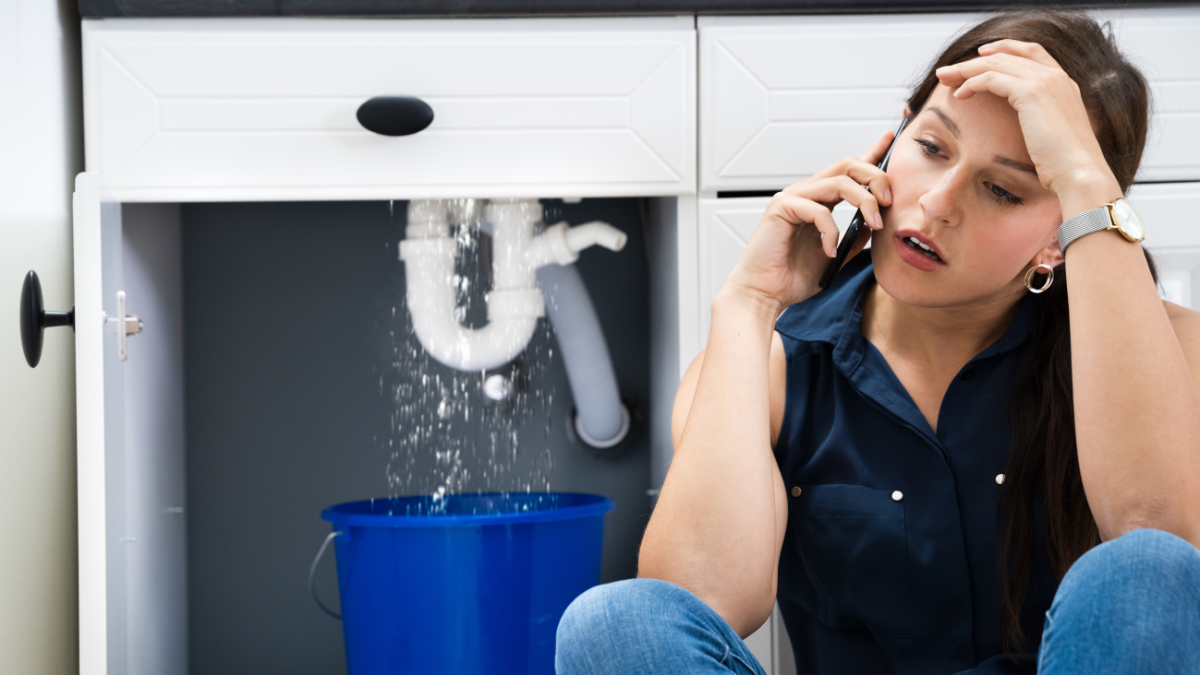
Eleven minutes. That’s roughly how long a supply line under a kitchen sink can run before a slow drip turns into a warped cabinet floor, a soggy baseboard, and a repair bill you weren’t planning for this month. I know because I watched it happen in my own house five years ago, and the culprit was a fifteen-dollar valve I’d walked past a hundred times. Here’s the good news: almost no plumbing emergency arrives without a warning first. It whispers. It spots the cabinet bottom. It makes your water bill creep up by a few dollars. Learning to hear that whisper is the cheapest home maintenance skill you’ll ever pick up, and it takes one Saturday afternoon to learn.
Your plumbing doesn’t fail overnight. It gives you warning signs.
Water damage rarely starts with a dramatic burst. It starts with pressure, corrosion, and time. A joint loosens a quarter turn. A rubber gasket hardens. Mineral deposits narrow a pipe the way cholesterol narrows an artery. Each of those small changes is invisible right up until the moment it isn’t, and that moment is when most homeowners start searching for an emergency plumber at 11 p.m.
So the whole game is catching the warning signs early. Think of it as three tiers, and I call it the Three-Tier Leak Ladder because it gives you one clear action at each rung instead of a vague feeling of worry.
- Tier one: it’s wet. Damp cabinet floors, fogged windows on cold mornings, a faint musty smell in the basement. This is a slow loss. You have days, not minutes. Dry it, find the source, and fix it.
- Tier two: it’s active. A drip you can see, a toilet that refills itself, a water stain that grows. This is losing water right now. You have hours. Shut the fixture’s local valve and call someone.
- Tier three: it’s uncontrolled. Water spraying, standing water spreading across a floor, sewage backing up. This is the real thing. Kill the main shutoff and treat it like the emergency it is.
Most people bounce straight from ignoring tier one to panicking at tier three. The goal is to act early and calmly, when a five-minute fix is still a five-minute fix.
Walk your house once and write down what you find
Grab a notepad and do this in one pass. It takes about twenty minutes, and it will tell you more about your plumbing than any app or smart sensor will.
- Find your main shutoff valve. It’s usually near the water meter, in the basement, or in a utility closet. Test it by turning it a quarter turn and back. If it’s seized, that’s your first repair, and it’s the most important one in the house.
- Check every supply line under every sink. Look for rust on the fittings, dark rings on the cabinet floor, or bulging in the tubing. Flexible braided lines have a service life, and they don’t announce when it’s over.
- Look at the water heater. Any rust streaks, moisture at the base, or popping sounds when it heats up all deserve a professional eyeball.
- Flush every toilet and listen. If it keeps running after the tank fills, that flapper is wasting water around the clock.
- Check the visible drain lines in the basement. Slow drains, gurgling, or a faint sewer smell point to a partial clog that’s building toward a backup.
- Write your plumber’s number on the inside of a cabinet door. Under the kitchen sink is ideal. When you’re panicking, you won’t want to search your phone.
Note what you find, even the small stuff. A dated list of “things that looked slightly wrong” is genuinely useful the next time someone is standing in your basement with a flashlight.
What to do in the first five minutes of a real emergency
If water is actively running where it shouldn’t be, sequence matters more than speed.
Kill the water first. If you can’t find the fixture valve fast, go straight to the main shutoff. Then cut the electricity to any room with standing water, and only then start moving furniture off the wet floor. Never wade into a flooded room to flip a breaker with wet hands. This is standard guidance, and the emergency preparedness guidance from Ready.gov is a solid refresher if you’ve never thought through the electrical side of a home water emergency.
Once the water is off, your job is documentation and containment. Take photos before you clean anything up. Move what you can. Point a fan at the wet area. Then make the call.
When a repair belongs to someone with a license
Here’s my honest take, and it’s the part people push back on: anything inside a wall, anything involving gas, anything tied to the main sewer line, and anything that requires you to cut or solder a pipe is not a weekend project for most homeowners. Not because you can’t learn it, but because a mistake in those spots is expensive in a way that a mistake under a sink is not.
That doesn’t mean you’re helpless. It means you decide in advance who you’ll call, so you’re not choosing a contractor under pressure at midnight. According to the Bureau of Labor Statistics, demand for skilled trade workers like plumbers has stayed steady for years because the work can’t be automated or outsourced. That’s worth knowing, because it means the good ones are busy, and the ones answering the phone at midnight might not be the ones you’d pick in daylight.
When you do need a licensed emergency plumber, ask two questions on the phone before anyone gets in a truck: can you tell me a rough arrival window, and is there an after-hours dispatch fee? A company that answers both clearly in thirty seconds is usually a company that will also communicate clearly once it’s in your house.
A quick note on water quality and pipe wear
One more thing most homeowners never connect: your water itself affects how fast your pipes fail. Hard water leaves mineral scale inside pipes and fixtures, and aggressive water can slowly eat at certain kinds of metal. The Environmental Protection Agency maintains public information on drinking water standards and what’s typically found in household water, which is a reasonable starting point if your fixtures keep crusting over. You don’t need to become a water chemist. You just need to notice the pattern. If your faucet aerators fill up with white crust every few months, your pipes are collecting the same stuff on the inside, and that’s a conversation worth having before a clog becomes a backup.
Build the habit, not the panic
Set a reminder for the first weekend of every season. Twenty minutes. Walk the same loop, check the same six things, and update your notes. That’s the entire system. It costs you an hour and a half a year, and it’s the difference between a small repair and a ruined floor. And if something on your walk looks wrong and you can’t tell whether it’s serious, call someone and ask. Nobody in the trades minds answering a question about a photo of a rusted fitting. They mind arriving at 2 a.m. to a house that’s already under two inches of water. Which of those two calls do you want to be making this year?