
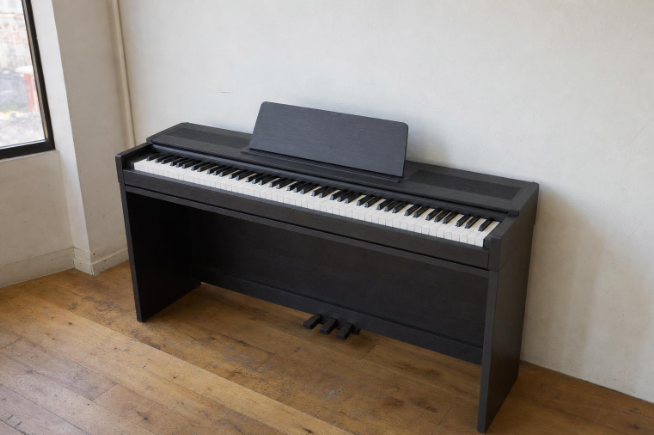
On an ordinary weekday evening, a song you love is playing. You imagine your hands finding the melody on a keyboard in the corner of the room, playing for your own enjoyment.
Piano can stay a hobby. You can make mistakes, skip scales for a week or learn a film theme before opening an exercise book.
Start by choosing an instrument that suits your home and your ears, then make room for a routine you enjoy.
Key takeaways
- Choose for your current space, schedule and musical interests.
- Try touch and sound in person before settling on a model.
- Leave room for enjoyable, imperfect practice so you want to come back.
Choose a piano that fits your everyday life
Start with the music you want to make. Write down two or three pieces you would like to learn: a Cantopop ballad, a film theme or a simple chord pattern to sing over. If you need ideas, a playlist of happy songs can help you find melodies you’d enjoy learning. Use that list to explain your interests to a teacher or shop adviser.
Digital or acoustic. Tom Lee Music’s beginner guide describes two broad types, acoustic and digital. They produce sound differently.
In an acoustic piano, the keys move hammers that strike strings. In a digital piano, an electronic tone generator produces the sound and a speaker amplifies it.
Digital pianos don’t need the routine tuning an acoustic requires, though they can still need repairs. They also let you practise through headphones; check the headphone connection on any model you shortlist.
Keys and pedals can still make noise, so consider others at home and check your building’s noise rules.
An acoustic is worth trying if its sound and feel appeal to you and you can accommodate routine tuning and delivery. Either type can suit a hobbyist.
Make room for the whole setup. Measure the instrument’s width and its depth with the key cover open, then allow space for the bench and for sitting comfortably. Check the weight as well as the dimensions.
For example, Tom Lee Music lists the slimline Yamaha Arius YDP-S55 as 1,353 mm wide and 309 mm deep with the cover closed, with a weight of 40 kg.
Check the lift, stairwell and doorway, and ask how delivery or any future move would be handled.
Try the keys before you choose a name
Keyboard touch response varies by manufacturer and model, as Yamaha’s instrument guide explains. Try each piano on your shortlist rather than relying on the brand name alone.
Compare touch and sound. Ask a teacher or shop demonstrator to play the same short passage on each instrument you’re considering. Then play a few keys yourself, even a one-finger melody. Ask the demonstrator to explain the resistance you feel when pressing the keys, and listen to notes played softly and firmly. You don’t need technical vocabulary to describe what feels comfortable or sounds appealing.
The manufacturer’s guide to weighted keys links the choice to your goals. If you want to learn piano, weighted keys deserve a close look. If you’re still deciding whether you enjoy playing, borrowing a friend’s keyboard or using an instrument provided during a lesson can help you try it before buying.
Check the complete cost. Before choosing a piano brand, use Tom Lee Music’s retailer-curated beginner guide as background reading, then compare the likely setup costs against your needs. Include these in your budget where applicable:
- the instrument itself
- a bench at a height that lets your forearms sit level
- a stand, if the model doesn’t include one
- the pedal unit, if sold separately
- headphones and the right connector
- delivery to your door, including any charge for stairs
- for an acoustic, regular tuning
For a second-hand acoustic, the Piano Technicians Guild recommends an inspection before purchase. In Hong Kong, arrange this with an appropriately qualified local technician.
Read shortlists with context. Tom Lee Music’s beginner guide offers a retailer-curated starting point for comparing acoustic and digital options.
Compare the instruments it names against your space, budget and preferred feel. The guide covers pianos the retailer sells, so use it as background reading rather than independent testing, and confirm current availability.
Ask for written warranty terms, a list of included accessories and details of after-sales support.
Tom Lee Music lists piano services ranging from regular tuning to major overhaul. Ask which services may apply to your instrument, what they cost and whether any are included in the purchase.
Build a piano habit that leaves room for play
Give yourself a small invitation. Try a ten-minute practice session, starting with something familiar.
Work on a manageable difficulty, such as two bars or a single chord change, then finish with whatever you most enjoy playing. Adjust the length to suit your day.
WKMT, a London piano teaching studio, recommends continuity over occasional intense practice in its guide for adult hobbyists. If you miss a day, resume when you can.
Find support that respects your goal. If you take lessons, tell the teacher at the first meeting that you’re learning for pleasure. Ask for music built around your interests at a pace that fits a hobby. You could also use a structured book, a course or an app.
If an app is part of the plan, check compatibility first; Casio, for example, notes that not all of its models support every feature of its Music Space app.
Let enjoyment count. If you’d like a record of your progress, make a phone recording once a month. You could also try a simple duet or play for a willing friend when you feel ready.