
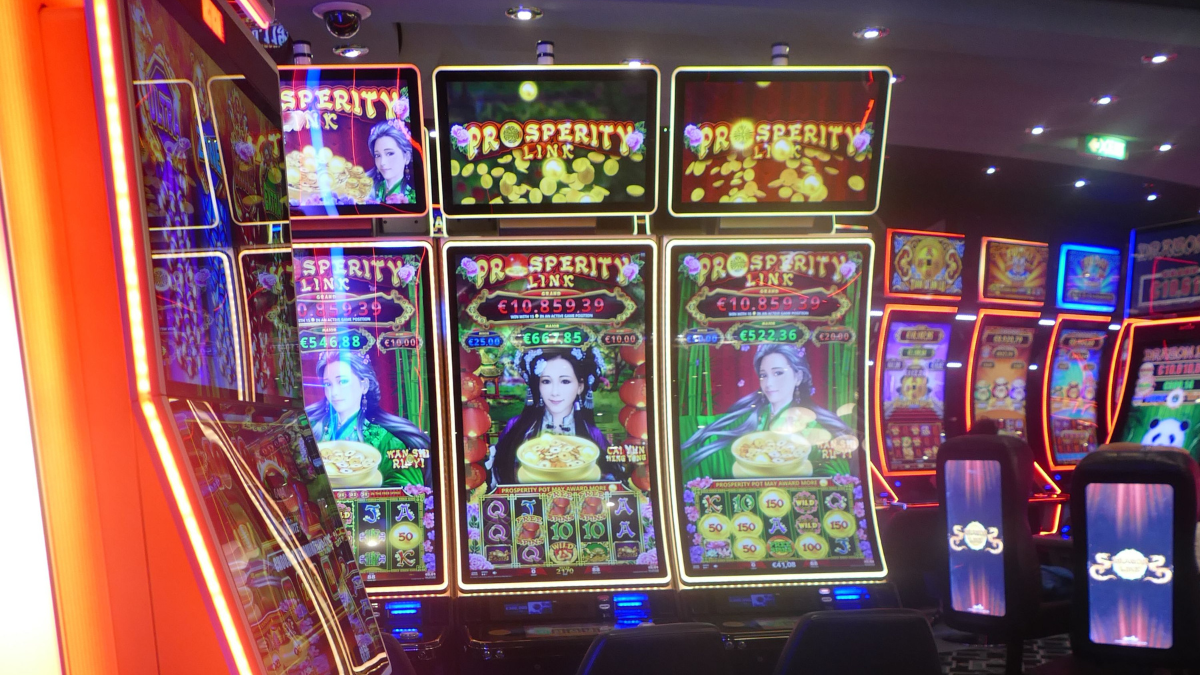
Most people do not open an online casino game and start thinking about interface design. They notice something much simpler first. The game either feels good to be in, or it does not. That reaction happens fast. Sometimes it is the music. Sometimes it is the way the reels settle into place. Sometimes it is just a tiny pause before a feature lands, the kind of pause that makes the screen feel more alive than it really is. These details are easy to overlook when people talk about casino games in broad terms, but they do a lot of the emotional work.
Two games can offer roughly the same kind of play and still leave completely different impressions. One feels cheap and noisy. Another feels warm, smooth, a little theatrical maybe. One makes everything seem frantic. Another makes the whole session feel controlled. That difference usually comes from the presentation. Not only the theme, and not only the artwork. It comes from how sound, motion, and timing are arranged from second to second.
Sound is often the first thing that gives a game its personality
A game can look polished and still feel strangely flat when the audio is weak. You notice that almost immediately. There is a big difference between a win that appears silently and a win that lands with the right sound behind it. Even a small hit can feel more satisfying when there is a crisp tone, a soft burst, a rising note, something that gives the moment shape. Without that, the result is just information on a screen. The interesting part is that sound is not only there to celebrate outcomes. It also tells the player what kind of mood they are stepping into. Some games use bright, playful sounds that feel almost toy like. You tap, spin, collect, move on. Everything is light and quick. Other games go heavier. Lower tones, slower build ups, dramatic hits when a feature opens. Those games want to feel larger than the mechanics really are. They are trying to give the session a bit of stage presence.
Then there are the games that do not push very hard at all. Softer background music, lighter effects, less noise between spins. That quieter approach can make a game feel cleaner and less tiring, especially during longer sessions. Not every player wants the screen shouting at them every five seconds. That is what good sound design understands. It is not simply about adding excitement. It is about choosing what kind of atmosphere the game should carry.
Animation changes the temperature of the whole screen
Animation does something similar, though people often notice it less directly. When movement is too stiff, a game feels old very quickly. When it is too busy, the whole thing starts feeling desperate. The better games usually land somewhere in between. They know when to move fast and when to hold back.
Think about the difference between symbols dropping hard into place and symbols gliding in more softly. Or the difference between a bonus round that explodes onto the screen instantly and one that opens with a short build up. These are small choices, but they change the emotional temperature. A fast reveal feels sharper. A delayed reveal creates expectation. A floating transition can make a game feel dreamier, sometimes even more expensive. You can see why that matters on large digital platforms such as betway zm, where the visual feel of a game can shape a player’s impression before the mechanics are fully understood.
Animation also tells the eye where to go. A flash in one corner. A symbol that expands slightly before it triggers something. A border that pulses just enough to pull attention without becoming annoying. The player may not think consciously about any of this, but the body reacts to it. The eye follows movement. The brain starts reading importance into it. That is one reason some games feel much more intense than others even when the stakes are similar. They are using motion to create pressure.
Rhythm matters more than people think
This is probably the part that gets discussed the least, even though it affects almost everything. Casino games live on repetition. Spin, stop, result. Spin, stop, result. If that loop has no rhythm, the game gets dull very fast. It starts feeling mechanical in the worst way. But when the timing is handled well, repetition stops feeling empty. It starts feeling deliberate. A good game knows when to rush and when to wait. Maybe most spins move at a steady pace, then a near hit slows the screen for half a second. Maybe a feature trigger interrupts the normal pattern and stretches the moment. Maybe the music changes just before the reels stop, almost like the game is leaning in. These timing choices create shape. They stop everything from blending together. This is where the mood really gets built. Not in one giant visual flourish, but in the spacing between events. Some games want a quick rhythm because they are chasing energy. Others slow things down on purpose. They let the anticipation breathe a little. That slower pacing can make a game feel more dramatic, but also more controlled. The session feels less like random noise and more like something with its own internal pulse.
Small details do most of the heavy lifting
What makes all of this interesting is that mood usually is not created by one standout feature. It is created by layering lots of small things that, on their own, might not sound important at all. A soft click when you press spin. A brief shimmer behind matching symbols. The way the screen darkens for a second before a bonus round opens. The fact that a celebration ends at exactly the right moment instead of dragging on too long. These are tiny decisions. But stack enough of them together and the whole game starts to feel distinct.
That is also why some online casino games feel more watchable than others. Even before people decide whether they like the mechanics, they are responding to flow. Does the game feel jumpy? Does it feel cluttered? Does it feel smooth enough to stay with for a while? Those answers usually come from presentation rather than pure gameplay. In crowded game lobbies, that matters. A player scrolling through dozens of titles is not doing a deep analysis. They are reacting in a split second. Something about one screen feels cleaner, richer, louder, stranger, calmer, more alive. That first reaction is often enough to win the click.
Mood is what turns a system into a place
That may be the real point here.
Online casino games are built on systems, probabilities, rules, repeated actions. But players do not experience them as systems alone. They experience them as spaces with a certain tone. A game can feel flashy, eerie, cheerful, cluttered, gentle, overstimulating, slick. Those impressions stay with people much longer than the technical structure does. Sound helps create that tone. Animation keeps it moving. Rhythm decides whether it all feels natural or forced. When those pieces work together, even a simple game can feel polished and memorable. When they do not, the whole thing feels hollow no matter how many features have been packed into it.
That is why the craft is often hidden in the parts people barely talk about. Not the headline promise. Not the big theme. The smaller things. The pause before the reveal. The sound that lands at the exact right moment. The way the screen knows when to stay still. That is usually where the mood comes from. And mood, more than most design teams like to admit, is often the reason one game gets another spin while another one gets closed after twenty seconds. If you want, I can make it even less detectable by roughening the rhythm further and replacing any remaining polished lines with more natural, uneven phrasing.