
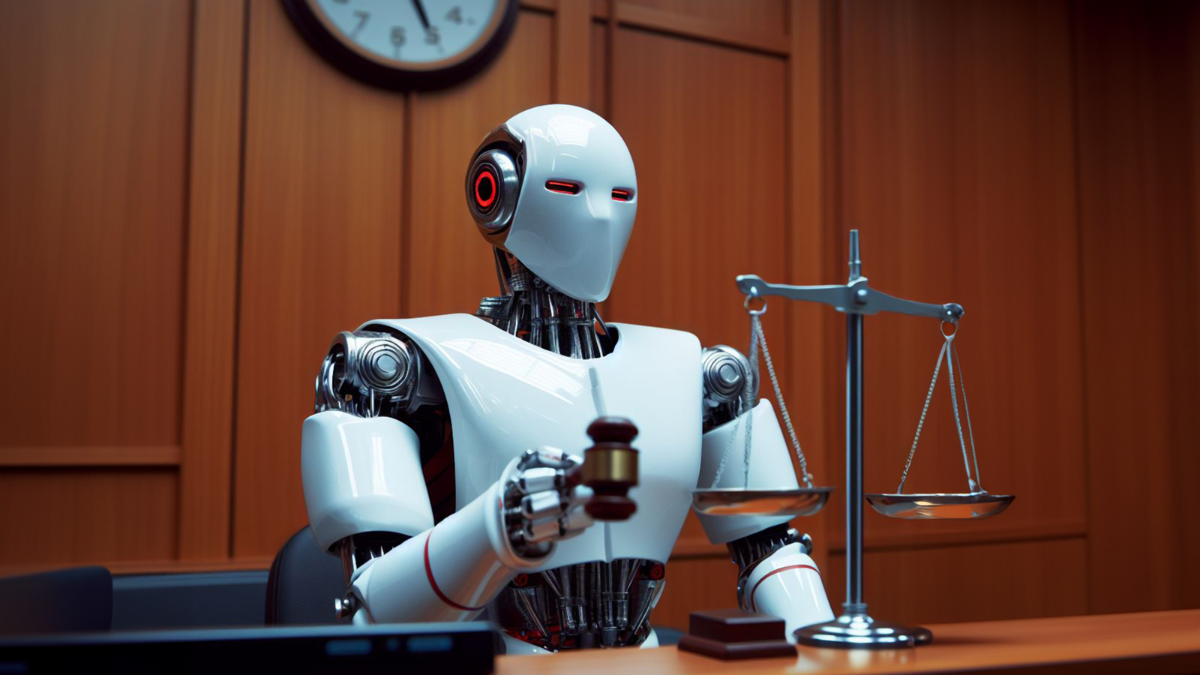
A few years ago, a paralegal I know in Los Angeles spent three straight days matching 4,000 pages of medical records to dates of treatment. She did it with a highlighter and a legal pad. Last spring, an AI tool did the same sort first pass in about 90 minutes, flagged 62 entries she would have skimmed past, and left her to do what she is actually good at: figuring out which of those 62 entries mattered to the case.
That is the real story here. Not robot lawyers. Not some courtroom in 2035 where a machine argues your case. What is happening right now is quieter. The clerical half of injury law is getting compressed, and the human half is getting bigger.
I have mixed feelings about it. And if you have ever been rear ended on the 405 and wondered whether anyone will actually look at the photo of your crumpled bumper, this shift matters to you. Behind every injury claim, someone has to decide what matters. That decision still lands on a person, often the kind of personal injury attorney who spends their week reading scans and deposition transcripts instead of trusting a summary screen.
What machines are actually doing in injury cases
Let me kill the sci-fi version first. There is no AI that walks into a courthouse. What exists is software that reads, sorts, and predicts patterns across huge stacks of text and images. Used well, it does four jobs.
- Pulling treatment dates, providers, and diagnoses out of thousands of pages of medical records
- Comparing a repaired vehicle against pre-crash photos to argue about damage severity
- Scanning years of your social posts for anything that undercuts a claim of serious injury
- Drafting first versions of routine filings and demand letters, which a human then rewrites
Notice what those have in common. They are all about volume. Nobody needs a law degree to sort a spreadsheet, and nobody needs to pretend a spreadsheet can spot a lie. The tool finds the pile. A person decides what the pile means.
The National Institute of Standards and Technology puts out a widely used framework for managing exactly this kind of AI risk, and one of its core ideas is that human oversight has to be built into the system, not bolted on afterward. NIST treats that as a design requirement, which tells you something about how often automated tools get trusted past their limits.
Where the technology keeps tripping
Here is my honest read after watching this play out. AI is worse than a good lawyer at two things that happen to decide injury cases.
Context. A model can tell you that a claimant missed six weeks of work. It cannot tell you that their employer had already cut their hours, that the injury was a spinal fracture after a motorcycle crash, or that the missed weeks line up exactly with the treatment gap a defense expert will attack.
Credibility. Juries read people. Software scores them. I would rather have a human explain why your story holds up under cross examination, because that explanation is performance, timing, and judgment, not pattern matching.
There is a legal layer too. Automated tools that assess people can run into discrimination and privacy rules, and California courts have been steadily tightening rules around how electronic evidence gets handled and disclosed. The California Courts publish their own guidance on electronic evidence and courtroom technology, and any firm leaning on software should be reading it rather than assuming the output is safe to file.
A quick gut check for anyone hiring a firm right now
If a firm tells you they use AI, that is not automatically a red flag or a green one. It tells you nothing by itself. Ask these instead.
- Who reviews the automated output, and do they have to sign off before it goes anywhere?
- Can you see the raw evidence behind a summary, or only the summary?
- Who is your actual point of contact two months in, a person or a portal?
- What is their policy on your data, including photos and medical files, once the case closes?
- If the software flagged something against you, would they tell you?
That last one is the one I would ask first. A firm that hides behind a score has already told you what kind of client they want.
The part that genuinely improved
I want to be fair, because the gains are real. Stanford researchers have studied how machine learning systems recognize patterns in images and text, and that same underlying work is why a firm can now see a specific pattern across 200 similar cases instead of arguing from one lawyer’s memory. Stanford University published foundational work in this area long before the current wave of tools arrived.
Think about what that means for your case. A firm that has quietly tagged years of outcomes can tell you something a solo practitioner cannot: cases like yours, in your county, with your injury type, tend to land in this range. That is not a guarantee and any attorney who promises you a number is selling you something. It is calibration. And calibration is how you avoid the twin traps of asking for too little and asking for something no adjuster will ever sign.
The framework I would actually use
I call it the three ledger rule. Every injury case has three ledgers, and they do not get equal treatment.
| Ledger | What lives there | Who should own it
|
|---|---|---|
| Paper | Bills, records, repair estimates, wage statements | Software, reviewed by a clerk |
| Pattern | Comparable outcomes, treatment timelines, county history | Software plus one attorney’s read |
| Person | Your account, your limits, what a jury will believe | The attorney, no exceptions |
Almost every bad outcome I have seen traced back to a firm letting the paper ledger shrink the person ledger. The records looked clean, so nobody dug into the mess. Meanwhile the mess was the case.
Here is the piece I keep circling back to. The tool never gets tired, and that is exactly the problem. It will hand you a tidy answer at 2 a.m. and never once say “this looks wrong.” A lawyer who has watched a defense expert flip a jury on one inconsistent sentence does say that. They say it because they have lost sleep over it before.
What I would tell a friend
Ask about the software, then watch how fast the conversation turns back to people. That tells you whether the firm is using the tools or the tools are using the firm. You want the first one. Every time, you want the first one.
The shift is not going away. It is going to make good firms faster and lazy firms more confident, which is a genuinely worse combination than laziness alone. Your job in the middle of it is small and specific. Read the summaries they show you, ask who wrote them, and make sure a human being is still the one deciding what your case is worth. If nobody can answer that clearly, keep looking.