
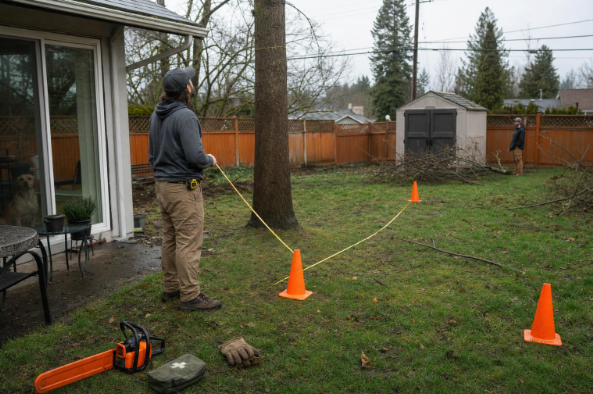
A leaning, cracked, or storm-damaged tree can make a homeowner want to grab a saw and get it down. That instinct is understandable, but trees are heavy, unpredictable, and often under tension, so the safest jobs start with a careful look, not a cut.
This guide shows how to size up a problem tree before anyone starts cutting. You will build a backyard safety checklist, decide what you can reasonably handle yourself, and know when to call a professional to protect people, pets, and property.
Key Takeaways
- Distance matters. Keep bystanders at least two tree lengths away when felling, and stay 30 feet back when cutting a downed tree.
- Power lines are a hard stop. Unqualified people and equipment need at least 10 feet of clearance from overhead lines.
- Plan your exit before you cut. Clear two escape routes at roughly 45 degrees from the fall line before the saw starts.
- Protective gear is not optional. Wear a helmet, eye and face protection, hearing protection, gloves, chaps, and sturdy boots.
- Call before you dig. Dial 811 before stump grinding, digging, or root work in the U.S.
The Backyard Safety Checklist Before You Cut
Every safe job starts with a quiet walk around the tree. Use this backyard safety checklist before the saw starts, and slow down enough to say each step out loud.
- Look up. Scan for overhead power lines, dead or hanging limbs, and active wildlife nests. Hanging limbs can drop once the tree moves.
- Look around. Note buildings, fences, vehicles, sheds, playsets, and garden features in range, then move valuables outside the possible landing area.
- Measure the drop zone. OSHA felling guidance calls for keeping others at least two tree lengths away until the area is safe.
- Plan two escape routes. Clear retreat paths at roughly 45 degrees from the fall line before cutting.
- Tidy the ground. Remove branches, rocks, hoses, and cords that could trip you.
- Stage your gear. Keep tools, wedges, and a stocked first-aid kit within reach but outside the fall path.
- Clear the audience. Keep kids and pets inside. A spotter should stay outside the fall zone and be ready to call for help.
Protective Gear and Tool Readiness
Protective gear is your last line of defense if something goes wrong. Chainsaw injuries send thousands of people to emergency departments each year, and basic equipment can reduce the severity of common mistakes.
The Centers for Disease Control and Prevention recommends a helmet, eye and face protection, hearing protection, gloves, cut-resistant chaps, and boots that cover the ankle for chainsaw work.
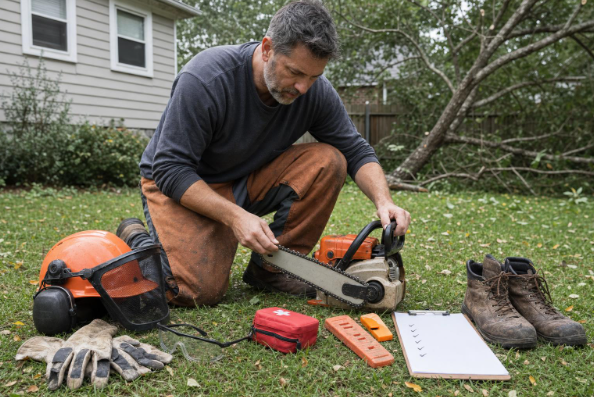
Once dressed, check the saw. A sharp chain cuts cleaner and pulls less, and correct chain tension helps keep the chain seated on the bar. Confirm the chain brake works and the bar area is clear of debris.
Keep plastic felling wedges on hand. NIOSH notes that wedges help keep a cut open and guide the tree in the intended direction when the trunk settles or pinches the saw.
When Not to DIY: Permits, Power Lines, and Tricky Trees
Confidence is useful, but knowing your limits is more important. Some jobs belong to trained professionals, and spotting them early can prevent serious damage or injury.
Anything near power lines. If the tree, a limb, or your equipment could come within 10 feet of an overhead line, stop. That clearance is OSHA’s minimum for unqualified people; contact the utility or a qualified crew.
Trees with a heavy lean or visible decay. The USDA Forest Service describes a hazard tree as one with structural defects that could strike people or property. Severe lean, cracks, hollow wood, and storm-tensioned limbs all qualify.
Tight access near structures. A tree that must be dropped between a house and a fence, or removed piece by piece, is a rigging job.
Permits, protected trees, or active nests. Local rules may limit when and how a tree can be removed, even on your own property.
For U.S. readers, call 811 at least two working days before digging, stump grinding, or root work; in many areas, the person doing the digging must place that notice.
A note for Melbourne readers. If you are in Melbourne’s eastern suburbs or Dandenong Ranges and the tree is leaning, near power lines, or likely to need a council permit, professional help with taking down problem trees is often safer. Tree Range Arborists can assess hazardous trees, difficult access, stump removal, and permit issues. Since 15 September 2025, many Victorian residential zones have required planning permits to remove or lop canopy trees. It is also illegal to disturb native wildlife or active nests without a permit under the Wildlife Act 1975. Confirm with your council first.
How a Safe Felling Plan Works
This section applies only to small, simple, healthy trees on open ground with plenty of clearance. If your tree does not fit that description, revisit the section above.
Start by reading the tree’s natural lean. It usually wants to fall where it already tilts, so choose a fall direction that works with that lean and lands in the cleared drop zone.
Make a face cut, the notch on the side facing the fall direction. Then make the back cut on the opposite side, slightly above the notch base, leaving hinge wood to help steer the tree.
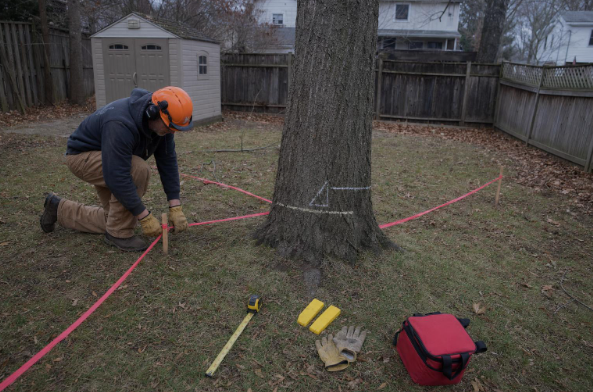
As the tree begins to move, walk down one cleared escape route at a 45-degree angle. NIOSH advises keeping bystanders two times the tree’s height away when felling a standing tree.
If anything feels off, stop. A binding saw, shifting wind, twisting trunk, or unexpected crack is a reason to step back.
After the Tree Is Down: Cleanup and Stump Choices
A downed tree still deserves respect. NIOSH recommends keeping bystanders 30 feet away while cutting a tree on the ground because logs can roll and limbs can spring loose.
When bucking, which means cutting the trunk into sections, watch for wood under tension. A pinned limb can whip when released, and a trunk can pinch the saw as the cut opens or closes. Stand to the side rather than directly over the wood.
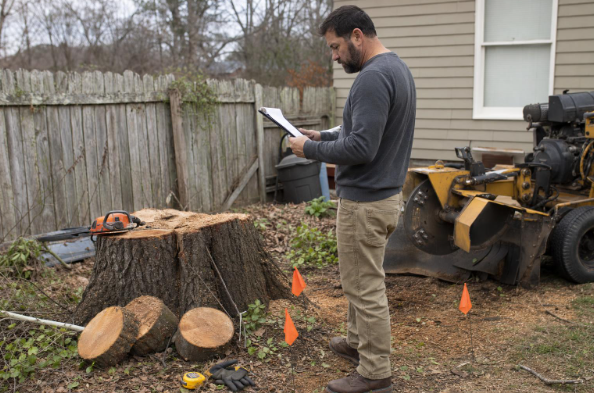
For the stump, you generally have two paths: grinding it below grade or removing it entirely, roots and all. Grinding is faster and less disruptive; full removal clears space for replanting, building, or major landscaping. If you will disturb the ground, call 811 first.
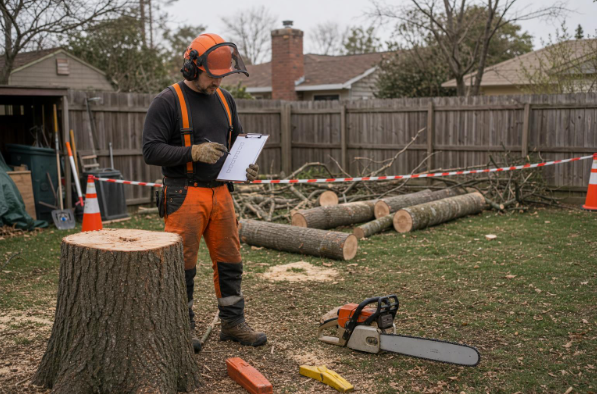
Be mindful of wildlife and local rules as you clean up. Move debris safely, avoid nests, and dispose of branches according to your area’s guidelines.
Local Rules Snapshot
Rules vary widely, and a quick check up front is far cheaper than a fine later. In the U.S., review city or county tree ordinances and homeowners association requirements before you start. Some protected trees cannot be removed without approval, even on your own property.
In Victoria, many councils require permits for tree work, and statewide canopy-tree provisions took effect on 15 September 2025. A local arborist, including Tree Range Arborists for Melbourne’s eastern suburbs and the Dandenong Ranges, can help identify what to confirm with council before cutting begins.
Qualified arborists also work under safety standards such as ANSI Z133, which covers tree-care operations. That is one reason complicated, hazardous, or tightly constrained jobs are worth handing off to people with the right training and equipment.
Working With the Tree, Not Against It
A problem tree does not have to become a crisis. Run a calm checklist, use proper gear, respect distance rules, and stay honest about what is beyond your skill level before the first cut.
Small, healthy trees on open ground may be manageable for a careful homeowner. Leaning trees, decayed trees, trees near wires, and trees that may require a permit should be assessed by trained professionals. For readers in Melbourne’s eastern suburbs and the Dandenong Ranges, a qualified crew such as Tree Range Arborists may be the better choice for harder situations.