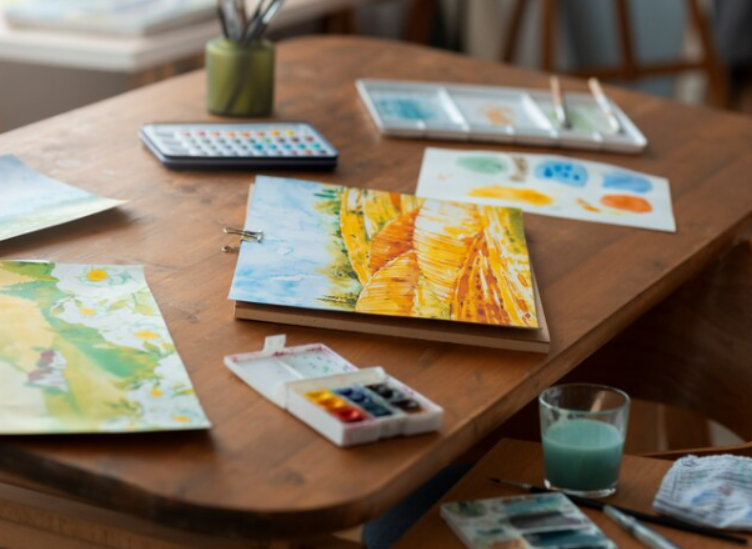
Picture a covered dining table, children bent over small canvases and glowing orange paint running across each one in a different direction. One child is painting a planet with rings, another has decided the planet is a cat and a third is pleased with a picture made from two colours.
A neon painting party leaves room for all those choices. Plan the space, test the materials and leave time for breaks and packing up wet artwork. Glowing colours add to the occasion, but every activity below also works under ordinary light, so guests can choose where they feel comfortable.
Key Takeaways
- Let the birthday child pick a theme, but treat it as an invitation rather than an assignment for guests.
- Compare a home party and a hosted studio by space, preparation, supervision and the full confirmed cost.
- Use artwork paint only on artwork, and choose a party black light, never germicidal UVC equipment.
- Build handwashing breaks around snacks and cake, and keep an ordinarily lit corner for quieter guests.
- Label every painting and plan trays for carrying wet work home.
Start With the Birthday Child’s Kind of Fun
Before buying brushes, ask the birthday child what kind of painting sounds fun. Some children want a darkened room and glowing colours, while others would prefer to sit by a window with a big brush.
Let the child choose. Offer a short menu: a neon galaxy of planets and swirls, an imaginary garden or free-form colour with no subject. Keep the choice open to every guest, so a child who wants to paint a racing car under the galaxy theme can do that. The US National Association for the Education of Young Children (NAEYC) identifies child choice as a feature of process-focused art.
Make participation flexible. Some children may want to watch before joining, and others may decide not to paint. Keep a station under ordinary room light for anyone who finds a darkened space unsettling, and set a chair slightly apart for a child who prefers to watch first.
Tell guests what to expect. Include a short note for caregivers with the invitation. Ask about paint sensitivities, since Hong Kong’s Consumer Council advises checking possible allergens when choosing fingerpaints, and ask about food needs, comfort with low lighting and whether an adult plans to stay. Suggest an old T-shirt, because clothing may get marked.
Choose a Place That Fits Your Guest List
Painting at home gives you control over the setup and pace, while a hosted studio can reduce preparation, depending on what’s included. Compare the space, the work involved and the full cost before choosing.
| Question | At home | Hosted studio |
| Space | Check seating, elbow room and clear walkways before setting the guest limit | Ask about usable painting space, not only total floor area |
| Preparation | You buy, test, cover, set up and clear away | Confirm which setup and cleanup tasks the venue handles |
| Supplies | You choose and check the materials | Ask what’s included and what costs extra |
| Supervision | Assign tasks to parents and caregivers | Agree which tasks caregivers handle and which staff cover |
| Total cost | Materials, coverings, food and any extras | Quoted activity price, minimums, adult fees and extras |
Work out the full cost. A per-child charge depends on how many children you pay for, and a minimum booking may mean paying for more children than attend. Adult charges may be separate, so list every confirmed charge before comparing totals.
For a hosted paint party for kids in Hong Kong, Sketch Studios offers private weekday sessions with two hours of neon painting from HK300perchildandathree-participantminimum,MondaytoFriday.Anoptionaladd-oncostsanextraHK50 per child, and adult add-on pricing is HK500forupto10adultsorHK1,000 for up to 20. Ask for a written quote covering your date, attendance, inclusions, deposit and cancellation terms.
Before you book. Confirm the practical details as well as the price:
- How do we get in with a cake and a stroller, and is there a lift?
- Is there a normally lit corner for children who prefer it?
- Can we bring a cake, and where will it be stored and cut?
- Who cleans up, and is cleanup included?
- What happens to our payment if a child is ill or we change the date?
- If outdoor space is included, what’s the bad-weather plan?
- Is the activity guided by staff, or do children paint independently?
Set Up a Comfortable Neon Painting Space
A clear table, enough elbow room and a visible route to the sink make the space easier to use. Keep supplies within reach without crowding each child’s painting area.
Materials. Adapt this home-party list to your guest count, or confirm what a venue supplies before buying anything:
- Clearly labelled artwork paint suitable for the children’s ages, with instructions and allergen information checked
- A painting surface for each guest, such as canvas board, thick card or heavy paper, plus spares
- Brushes and sponges in different sizes
- Palettes or paper plates for mixing
- Wide-based rinse containers, filled halfway
- Table and floor coverings secured against slipping
- Name labels for the back of each surface
- Trays or rigid backing for carrying wet work home
Keep artwork paint on artwork. The US Food and Drug Administration (FDA) advises against decorating the face with materials that aren’t intended for skin, and a non-toxic label on craft paint doesn’t make it face paint. If you offer skin painting, use a product expressly intended for that use and keep it optional and separate from the painting table.
Lighting. Test the actual paint on your chosen surface under the lamp you plan to use. Use a decorative black light intended for party or display use, and never use germicidal UVC equipment, which the FDA warns can cause severe skin burns and eye injuries. Keep walkways and the rinse-water area visible, and keep an ordinarily lit station throughout.
Surfaces and clothing. Put food on a separate table and clear unnecessary items from the painting area. Check what the paint’s instructions say about skin, hair and fabric, since washability claims rarely extend to clothing, and keep cloths and handwashing within easy reach.
Offer Three Playful Ways to Paint
The activities below are adaptable ideas for a home party. NAEYC’s process-art guidance notes that expensive materials aren’t necessary, so paper plates, cotton buds and kitchen sponges can all serve as painting tools.
A neon imaginary galaxy. Invite children to paint a sky nobody has seen. Give each child a dark surface, three or four bright paints, cotton buds, a sponge and a wide brush, then demonstrate a sponge swirl for a nebula and a cotton-bud dot for a star.
A name or initial canvas. Suggest a name, initial or word the child likes, and pencil an outline for anyone who asks. A single large initial filled with dabs of colour gives an easy starting point, and children can add stripes, flowers or letters that turn into animals.
A shared celebration banner. Tape a long strip of paper to a second table and mark out squares with masking tape. Offer a square to anyone who wants one and suggest painting a wish for the birthday child, then let the birthday child keep the banner once it’s dry.
Demonstrate a technique, then give children time to try it their own way. Keep resin, spray paint, paint fights and loose glitter out of the plan, and let children decline any activity.
Give the Celebration a Gentle Rhythm
Use this two-hour home-party timetable as a starting point, then adjust it to the group. Leave the second painting round optional so children can stop when they’ve had enough.
| Minutes | What happens |
| 0 to 10 | Arrival, names on the back of painting surfaces, aprons on |
| 10 to 20 | Short demonstration of one or two techniques |
| 20 to 55 | Main painting activity |
| 55 to 65 | Wash hands, eat a snack away from the paint table, then wash again |
| 65 to 85 | Optional further painting or a second activity |
| 85 to 100 | Wash hands, have cake, then wash again |
| 100 to 110 | Optional mini-gallery |
| 110 to 120 | Artwork handover and departure |
Transition warnings. Give a five-minute and a two-minute warning before changing activities. The US Centers for Disease Control and Prevention lists before and after eating as key times for handwashing, so allow enough time for everyone to use soap and clean running water.
Quiet alternatives. Keep a corner with cushions, picture books and the ordinarily lit painting station. Children who have finished can move there without being asked to complete another picture.
A backup activity. If the paint runs out, the lamp fails or the group finishes early, have plain paper and crayons ready, or read a story aloud while the artwork dries.
Assign adult tasks by name, such as rinse-water refills, arrivals, handwashing and food. At a hosted venue, agree in advance which responsibilities staff cover and which stay with caregivers.
Send Every Little Artist Home With a Keepsake
Prepare for artwork collection before guests arrive. Names, a drying area and suitable trays make it easier to hand over wet paintings while caregivers collect coats and say goodbye.
Label and dry. Write each child’s name on the reverse of their surface before painting starts. Set aside a protected drying area away from walkways and snacks, and follow the paint and surface instructions rather than assuming everything will dry before departure.
Pack for the journey. Trays or rigid backing help keep wet artwork flat on the way home. Remind caregivers that paint may mark upholstery as well as clothing.
Keep the mini-gallery voluntary. Lay the pieces along the drying area and invite anyone who wants to look. Comments can be specific without ranking the paintings, such as noticing a mixed shade of green or a story painted across the banner.
The painting itself can serve as the party favour, and a photo of the gallery sent to caregivers afterwards is a simple extra. Small, playful rituals like this are a big part of merriment making, long after the paint has dried.
Conclusion
A neon painting party works best when it leaves room for every child’s way of joining in. Let the birthday child set the mood, keep a normally lit corner and treat each theme as a starting point rather than a template.
Whether you paint at home or book a studio, confirm the full cost, test the materials and plan handwashing breaks around food. Then label every canvas, line up the trays and let the artwork go home glowing.
FAQ
Is craft paint safe to use as face paint?
No. The FDA advises against decorating the face with materials that aren’t intended for skin, and a non-toxic label doesn’t make craft paint suitable. Use a product made for skin, and keep it optional.
What kind of black light should I use?
Use a decorative black light intended for party or display use, and follow the manufacturer’s instructions. Never use germicidal UVC lamps, which the FDA warns can cause skin burns and eye injuries.
How long should a children’s painting party last?
About two hours works well for many groups, with a main painting session, an optional second round and breaks for snacks, cake and handwashing.
What if a child doesn’t want to paint in the dark?
Keep an ordinarily lit painting station and a quiet corner available throughout. Children can watch first, paint in normal light or skip the activity altogether.