What Lake Nona Taught Me About Caring for Family
I moved to Lake Nona three years ago thinking I’d landed in a planned community with manicured lawns and efficient traffic patterns.
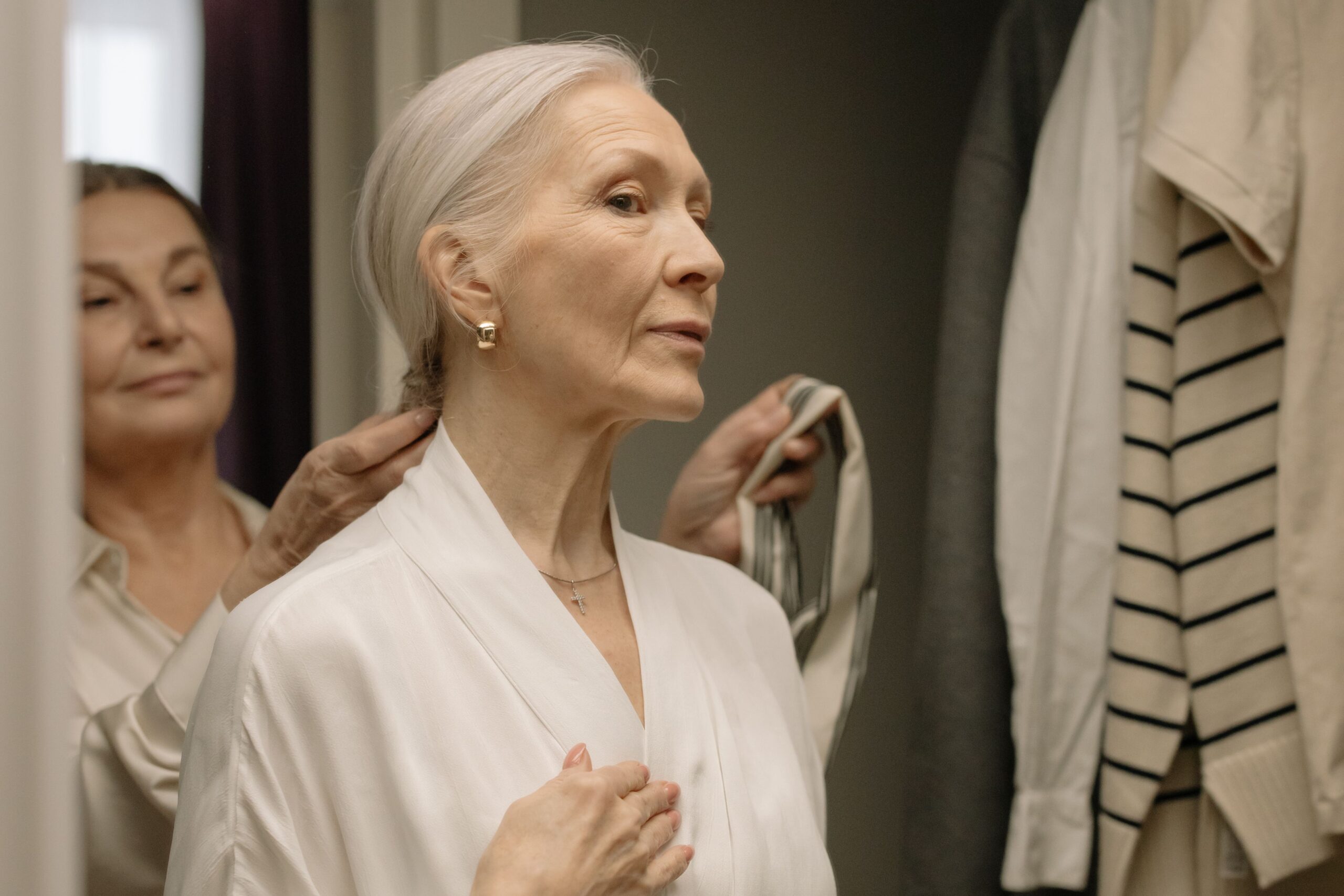
Photo by cottonbro studio: https://www.pexels.com/photo/photo-of-an-elderly-woman-getting-her-hair-fixed-6923501/
What I found instead was a living classroom on caregiving, connection, and the kind of love that asks more of us than we think we can give.
The curriculum started the week we unpacked boxes. My mother needed surgery. Not the minor kind, but the kind that changes the household rhythm and forces you to rethink who’s holding whom together. Between follow-up appointments and prescription pickups, I started noticing things about this place I’d barely settled into.
The Architecture of Intergenerational Support
Lake Nona isn’t just a neighborhood. It’s structured around the concept that different generations belong in the same ecosystem, not tucked away from each other in age-segregated pockets.
Research confirms what I watched unfold on my street: children in intergenerational environments develop stronger social skills, greater resilience, and reduced ageist stereotypes, while older adults benefit from opportunities to nurture and mentor, and all age groups experience reduced isolation due to increased social interaction.
I watched my neighbor’s teenage son help an elderly couple carry groceries every Thursday. Not because of community service hours, but because they’d developed an actual relationship.
Studies show children benefit greatly from intergenerational connections, needing four to six involved adults in their lives to thrive, with such interactions improving self-esteem, emotional and social skills, and academic performance. The structure of Lake Nona made those connections inevitable rather than optional.
My mother’s recovery became easier because the community had already normalized asking for help. The physical design of walkable paths and mindful living spaces created natural opportunities for interaction. Nobody disappeared behind garage doors. Visibility translated to accountability, and accountability turned into genuine care.
Finding Professional Support When Family Isn’t Enough
Here’s what no one tells you about caregiving until you’re in it: love doesn’t magically grant you medical knowledge or endless patience. There were days I wanted to scream into a pillow because I couldn’t figure out wound care instructions or decode insurance jargon. I was exhausted in ways that sleep couldn’t fix.
That’s when I started learning about the Senior Helpers home care services in Lake Nona. They offered specialized support for families navigating complex care needs, including Alzheimer’s care and assistance with daily living activities. The presence of these services in the area meant I wasn’t alone in recognizing that family caregivers need backup, not judgment.
Roughly 38% of family caregivers report their situation as highly stressful, with 45% of those caring for a spouse or parent experiencing stress, and 52% of co-resident caregivers reporting stress compared to 34% of non-resident caregivers. I was definitely in that statistical majority. Acknowledging that didn’t make me a bad daughter. It made me human.
What Social Connection Actually Means for Health
The Surgeon General wasn’t kidding when he called loneliness an epidemic.
Studies show that loneliness and social isolation are associated with higher risks for health problems such as heart disease, depression, and cognitive decline. Watching my mother navigate recovery, I saw how quickly isolation could creep in. Doctor’s orders to rest became an excuse to withdraw. Pain made her irritable, which made socializing feel like work.
Lake Nona’s design fought that tendency.
Robust evidence documents social connection factors as independent predictors of mental and physical health, with social connection being one of the strongest predictors of survival and linked to higher well-being and longer lifespan. The community walking trails weren’t just aesthetic. They were lifelines. My mother started joining a morning group that moved at a slower pace. No one rushed her. No one made her feel like a burden.
I learned that caregiver mental health resources weren’t luxuries but necessities. The NIH has published extensive research on how social disconnection impacts physical health outcomes. Reading those studies validated what I felt in my bones: I needed community as much as my mother did.
The trails also connected to parks where intergenerational activities happened organically. Kids played near benches where older adults sat. Conversations started. Relationships formed. My mother began recognizing faces, then names, then stories. She had a social calendar again, which took pressure off me to be her sole source of connection.
The Uncomfortable Lessons No One Mentions
Caregiving reveals things about yourself you’d rather not see. I discovered I have a martyrdom streak. I’d refuse help, then resent feeling unsupported. Classic self-sabotage. Lake Nona forced me to confront that pattern because the infrastructure kept offering solutions I had to actively reject if I wanted to stay miserable.
Being socially isolated or feeling lonely can put physical and mental health at risk, with lonely or isolated adults tending to be less healthy, experiencing longer hospital stays, more hospital readmissions, and higher mortality rates than those with meaningful social connections.
I realized I was isolating myself by refusing to admit I needed the same support systems I was trying to arrange for my mother.
The community had resources I initially ignored out of pride. Support groups. Caregiver workshops. Stress management programs backed by actual research. Once I stopped treating asking for help as failure, everything shifted. I met other people navigating similar challenges. We traded practical advice and dark humor in equal measure.
I also learned that caregiving doesn’t erase the need for boundaries. My mother and I had to renegotiate our relationship. She’d raised me to be independent, and now that independence meant making medical decisions on her behalf sometimes. Role reversal is a strange, tender, infuriating dance. Lake Nona gave us space to figure it out without the added stress of isolation or inadequate resources.
What Stays With Me
Lake Nona didn’t make caregiving easy. Nothing can. But it taught me that infrastructure matters. Community design matters. Access to professional support and social connection isn’t about being weak or failing at family responsibility. It’s about creating conditions where love can actually function without destroying the people doing the loving.
I’m still figuring this out. My mother’s health has improved, but caregiving doesn’t have a neat ending. What’s different now is that I understand I’m not meant to do this alone. Neither is she. The lesson Lake Nona drilled into me is that care works best when it’s structural, not just emotional. When the neighborhood paths lead somewhere. When services exist that acknowledge family caregivers are holding up a system that would collapse without them.
The most radical thing this community taught me is that asking for help isn’t a character flaw. It’s how humans have survived across generations. We need each other, and designing spaces that make connection possible instead of optional might be the most practical form of love there is.