
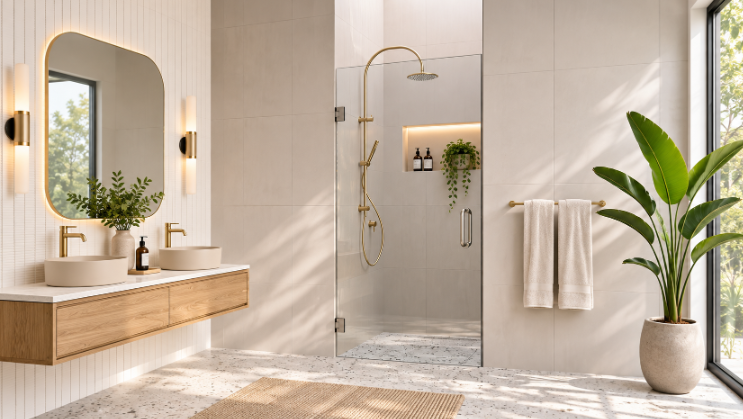
A modern bathroom is about more than attractive tile, stylish fixtures, and carefully selected lighting. The shower enclosure also plays an important role in how the space looks and functions. Among the available shower enclosure styles, pivot frameless shower door are popular because they provide a clean appearance, convenient access, and a relatively simple opening mechanism.
Unlike sliding shower doors that move along a track, pivot-operated designs rotate around fixed points near the top and bottom of the glass panel. This creates a traditional swinging-door experience while maintaining the open appearance associated with frameless glass enclosures.
However, choosing the right configuration requires more than considering appearance. Door dimensions, glass thickness, hinge capacity, wall alignment, available clearance, and water containment all affect the final installation.
Understanding these factors helps homeowners, contractors, and bathroom designers make informed decisions before selecting or installing a glass shower enclosure.
What Is a Pivot Frameless Shower Door?
A pivot frameless shower door is a glass shower enclosure door that rotates around a pivot mechanism rather than relying on conventional hinges attached along its vertical edge.
The pivot hardware typically connects near the upper and lower corners of the door. The bottom pivot supports much of the door’s weight, while the upper pivot helps maintain alignment and control movement.
Unlike traditional framed shower enclosures, frameless designs use exposed glass edges and minimal visible metal framing. Specialized hinges, brackets, seals, and handles provide the necessary support and functionality.
Most installations use tempered safety glass because it is designed for architectural applications where impact resistance and safer breakage characteristics are important.
Depending on the hardware system, the door may swing inward, outward, or in both directions. The actual movement depends on the pivot mechanism and manufacturer specifications.
How Does a Pivot Shower Door Mechanism Work?
The pivot mechanism is the most important functional component of this type of shower enclosure. It consists of hardware that establishes a fixed rotation point for the glass panel. When someone pushes or pulls the handle, the door rotates around this point instead of sliding horizontally.
Top and Bottom Pivot Hardware
The bottom pivot is generally responsible for carrying a significant portion of the glass door’s weight. It attaches to a shower curb, floor, or another approved supporting structure.
The top pivot connects to a wall-mounted bracket, ceiling support, header, or adjacent glass panel, depending on the enclosure design.
According to the National Glass Association’s Frameless Shower Enclosure Design and Installation Manual, pivot hardware configurations must account for suitable structural support, alignment, and the manufacturer’s door-size and weight limitations.
glass.org
Self-Centering and Swing Control
Some pivot hinges feature spring-loaded or self-centering mechanisms. These help guide the door toward its closed position after opening.
Other systems provide different levels of swing control, depending on their design.
Not every pivot hinge works identically. Before selecting hardware, installers should verify its permitted swing direction, closing mechanism, glass compatibility, and weight capacity.
Pivot Hinges vs. Side-Mount Hinges: What’s the Difference?
Both pivot hinges and side-mount hinges can support frameless glass shower doors, but their construction and installation requirements differ.
Understanding these differences is particularly important when planning a bathroom renovation or replacing an existing shower enclosure.
Pivot Hinges
Pivot hinges attach near the upper and lower portions of the glass door. They establish a rotation point that allows the panel to swing open and closed.
One advantage is their relatively discreet appearance. Because the hardware is concentrated around the pivot locations, the vertical edge of the door can remain visually clean.
Pivot systems can also work well in certain configurations involving a fixed glass panel or overhead support.
However, the floor or curb must provide suitable structural support. The installer must also account for the door’s swing path and the available opening clearance.
Side-Mount Hinges
Side-mount hinges operate more like conventional residential door hinges.
They attach along the vertical edge of the glass panel and connect to a wall or another fixed glass panel. This arrangement distributes the door’s support through the hinge locations along its side.
Side-mount hinges are often suitable when a wall provides the required structural support and a conventional hinged configuration is preferred.
Some systems also accommodate sealing components around the hinge area, which can help improve water containment.
Which Hinge System Is Better?
Neither configuration is universally better. Pivot hardware may be appropriate when the design calls for top-and-bottom support and a particular frameless appearance. Side-mount hinges may be more practical when the door needs conventional wall-mounted support.
The enclosure layout, glass dimensions, structural conditions, and water-control requirements should determine the selection rather than appearance alone.
Common Glass Thicknesses for Frameless Shower Doors
Glass thickness affects the weight, stability, appearance, and hardware requirements of a shower door. Selecting the correct thickness is important because the hinges and supporting structures must be compatible with the finished glass panel.
Several thickness options appear in the U.S. shower door market.
5/16-Inch Tempered Glass
5/16-inch glass is commonly found in frameless shower door systems. It offers a balance between visual appearance, weight, and structural requirements.
It may be suitable for certain standard-size doors when the selected hardware is specifically designed to support its dimensions and weight.
3/8-Inch Tempered Glass
3/8-inch glass is another widely used option for frameless shower enclosures.
Its substantial appearance makes it popular in contemporary bathroom designs. However, thicker glass also weighs more, so the supporting hinges, anchors, and mounting surfaces must be rated accordingly.
1/2-Inch Tempered Glass
Some specialized shower enclosure configurations use 1/2-inch glass. This thickness creates a substantial glass panel but also increases the overall door weight.
It should only be considered when the complete hardware system and supporting structure are engineered for that application.
Important: Glass thickness should never be selected independently of door width, height, weight, and hinge specifications. A thicker panel does not automatically make an enclosure safer or better.
Standard Shower Door Sizes and Measurements
Choosing the correct dimensions is one of the most important steps in planning a glass shower enclosure.
Although manufacturers offer standard-size shower doors, actual bathroom openings can vary significantly. Tile thickness, wall alignment, curb dimensions, and the position of fixed glass panels all influence the required measurements.
Common retail configurations include doors approximately 30–36 inches wide and around 72 inches tall. Larger configurations are also available, depending on the manufacturer and enclosure design.
These are examples of market dimensions, not universal installation standards.
Measuring Shower Door Width
Width measurements should be taken across the actual finished shower opening.
For an alcove shower, measure the distance between the finished walls at multiple heights. For an enclosure with a fixed glass panel, measure the intended door opening separately.
Walls are not always perfectly parallel, particularly in older bathrooms. Measuring at the top, middle, and bottom can help identify differences that affect glass fabrication.
Measuring Shower Door Height
Measure from the finished curb or shower floor to the intended top edge of the door.
The correct height depends on the enclosure design, ceiling clearance, ventilation requirements, and hardware configuration.
A door that is too tall may interfere with overhead structures or require different mounting hardware. A door that is too short may provide less effective water containment.
Allowing for Swing Clearance
A swinging glass door needs enough unobstructed space to open safely.
Consider the position of the bathroom vanity, toilet, towel bars, shower controls, and nearby walls. Also determine whether the door can open inward, outward, or in both directions.
The pivot location matters because the actual walk-through opening can be smaller than the overall opening width.
For example, a door that appears wide enough on paper may provide a narrower usable entrance once the pivot position and handle clearance are considered.
Important Design Considerations Before Installation
A frameless glass enclosure should be planned as a complete system rather than as an individual glass door. Several installation factors influence its long-term performance.
1. Wall and Floor Support
The wall, curb, floor, and other mounting surfaces must provide suitable support for the selected hardware.
A glass door is considerably heavier than many homeowners expect. Attaching hinges to an unsuitable surface can result in loose hardware, alignment problems, or damage.
Installers should identify appropriate structural backing before drilling or mounting components.
2. Wall Alignment and Plumb
A perfectly vertical wall is not guaranteed in every bathroom.
If a wall is out of plumb, the glass door may not close correctly or maintain consistent gaps along its edges.
Professional measurements should account for these variations before the glass is fabricated.
3. Fixed Glass Panel Compatibility
Some shower layouts combine a swinging door with one or more stationary glass panels.
The fixed panel may provide additional support or serve as the mounting location for specific hardware systems.
However, glass-to-glass connections require compatible clamps, brackets, and properly fabricated glass openings.
4. Handle and Hardware Placement
Handles should be positioned where users can reach them comfortably without interfering with nearby fixtures.
Hardware finishes also influence the overall appearance of the enclosure. Popular choices include chrome, brushed nickel, matte black, and brushed gold.
The finish should be compatible with the bathroom’s other fixtures and accessories.
How Well Do Pivot Shower Doors Prevent Leaks?
One common concern with frameless shower enclosures is water escaping through the gaps around the glass.
Unlike fully framed shower doors, frameless systems generally have more exposed openings. This means their water containment depends on proper design, installation, and the use of appropriate seals.
Bottom Sweeps and Door Seals
A bottom sweep is a flexible sealing component attached along the lower edge of the glass door.
It helps direct water back into the shower area and reduces splashing through the bottom gap.
Other sealing components may include:
- Vertical clear vinyl seals between glass panels.
- Magnetic closing seals where the system supports them.
- Wall-mounted seals along the door edge.
- Water deflectors for specific enclosure configurations.
Not every seal works with every pivot system. The hardware and seal design must be compatible with the glass thickness and door movement.
Shower Curb and Floor Slope
The shower curb and floor slope also play important roles in water management.
The shower floor should direct water toward the drain rather than allowing it to collect near the entrance.
A properly designed curb helps contain water within the shower area. Curbless showers require particularly careful planning because they do not have the same physical barrier.
Even a well-installed glass enclosure cannot compensate for an incorrectly sloped shower floor or poorly designed drainage system.
Is a Pivot Glass Door Suitable for Every Bathroom?
No. The available space and bathroom configuration determine whether this style is practical.
A pivot-operated glass door can work well in bathrooms with enough room for the door to swing without hitting nearby fixtures.
However, smaller bathrooms may have limited clearance. In those situations, a sliding shower door or another suitable enclosure design may be more practical.
Small Bathrooms
A compact bathroom requires careful planning because the swinging door can interfere with the vanity, toilet, or walking area.
Measure the complete swing path before choosing the door configuration.
Large Walk-In Showers
Larger walk-in showers provide more flexibility for door placement and fixed glass panels.
A combination of stationary glass and a swinging entrance can create a spacious, open appearance without requiring a full metal frame.
Corner Shower Enclosures
Corner showers may use pivot doors as part of a larger glass enclosure.
The position of adjoining walls, available entrance width, and supporting hardware determine whether this arrangement is suitable.
Curbless Showers
Curbless showers can accommodate certain pivot door systems, but the design requires careful attention to floor slope, drainage, door clearance, and water containment.
A compatible pivot assembly and appropriate installation details are essential.
Installation Process: What Should Homeowners Expect?
Installing a frameless glass shower enclosure requires accurate measurements, compatible hardware, and careful handling of heavy glass.
Although some manufacturers offer DIY installation kits, larger or custom glass installations are generally better handled by experienced professionals. The typical installation process involves several stages.
Step 1: Site Inspection and Measurement
The installer examines the shower opening, checks wall alignment, identifies mounting locations, and determines the appropriate door configuration.
Step 2: Glass Fabrication
Once measurements are finalized, the glass is cut, polished, and tempered according to the required specifications.
Tempered glass cannot be cut or drilled after the tempering process. Therefore, all hardware holes, notches, and edge treatments must be completed beforehand.
Step 3: Hardware Installation
The installer positions the bottom and top pivot components, ensuring they are properly aligned and securely attached to suitable structural support.
Step 4: Glass Door Placement
The glass panel is carefully positioned and connected to the pivot hardware. Proper handling is essential because glass edges can be vulnerable to impact damage.
Step 5: Adjustment and Testing
The installer checks the door’s swing, closing position, alignment, handle operation, and clearance from surrounding fixtures.
Finally, appropriate seals and water deflectors are installed where required.
Safety Requirements for Tempered Shower Glass
Safety is an essential consideration when selecting glass for a bathroom enclosure. Shower doors and enclosures are subject to U.S. safety glazing requirements. The Consumer Product Safety Commission (CPSC) identifies shower doors and bathtub enclosures among the architectural products covered by its mandatory glazing safety standard.
Tempered glass is commonly used because its manufacturing process changes its internal stress characteristics. When it breaks, it is designed to fragment into relatively small pieces rather than large, sharp shards. However, tempered glass is not unbreakable.
It can still break because of edge damage, improper installation, hardware stress, or other physical conditions.
Homeowners should pay attention to the following safety considerations:
- Confirm that the glass meets applicable safety glazing requirements.
- Avoid striking or chipping exposed glass edges.
- Ensure that mounting hardware is compatible with the glass.
- Never modify tempered glass by drilling, cutting, or grinding after fabrication.
- Have damaged or poorly aligned hardware inspected promptly.
The visible manufacturer’s safety glazing mark is also important. Applicable building codes establish requirements for safety glazing identification and testing. Local requirements should always be checked before installation.
Cleaning and Maintaining a Frameless Glass Shower Door
Regular maintenance helps preserve the appearance and functionality of a glass shower enclosure. Soap residue, mineral deposits, and hard-water stains can gradually accumulate on glass surfaces, particularly in bathrooms with frequent use. A simple cleaning routine can prevent heavy buildup.
Daily Cleaning
Use a soft squeegee after showering to remove excess water from the glass.
This reduces the amount of mineral residue left behind as water evaporates.
Weekly Cleaning
Clean the glass with a suitable nonabrasive glass cleaner and a microfiber cloth.
Avoid harsh chemicals, abrasive pads, or cleaning products that could damage protective coatings or metal hardware finishes.
Hardware Inspection
Periodically inspect the hinges, brackets, handles, and mounting components.
Look for loose screws, unusual movement, corrosion, or changes in the door’s alignment.
If the glass begins rubbing against another surface or the door no longer closes properly, stop using it if there is a safety concern and arrange an inspection.
Seal Replacement
Flexible vinyl seals can become discolored, brittle, or worn over time. Replacing damaged seals helps maintain water containment and prevents unnecessary splashing outside the shower.
Final Thoughts
Pivot-operated glass shower enclosures combine the clean appearance of frameless glass with the convenience of a swinging entrance. Their functionality depends on much more than the glass panel itself.
Proper measurements, suitable glass thickness, compatible pivot hardware, structural support, and sufficient swing clearance all contribute to a successful installation.
For homeowners planning a bathroom renovation, understanding these details before fabrication can prevent unnecessary adjustments, water containment problems, and hardware failures.
Ultimately, the best shower enclosure is not simply the one with the most attractive appearance. It is the one that fits the bathroom’s layout, meets applicable safety requirements, and performs reliably under everyday use.
Open kitchens and shared tables are trends that have moved from restaurants into homes. To see what popular restaurants in Germany offer and charge, take a look at speisekarte preises.