
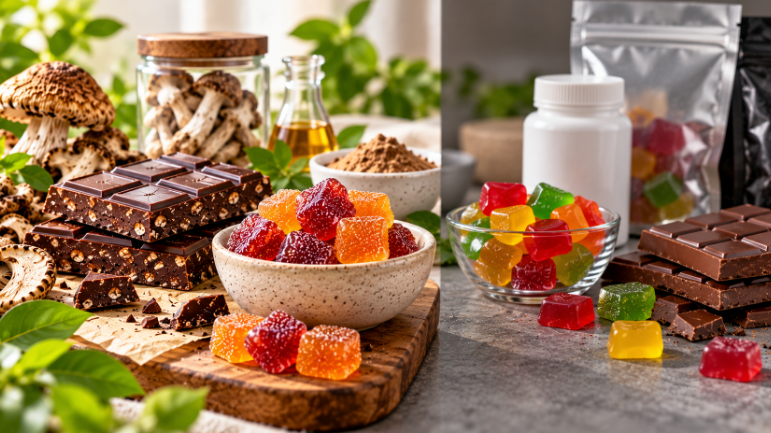
What Separates Quality Shroom Gummies and Bars from the Rest
The growing interest in mushroom-infused edibles has introduced consumers to a wide variety of chocolate bars, gummies, and specialty confectionery products. While many of these products share similar packaging and flavors, their ingredients, manufacturing processes, and quality standards can differ significantly.
Some mushroom edibles contain non-psychoactive mushroom extracts, while others are marketed as containing psychoactive compounds. This makes it important to look beyond attractive packaging and understand what actually goes into each product.
When evaluating shroom gummies and chocolate bars, factors such as ingredient transparency, production consistency, laboratory testing, and responsible labeling deserve careful attention.
But what truly separates a quality mushroom edible from a poorly documented product?
This guide explores the essential characteristics of mushroom chocolate bars and gummies, explains common quality concerns, and outlines what consumers should know when comparing different formulations.
The Foundations of Quality Mushroom Edibles
A well-made mushroom edible should meet appropriate standards for ingredient identification, food manufacturing, and product transparency.
The presence of mushroom ingredients alone does not establish quality.
Clearly Identified Mushroom Ingredients
Mushroom species and extracts should be accurately identified.
Broad descriptions such as “premium mushroom blend” may sound appealing but provide limited information about the actual formulation.
Appropriate Food Manufacturing Practices
Chocolate bars and gummies require careful ingredient handling, sanitation, and production controls.
Manufacturers should take reasonable measures to prevent contamination and maintain consistency.
Honest Product Descriptions
Product descriptions should accurately explain the ingredients and avoid making unsupported claims about safety, potency, or health benefits.
Transparent information is more meaningful than promotional language.
Why Ingredient Sourcing Makes a Difference
The quality of mushroom-derived ingredients can depend on several factors, including cultivation conditions, harvesting, processing, and storage.
Different mushroom species also have different chemical compositions.
Mushroom Powders and Extracts
Mushroom powders are generally made from processed mushroom material.
Extracts may involve additional manufacturing steps intended to isolate or concentrate selected substances.
Neither format is automatically superior.
The important considerations are the identity, purity, and intended use of the ingredient.
Raw Material Verification
Responsible manufacturers should verify that incoming materials match their specifications.
This can include identity checks and appropriate screening for contaminants.
Storage Before Manufacturing
Mushroom ingredients may be affected by moisture, heat, and unsuitable storage conditions.
Proper handling helps protect material quality before production begins.
Mushroom Chocolate Bars: What Defines a Better Formulation?
Chocolate-based mushroom edibles combine cocoa ingredients with additional mushroom-derived materials.
Their quality depends on both the chocolate formulation and the added ingredients.
Chocolate Texture and Composition
A well-manufactured chocolate bar should have characteristics appropriate to its formulation, including consistent texture and flavor.
Cocoa content, sweeteners, milk ingredients, and processing conditions can influence the finished product.
Ingredient Distribution
When manufacturers add concentrated ingredients to chocolate, appropriate mixing and production controls become important.
Equal-sized chocolate squares do not automatically guarantee identical quantities of an added compound.
Accurate Product Information
Readers researching a Boom shroom chocolate bar can examine its listed ingredients, package details, and any available supporting documentation.
The product name itself does not verify the identity or concentration of active ingredients.
Reliable quality assessment requires more than appearance or branding.
What Makes Mushroom Gummies Different?
Gummies use a different manufacturing process from chocolate bars.
They typically combine sweeteners, flavorings, and gelling agents with additional ingredients.
These differences influence their texture, storage characteristics, and manufacturing requirements.
Texture and Gelling Ingredients
Gummies may use gelatin or plant-derived pectin to create a chewy consistency.
The selected ingredients affect firmness, elasticity, and dietary suitability.
Flavor Consistency
Fruit-inspired flavors are common in gummy formulations.
However, pleasant taste does not indicate the presence, absence, or concentration of psychoactive compounds.
Manufacturing Uniformity
Consistent gummy size and appearance can indicate attention to physical production standards, but they do not independently prove that active ingredients are evenly distributed.
Understanding Product Listings
Consumers comparing shroom gummies should examine the available ingredient information, quality documentation, and safety disclosures.
The gummy format does not automatically make a product more predictable or suitable for first-time consumers.
Chocolate Bars vs. Gummies: Comparing Quality Characteristics
Both edible formats have advantages and limitations from a food manufacturing perspective.
| Quality factor | Mushroom chocolate bars | Mushroom gummies |
| Main food base | Cocoa and chocolate ingredients | Sweeteners and gelling agents |
| Typical texture | Firm, smooth, or creamy | Soft and chewy |
| Common flavor profile | Cocoa-based | Fruit-inspired |
| Heat sensitivity | May melt | May soften or become sticky |
| Ingredient consistency | Requires manufacturing controls | Requires manufacturing controls |
| Allergen concerns | May contain milk, soy, or nuts | May contain gelatin or other allergens |
| Quality verification | Relevant testing and documentation | Relevant testing and documentation |
Neither format should be considered inherently safer or higher quality.
Actual ingredient composition, manufacturing practices, and testing are more important than product shape.
The Importance of Laboratory Testing for Mushroom Edibles
Independent laboratory analysis can provide information about selected aspects of product composition.
Testing is especially important when products are marketed as containing active mushroom compounds.
Identity and Composition Testing
Appropriate analytical methods can help identify specific substances and measure their concentrations.
However, testing must be designed to detect the relevant compounds.
Screening for Contaminants
Depending on the formulation, laboratory analysis may examine microbial contamination, heavy metals, or other unwanted substances.
Batch-Specific Documentation
A Certificate of Analysis, or COA, may identify the tested sample, laboratory, testing date, and analytical results.
Documentation connected to a particular batch is generally more informative than an unsupported statement that a product is “lab tested.”
Why Testing Claims Should Be Examined Carefully
Laboratory testing does not automatically guarantee safety.
A report may cover only a limited selection of substances.
In a U.S. FDA investigation of certain mushroom-themed chocolates and gummies, testing identified unexpected compounds and substantial differences between samples. This demonstrates why accurate labeling and relevant testing matter. <Cite ref=”turn703360search2″/>
Reading Mushroom Edible Labels More Carefully
A clear label should help consumers understand what the product contains.
Important information may include ingredient names, net weight, serving information, allergen disclosures, and appropriate warnings.
Understanding Total Weight
The net weight of a chocolate bar or gummy package describes the total quantity of food.
It does not necessarily indicate how much mushroom material is present.
Ingredient Quantity vs. Active Compound Concentration
A stated quantity of mushroom powder is different from a verified measurement of a particular active substance.
These values should not be confused.
Serving Size and Dosing Claims
Serving information may describe a portion of the food product.
It should not automatically be interpreted as a safe or medically recommended dose of a psychoactive substance.
Warning Signs of Poorly Documented Mushroom Products
Some product characteristics should prompt additional scrutiny.
Vague Ingredient Descriptions
Products that fail to identify their mushroom ingredients may be difficult to evaluate.
Unsupported Potency Claims
Statements about predictable effects or guaranteed strength require appropriate verification.
Missing Manufacturer Information
A lack of clear business identification can make it difficult to establish accountability.
Unverifiable Testing Claims
A testing badge or promotional statement is not a substitute for credible laboratory documentation.
Unrealistic Health Promises
Claims that a mushroom edible can cure illnesses or produce guaranteed wellness benefits should be approached cautiously.
Packaging, Freshness, and Storage Quality
Proper packaging helps protect mushroom edibles during storage and handling.
Chocolate bars may be affected by excessive heat, while gummies can become sticky or change texture when exposed to unsuitable conditions.
Packaging Integrity
Damaged or poorly sealed packaging can increase the risk of contamination and product deterioration.
Storage Instructions
Manufacturers should provide storage recommendations appropriate to the product formulation.
Clear Identification
Packaging should make the product distinguishable from ordinary confectionery, particularly when psychoactive substances are involved.
Child and Pet Safety
Mushroom edibles containing psychoactive ingredients should be securely stored away from children and pets to reduce the risk of accidental ingestion.
Legal and Health Considerations Beyond Product Quality
Even a carefully manufactured product may contain ingredients that are restricted or inappropriate for certain individuals.
For example, psilocybin remains federally controlled in the United States, despite limited reforms in some jurisdictions.
The FDA has also determined that Amanita muscaria and certain of its constituents are not authorized for use as ingredients in conventional foods. <Cite ref=”turn703360search1″/>
Consumers should not assume that online availability establishes legal compliance.
Potential adverse reactions to psychoactive mushroom products may include anxiety, confusion, nausea, impaired judgment, and other serious effects.
Product quality controls can reduce certain manufacturing risks, but they cannot eliminate every health concern.
Frequently Asked Questions About Quality Shroom Gummies and Bars
1. What Makes a Mushroom Edible High Quality?
Important factors include accurately identified ingredients, appropriate manufacturing practices, transparent labeling, and credible quality documentation.
2. Are Mushroom Chocolate Bars Better Than Gummies?
Not necessarily. Both formats have different food characteristics, but neither is automatically superior in ingredient quality or safety.
3. Why Is Third-Party Testing Important?
Independent testing can help verify selected product claims and identify certain contaminants or unexpected substances.
4. Do All Shroom Gummies Contain Psilocybin?
No. Some contain non-psychoactive mushroom extracts, while others may contain psilocybin or different psychoactive compounds.
5. Does Better Flavor Mean Better Quality?
Flavor is one aspect of food quality, but it does not establish ingredient purity, active compound concentration, or safety.
6. How Can Consumers Recognize Misleading Product Claims?
Warning signs include vague ingredient descriptions, unsupported health promises, unverifiable laboratory claims, and missing manufacturer details.
7. Are Individual Gummies More Consistent Than Chocolate Squares?
Not automatically. Consistency depends on ingredient distribution, manufacturing controls, and appropriate verification.
8. What Information Should a Mushroom Edible Label Include?
Relevant information may include ingredient identification, net weight, allergen disclosures, manufacturer details, and appropriate warnings.
9. Can Mushroom Edibles Contain Undisclosed Ingredients?
Yes. Investigations have identified unexpected substances in some mushroom-themed products, making ingredient transparency and testing particularly important.
10. What Is the Most Important Difference Between Quality and Poorly Documented Mushroom Edibles?
The most important distinction is the availability of credible information supporting the product’s composition, manufacturing quality, and relevant safety claims.
Final Thoughts: Recognizing Quality in Mushroom Gummies and Bars
The differences between mushroom chocolate bars and gummies go beyond flavor, texture, and appearance.
Both formats require careful ingredient selection, appropriate production controls, clear labeling, and responsible storage.
While attractive packaging may influence first impressions, meaningful quality indicators include verified ingredient identity, relevant laboratory testing, and manufacturer transparency.
Consumers should also recognize that quality manufacturing does not automatically establish that psychoactive mushroom products are safe or legally available.