
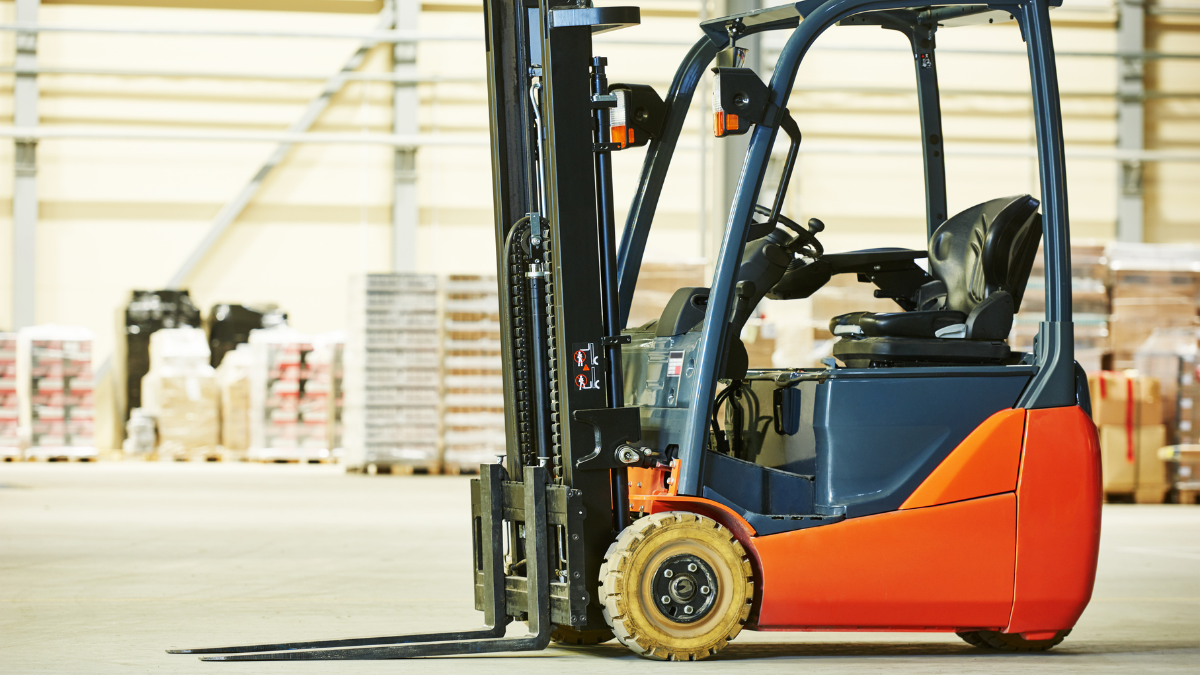
A forklift purchase begins with a familiar question: how much can the truck lift? The answer matters, but it leaves much of the decision unfinished. A warehouse also needs to know where the truck will travel, how often it will lift, how the battery will be charged, and who will keep it working when a component fails. A suitable truck must fit that whole operating pattern.
Electric equipment can be a useful option for indoor material handling because its drive system does not produce exhaust at the point of use. That benefit does not settle questions about capacity, floor conditions, charging arrangements, or operator protection. A practical evaluation connects the machine’s specifications to a measured description of the site.
Define the operating job before comparing trucks
Start with the loads rather than the catalog. Record the heaviest routine pallet, its dimensions, how the weight is distributed, and the height at which it must be placed. Include unusual loads that appear only occasionally. An awkward pallet may influence the specification more than the average daily shipment.
When evaluating an electric forklift manufacturer, buyers should ask for capacity information that matches the proposed mast, attachments, and operating height. Meenyon’s electric forklift category provides examples of several truck formats, including three-wheel, four-wheel, reach, and articulated designs. These categories are starting points for discussion, not substitutes for a configuration-specific assessment.
A warehouse reviewing a Meenyon electric forklift should translate its operating requirements into a written request for the exact proposed model. Ask the supplier to identify what is included, what is optional, and which limits apply. Two quotations that use the same headline lifting figure may describe substantially different machines.
Measure the route as carefully as the rack
A truck must travel between work areas as well as reach the top storage location. Measure aisle widths, doorway clearance, overhead obstructions, dock approaches, and turning areas. Include temporary obstacles such as staging pallets and waste containers. A route that looks generous on a floor plan may become restrictive during receiving.
Aisle suitability depends on the truck, load dimensions, and maneuver being performed. Do not compare a truck’s overall width directly with an aisle measurement and assume the combination will work. Request the relevant maneuvering dimensions for the actual pallet arrangement, then confirm the proposal on site where practical.
Floor transitions deserve particular attention. Broken surfaces, ramps, thresholds, and dock equipment can change how a truck behaves. If the operation includes outdoor travel, explain the exposure to rain, debris, slopes, and uneven ground. Ask the supplier to confirm the suitability of tires and the proposed configuration for those conditions.
Build charging into the shift plan
Battery selection and charging arrangements should be evaluated together. Establish how many hours the truck works, how demanding those hours are, and when breaks occur. A long shift with intermittent travel differs from continuous lifting, even when both schedules show the same duration.
Ask for the proposed battery chemistry, usable capacity, charger requirements, and operating instructions. Avoid assuming that every battery supports the same charging habits. Opportunity charging, battery changes, cooling periods, and maintenance requirements depend on the particular system and its manufacturer’s guidance.
The charging location also needs an owner. Facilities staff should confirm electrical compatibility and the work needed to install the equipment. Operations should decide who connects the charger, checks the equipment, and reports faults. A purchase becomes easier to manage when those responsibilities are agreed before delivery.
A useful review includes:
- The longest demanding work period between charging opportunities.
- The battery and charger supplied with the quoted configuration.
- Electrical installation requirements and the planned charging location.
- Procedures for a truck or charger becoming unavailable.
- Battery warranty terms, maintenance duties, and replacement arrangements.
This discussion should produce an operating plan that supervisors can follow. A theoretical runtime figure is less useful if it assumes breaks or charging access that the warehouse cannot provide.
Evaluate safety in the real workplace
Forklift safety depends on the interaction between equipment, operators, pedestrians, and the site. OSHA’s powered industrial truck guidance explains that hazards vary with truck type and workplace conditions. It also emphasizes operator competence demonstrated through appropriate training and evaluation in the United States. Managers elsewhere should establish the requirements that apply to their own operation.
For procurement, the practical lesson is to include the people who will use and work around the truck. Ask operators to assess visibility, entry and exit, controls, seating or standing position, and the handling of routine loads. A demonstration should follow an agreed safe plan and use representative work.
Pedestrian routes need equal attention. Review blind intersections, shared doorways, picking areas, and reversing locations. A warning device can support a broader traffic plan, but it cannot make a poorly organized crossing safe by itself. Equipment selection and site arrangements should be reviewed together.
Compare the cost of dependable service
The purchase price is only one part of ownership. Build a comparison that includes charging infrastructure, energy, planned maintenance, consumable parts, battery replacement assumptions, training, and service coverage. Use the same workload and ownership period for every option so that the comparison remains meaningful.
Ask who will perform repairs and how support is delivered. Clarify the location of technicians, spare-parts availability, diagnostic access, and the process for escalating a fault. A broad promise of after-sales service becomes more useful when it is supported by a named contact and an agreed response process.
Warranty language should be read alongside maintenance instructions. Establish which components have separate coverage and which actions the owner must complete to preserve that coverage. Record exclusions and operating limits before committing, especially where the warehouse has unusual temperatures, long shifts, or demanding loads.
Make acceptance a documented decision
Before delivery, agree on what a successful handover will demonstrate. The checklist should identify the truck configuration, capacity information, battery and charger, supplied documents, accessories, and operator familiarization. Record serial numbers and the service contact while the supplier is present.
Where a trial is available, observe a representative work period. Note interruptions, charging behavior, load handling, and operator feedback. The purpose is to test the assumptions used in the quotation, including ordinary tasks that may receive little attention during a short demonstration.
The strongest purchase decision can be explained in operational terms: this configuration handles these loads, fits these routes, supports this shift pattern, and has a credible service plan. Those facts give a warehouse a sounder basis for choosing an electric truck than a capacity label or a persuasive product description alone.