
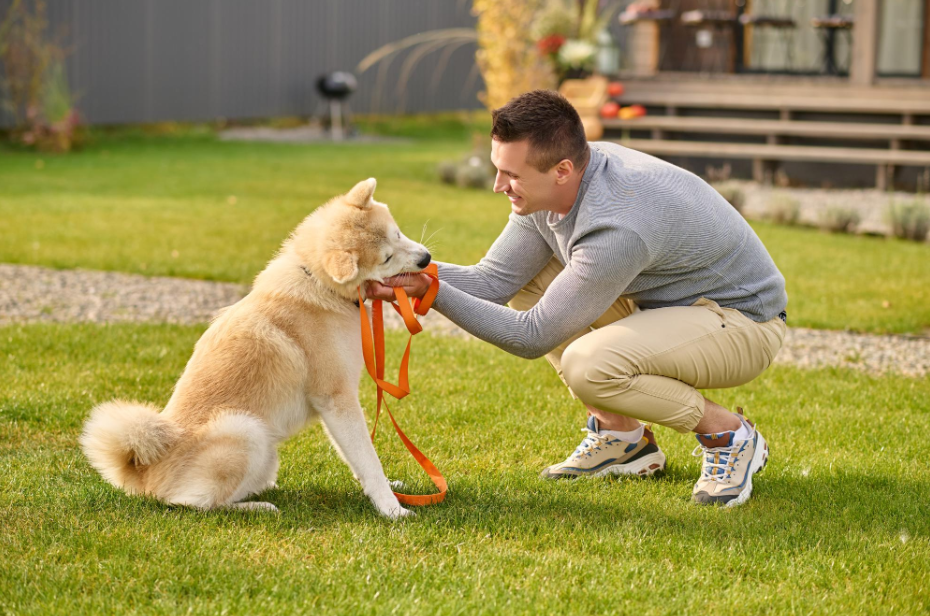
Escondido is a city in San Diego County, about 30 miles northeast of downtown San Diego. It sits in a valley surrounded by hills and is known for its warm climate, residential neighborhoods, parks, and outdoor spaces. The mix of homes, public areas, and busy streets gives local dog owners plenty of everyday settings where training skills need to work consistently.
Destination Canines’ private dog training lessons support better behavior by teaching dogs useful skills while showing owners how to reinforce those behaviors in daily life. One-on-one training can address issues such as leash pulling, reactivity, barking, jumping, and anxiety while building obedience, impulse control, recall, and calm behavior in situations the dog actually encounters.
Because the training involves both the dog and owner, private dog training lessons in Escondido focus on the specific behaviors that need improvement rather than following a standard group curriculum. Lessons can take place at home, in a local park, or in other environments where the behavior occurs, making it easier to apply the training beyond the session.
How the Lesson Cycle Works
Destination Canines packages are designed around the dog’s needs rather than a fixed curriculum. The pattern repeats through every session in the package.
- The trainer introduces the first stage of a new skill.
- The owner learns the mechanics in depth, so the skill can be practiced at home.
- Between lessons, the owner works toward the agreed objectives with trainer support.
- At the next session, progress is reviewed, and new challenges are added.
Skills Covered in a Private Package
Destination Canines private lessons program with communication and builds toward control in harder settings. Primary goals may include:
- Marker words and luring techniques give dogs clear signals about what behaviors are correct.
- Take a seat here at the thresholds, indicating an implied pause, held until a release word.
- Loose-leash walking includes techniques for managing leash pressure, proper positioning, and positive reinforcement.
- Long-line recall establishes a reliable “here” while keeping the dog safe in open areas.
- Teach the dog to go to a bed or mat and remain there on command.
Why the Owner’s Role Matters
Destination Canines employs balanced training methods and collaborates directly with owners to ensure lasting results at home. This structure transforms skills demonstrated in lessons into habits that dogs retain.
The approach also builds impulse control, since a dog holding a command until released is practicing self-control rather than waiting for the next cue. Owners who want private dog training in Escondido for a new puppy can start with basics alongside crate training and potty training.
Training Where the Behavior Happens
Private lessons allow troubleshooting in the exact place a behavior shows up, which is harder to replicate in a group setting. Dogs that need individualized attention often progress faster with one-on-one work.
In the Home
Jumping on guests, begging, and settling problems tend to appear indoors. Placework is especially useful for high-energy dogs learning to stay settled when visitors arrive.
In Public Spaces
Long-line recall practice happens in open areas, which matters for owners planning off-leash hiking and for emergencies. Loose-leash work turns stressful walks into a calmer, more structured routine.
Other Services Available
Private lessons are one of several programs. Destination Canines also offers board-and-train for puppies and adult dogs, scentwork, and ecological detection, and specializes in off-leash training and reactivity management.
Key Takeaways
- Private lesson packages range from four to ten sessions, tailored to the dog’s goals.
- Each lesson teaches a new skill stage, then the owner practices it at home before the next session.
- Core skills include marker words, sit, down, and here thresholds, loose-leash walking, long-line recall, and placework.
- Commands are taught with an implied stay, held until a release word is given.
- Lessons take place in the home, at parks, and in other real environments.