You probably use your bathroom more often than almost any room in your home, yet it’s usually the last place to get real attention. A bathroom upgrade can improve comfort, storage, safety, and even resale value, but only if you plan it carefully. One rushed decision can leave you staring at awkward tile lines or a shower niche in the wrong spot for years. A smart plan keeps the project practical, attractive, and far less stressful.
Start With What Actually Bothers You
Before you look at paint colors or trendy fixtures, get honest about what feels off in your current bathroom. Maybe the lighting makes you look like you’re preparing for a police lineup. Maybe storage is almost nonexistent. Maybe the tub is fine, but the shower setup is a daily annoyance.
Make a short list of your biggest problems. Rank them by impact, not by aesthetics alone. Poor ventilation, slippery flooring, and water damage deserve more attention than decorative upgrades.
It also helps to notice how you use the space at different times of day. A bathroom used by one person before work has different needs than one shared by three people trying to get ready at once.
Choose a Bathing Setup That Fits Your Needs
Not every bathroom needs a giant soaking tub, and not every home benefits from removing one. Your decision should reflect the room size, household needs, and how you actually bathe.
If you rarely use a tub, a walk-in shower may create a more open and practical setup. If you have young kids or plan to sell in a family-oriented market, keeping at least one tub can be a smart move.
If you’re comparing remodel options, companies like Bath Source can help you evaluate bath and shower solutions built for durability, accessibility, and easier updates. That can be useful if you want a cleaner process than a drawn-out renovation saga.
Think about wall surrounds, entry height, shelving, grab bars, and cleaning effort. Daily use should guide the decision more than showroom fantasy.
Set a Budget That Includes the Sneaky Costs
Bathroom projects have a talent for looking simple on paper and expensive in real life. Materials, labor, delivery fees, permit costs, disposal charges, and repairs behind the wall can pile up quickly.
Set your ideal budget, then add a cushion of at least 10 to 20 percent. Old plumbing, uneven subfloors, or hidden mold aren’t exactly rare plot twists. If your home is older, that backup fund matters even more.
Separate your spending into categories:
– Must-haves like plumbing, waterproofing, and flooring
– High-impact items like a vanity or shower upgrade
– Nice-to-haves like premium hardware or heated floors
That approach helps you protect the parts that affect function. Nobody wants to blow the budget on a dramatic mirror and then settle for poor ventilation.
Focus on Layout Before Finishes
A bathroom that looks good but functions badly gets old fast. Layout comes first. Think about how the door swings, where you stand to open drawers, and whether the toilet feels cramped or awkwardly placed.
Keeping plumbing in the same general location usually saves money. Moving a toilet or shower drain can increase labor fast. If the current layout works, improve it through better storage, lighting, and fixture choices instead of a full rearrangement.
Pay attention to clearance around each item. You need enough space to move comfortably, dry off, and clean the area without performing a weird little dance around the vanity. Good design feels effortless, which usually means someone planned the boring details very well.
Choose Materials That Can Handle Real Life
Bathrooms deal with steam, splashes, heat, soap buildup, and constant cleaning. That makes material selection more practical than glamorous. A surface that looks amazing online may be a pain once you live with it.
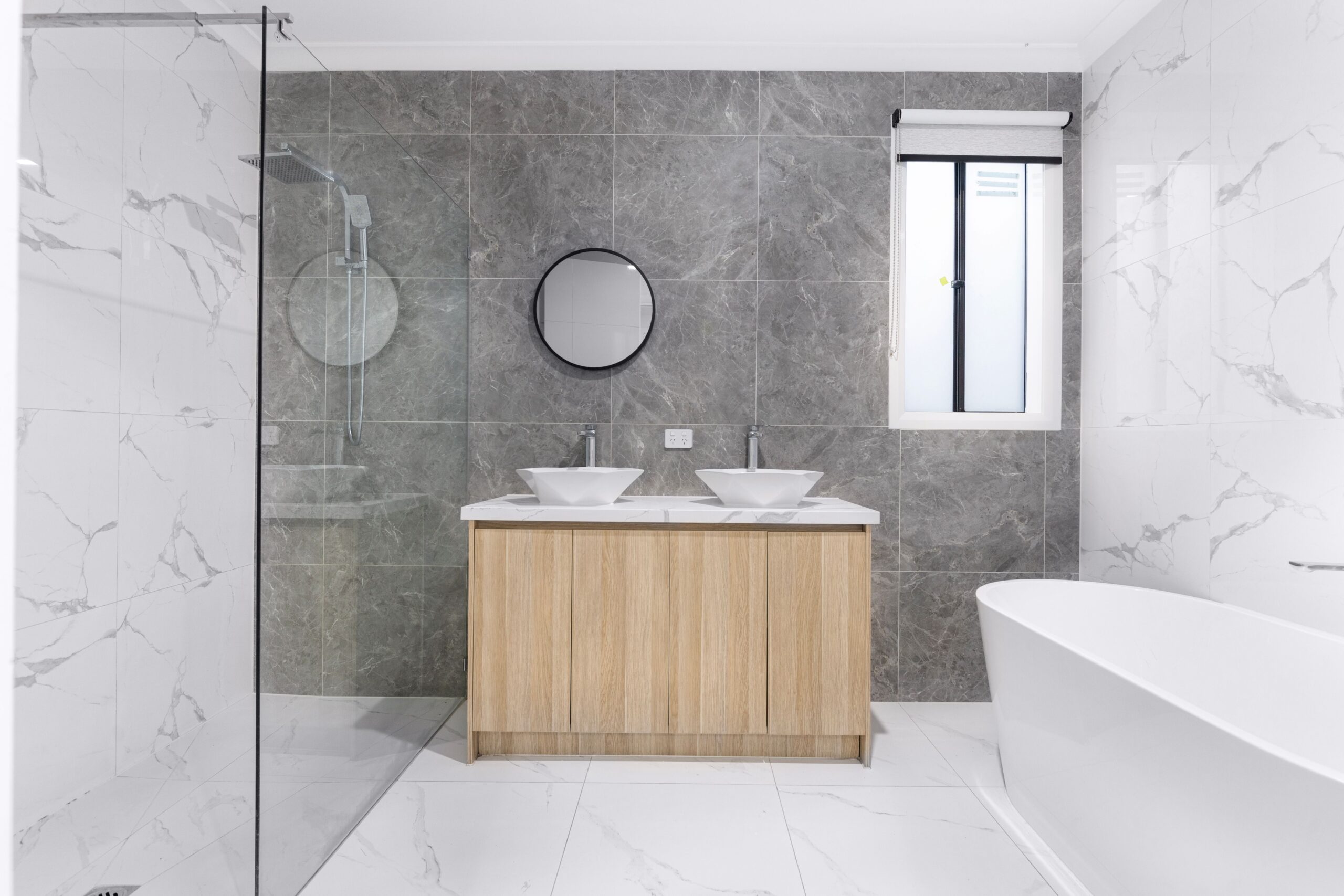
Porcelain tile is popular for good reason. It’s durable, moisture-resistant, and available in styles that mimic stone or wood. Quartz counters are another smart option because they resist staining and don’t require the maintenance natural stone often does.
When comparing finishes, think beyond appearance:
– Is the flooring slip-resistant?
– Will the grout be easy to clean?
– Does the vanity material tolerate humidity?
– Will matte black hardware show water spots constantly?
A bathroom should photograph well, sure, but it also needs to survive toothpaste, humidity, and rushed weekday mornings.
Lighting and Ventilation Deserve More Respect
A surprising number of bathroom upgrades still treat lighting as an afterthought. That’s a mistake. You need layered lighting that works for grooming, cleaning, and winding down at night.
Wall sconces or side lighting near the mirror reduce shadows better than a single overhead fixture. A ceiling light handles general brightness, while dimmable options can make late-night trips less harsh.
Ventilation matters just as much. A quality exhaust fan helps control humidity, reduces mold risk, and protects paint, trim, and cabinetry. If your mirror stays fogged forever and the room feels damp long after a shower, your current fan probably isn’t doing its job.
A beautiful bathroom with bad airflow ages badly. Steam always wins when nobody plans for it.
Storage Should Be Built Around Your Habits
You don’t need endless cabinets. You need the right storage in the right places. Start by looking at what you keep in the bathroom every day: skincare, towels, cleaning supplies, hair tools, medication, backups, and all the tiny items that somehow multiply.
Drawers often work better than deep cabinets because you can see what’s inside without crouching and excavating. Recessed niches in showers help keep bottles off the floor or tub edge. Medicine cabinets can add storage without taking up extra room.
A few practical storage ideas include:
– Drawer dividers for grooming products
– Vertical shelving over the toilet
– Pull-out organizers under the sink
– Hooks for towels and robes where you actually reach for them
Good storage reduces clutter, and clutter is what makes even a nice bathroom feel chaotic.
Hire Carefully and Think Long Term
If you’re bringing in professionals, don’t choose based on price alone. Ask about timelines, warranties, licensing, waterproofing methods, and what happens if hidden issues appear once demolition starts.
Request detailed estimates and make sure they break down labor, materials, and allowances. Vague pricing can turn into expensive “adjustments” later. Reviews help, but photos of completed work and clear communication matter just as much.
Plan for the future too. Aging-in-place features like curbless showers, wider entries, comfort-height toilets, and grab bar blocking inside walls can make the space more adaptable without changing the look.
The best bathroom upgrade isn’t the flashiest one. It’s the one that keeps working beautifully years later, when trends have moved on, and you’re still glad you made the choices you did.