

Nothing kills a summer party faster than an inflatable that’s too cramped, underpowered, or just wrong for the crowd you’ve got. Picking the right one isn’t rocket science, but it takes more thought than scrolling a product page and clicking “add to cart.” You’ve got to think about your space, your guests, your power sources, and whether you actually want to own the thing once the party’s over. Nail those four factors, and you’ll have an attraction people are still talking about the following weekend. Miss them, and you’re staring down a frustrated setup crew, a slide that barely squeezes in, or kids standing in a line that isn’t worth their time. This guide walks you through how to choose the right inflatable water slide for your next event, starting with the practical details most people don’t think about until it’s too late.
Assess Your Event Space and Setup Requirements
Before you even start comparing products, take a close look at what your setup area can accommodate. The range of sizes and configurations shown at https://www.ezinflatables.com/pages/water-slides gives a useful idea of how much space different setups may require. This is a step many buyers overlook: they choose a slide first and only later realize that their yard is too small or the surface isn’t suitable. Measure the available area, check for overhead obstacles such as trees or power lines, and consider whether you’re working with grass, concrete, asphalt, or gravel. Each surface can affect how the unit needs to be anchored, while sloped or uneven ground may create additional stability concerns.
Measure Your Available Area and Ground Conditions
Most inflatable water slides need more room than their listed dimensions suggest. A unit described as 20 feet long typically needs a safety buffer of at least 5 feet on every side – so you’re really working with a 30-foot footprint. Mark out that full zone with a tape measure before you commit to anything. Overhead clearance matters too, especially for taller slides that can push 15 feet or higher. Grass is the most forgiving surface; it gives you solid staking points and soaks up runoff without much fuss. Concrete and asphalt require sandbag anchoring instead, which works fine but takes longer to set up correctly. And avoid any surface with sharp debris, exposed roots, or a noticeable slope. A poorly anchored slide on uneven ground isn’t just inconvenient – it’s a genuine safety hazard.
Determine Water and Power Needs for Safe Operation
Every inflatable water slide runs on two things: a steady water source and a reliable power supply for the blower. The blower keeps the unit inflated throughout your event, so a power interruption doesn’t just pause the fun; it collapses the whole structure mid-use. Standard 110-volt residential outlets handle most smaller slides without issue, but larger commercial units often need dedicated 20-amp circuits or multiple outlets. Check the product specs before you piece together an extension cord setup that can’t handle the load. On the water side, you’ll need at least a standard garden hose connection. Factor in how much runoff you’ll generate; make sure your yard or venue can drain it without flooding everything nearby. Parks and public venues often have restrictions on water usage, so it’s worth checking with the coordinator ahead of time rather than finding out the rules mid-setup.
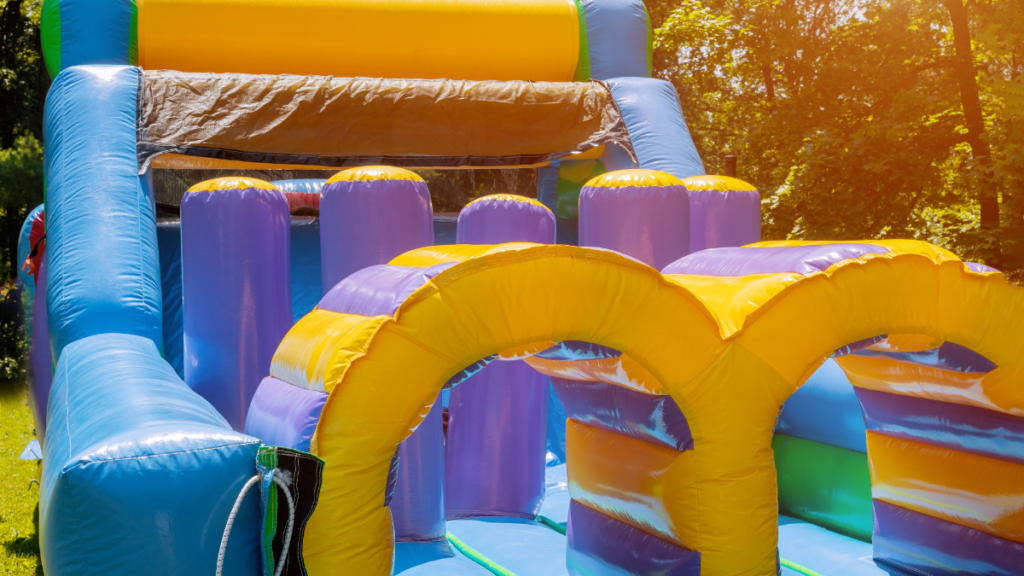
Match Slide Size and Features to Your Guest Count
Getting the size wrong is one of the most common mistakes people make. And it almost always goes the same direction – people underestimate how many kids will actually want to use the slide, then end up with a line stretching halfway across the yard. The trick is to think about your peak usage window, not the average. If 40 kids show up to a birthday party and 30 of them want on the slide at once, a compact unit built for 8 to 10 simultaneous users isn’t going to cut it. But size alone doesn’t tell the whole story – the age range of your guests matters just as much. A slide designed for ages 5 to 12 will have different height requirements, lane widths, and water flow rates than one built for teens or adults.
Choose the Right Dimensions for Your Crowd
For smaller events – say, 20 to 30 guests – a slide in the 12 to 16 foot range usually covers the demand without swallowing your entire yard. Mid-size events of 50 to 100 guests do better with units in the 18 to 24 foot range, particularly when you’ve got multiple age groups mixed together. Large community events or corporate gatherings often warrant dual-lane slides or multi-feature units that let two riders go simultaneously, cutting wait times significantly. Height plays into age-appropriateness as well; shorter slides with gentler drops suit young children, while steeper, taller structures appeal to older kids who want actual speed. Always cross-reference the manufacturer’s weight and age limits; those restrictions exist for structural and safety reasons, not as rough guidelines. Don’t forget that adult spotters take up space too; you’ll want room at the bottom landing zone for supervision throughout the event.
Consider Extra Features That Fit Your Event Type
Beyond the slide itself, manufacturers offer a range of add-ons that can genuinely raise the experience. Splash pools at the base give younger kids somewhere to land safely and cool off between turns. Dual or triple lanes let multiple guests ride at once, which keeps lines moving at high-attendance events. Some units come with climbing walls, water cannons, or spray arches that hold kids’ attention even when they’re waiting their turn. These features are worth it for longer events where you need the attraction to stay engaging for several hours; a slide that bores kids after 45 minutes isn’t doing its job. Here’s the thing: every added feature increases the unit’s footprint, water draw, and blower requirements, so weigh the entertainment value against your actual setup constraints. A feature-packed unit crammed into a space that’s too small gets harder to use, not more fun.
Evaluate Durability, Safety, and Rental vs. Purchase Options
Once you know what size and configuration you need, the next question is whether you’re after a one-time rental or an actual purchase. Both paths have clear advantages depending on how often you plan to use the unit and how much oversight you want over its condition. Durability and safety standards matter either way; a poorly built slide, rented or owned, puts guests at risk.
Check Material Quality and Safety Certifications
The material an inflatable is built from determines how long it lasts and how well it holds up under real-world use. Commercial-grade PVC is the standard for units expected to handle repeated events; it resists punctures, holds seams under pressure, and doesn’t break down quickly when it’s constantly exposed to UV light and water. Units made from thinner vinyl may look identical in product photos, but they show wear faster and are more prone to seam failures when kids are actually using them hard. When you’re reviewing any slide – rented or purchased – ask about seam construction and what the warranty covers. A multi-year seam-to-seam warranty signals genuine confidence in the build. So check that the unit meets ASTM F2374 standards, which govern the design and performance of inflatable amusement rides. Suppliers don’t always advertise this upfront, so ask directly before you sign anything.
Decide Between Renting and Buying Based on Your Needs
Renting makes the most financial sense for one-time or annual events where storing a large inflatable between uses isn’t realistic. Rental fees typically run $200 to $500 per day for mid-size residential units, covering delivery, setup, and pickup – honestly, that’s a reasonable deal if you’re only doing this once or twice a year. Purchasing becomes the smarter play when you’re running a party rental business, a daycare, a community center, or planning events multiple times per season. Commercial-grade units in the $2,500 to $12,000 range pay for themselves fairly quickly when you account for rental revenue or repeated private use. But ownership comes with real responsibility – proper storage, regular inspection, blower maintenance, and compliance with local amusement regulations. If you’re serious about buying, look for a supplier who offers post-purchase support rather than just closing the transaction. Good guidance on maintenance and setup makes an outsized difference in how long your unit lasts and how safely it performs.
Conclusion
Choosing the right inflatable water slide comes down to three things: knowing your space, matching the unit to your actual crowd size, and making an honest call on renting versus buying based on how often you’ll really use it. Material quality and safety standards aren’t optional, they’re what separates a fun afternoon from a liability. Get the setup details right first, and the rest of the decision falls into place. The right slide, set up properly, turns a good event into a genuinely memorable one.