
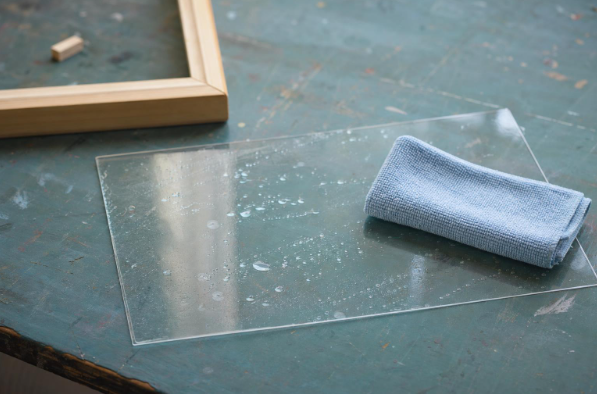
Clear acrylic looks like glass, but it is often easier to use for home projects. It is lighter, easier to cut, and more forgiving while you are learning.
The main challenge is choosing the right sheet. You need to decide between cast and extruded acrylic, pick a thickness, and handle the panel without cracks or scratches. This guide walks through those choices.
At a Glance
- Cast acrylic has the best optical finish. Extruded acrylic has tighter thickness tolerance and often costs less.
- Acrylic is combustible. Keep it away from flames, stovetops, heaters, and other high heat sources.
Step 1: Match the Material to Your Use
Acrylic works well for picture frames, display covers, shelf guards, desk protectors, signs and small window inserts because it is clear, light, and simple to fabricate with basic care.
It is not right for every location. Acrylic scratches more easily than glass, so heavy-rubbing areas need a hard-coated grade or another material. Because it is combustible, avoid it near stovetops, open flame or equipment that runs hot.
Step 2: Choose a Thickness With Confidence
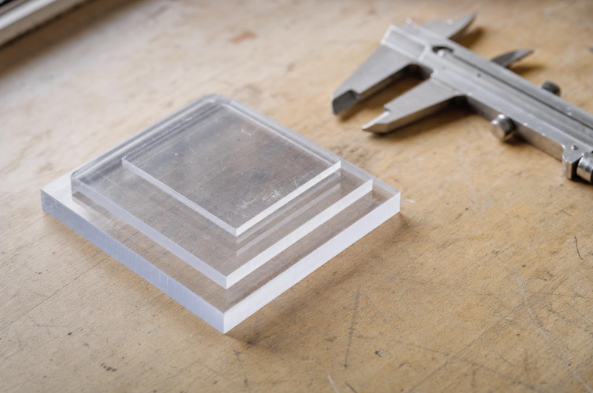
For small glazing and inserts, use panel area as a starting point. The table is a guide, not engineering advice for safety-critical panels.
| Opening size | Suggested thickness |
|---|---|
| 1 to 5 sq ft | 3 mm (about 1/8 in) |
| 6 to 15 sq ft | 4.5 mm |
| 15 to 32 sq ft | 6 mm (about 1/4 in) |
| 32 to 50 sq ft | 9.5 mm (about 3/8 in) |
For shelves, desk protectors or table covers, support matters as much as area. More span or less support means more flex, so size up one step when unsure.
Step 3: Cast or Extruded
Cast acrylic has a higher molecular weight, a premium optical finish and edges that polish well. It suits display cubes, awards, shelves, and pieces where the edges will show.
Extruded acrylic has tighter thickness tolerance and often costs less. It is practical for flat covers, simple glazing, slot fits, jigs and projects where even thickness matters most. For laser cutting or glass-clear polished edges, lean toward cast.
Step 4: Size, Support, and Outdoor Notes
Acrylic expands and contracts more than glass. As a practical guide, it can move about 0.07 mm per metre for each 1 degree C change, so outdoor panels need clearance on all sides to prevent bowing, binding and stress cracks.
Step 5: Cutting, Drilling, and Gluing Without Cracks
Keep the protective masking on while you work. It guards the surface from scuffs and gives you a safe place to mark measurements.
Support the workpiece fully and use a slow, steady feed. Step drills work on sheets up to 3 mm when fully backed up; for thicker sheet, use plastic-ground bits. Keep holes away from edges, back the sheet with scrap wood and do not force the bit through the last part of the cut.
For clear-to-clear joints, use a solvent cement made for acrylic. A clear, medium-bodied formula such as SCIGRIP 16 can bond acrylic to acrylic and fill small gaps.
Project Ideas With Starter Specs
Use these starter specs with your favorite craft ideas.
- Picture frame glazing: about 2 to 3 mm; keep masking on until assembly.
- Display cube or dust cover: 3 to 4.5 mm, cast for clearer edges.
- Desk or shelf top protector: 4.5 to 6 mm for a firm feel; avoid heat.
Cleaning and Care
Clean acrylic with mild soap and water and a soft microfiber cloth. Rinse away grit first so you do not drag particles across the surface and avoid ammonia, alcohol, acetone and abrasive cleaners. For decorative projects and home design inspiration, acrylic panels create sleek display options that require minimal maintenance when cared for properly.
Where to Buy and What to Order
Once you know your thickness and size, ordering cut to size can save trimming at home. Measure carefully, list dimensions in millimeters, and note any hole locations or corner details.
Many suppliers let you enter exact panel sizes and drill points before checkout. Cut My Plastic lists clear acrylic with about 92% transparency, UV resistance, indoor and outdoor suitability and service temperature up to 80 degrees C.
If you prefer not to cut large panels at home, you can buy clear acrylic sheet online cut to your measurements. Material costs can shift when acrylic raw material suppliers adjust prices in response to tariffs and market changes, so check current details before ordering.
Before you confirm, double-check shipping regions, lead times and tolerance notes. Cut-to-size selection can also reduce offcuts when you know your final measurements.
FAQ
What thickness suits a 24 by 36 in cover?
That opening is about 6 sq ft, in the 4.5 mm range. Size up to 6 mm if support is limited.
What glue works for clear-to-clear bonds?
Use acrylic solvent cement. Medium-bodied formulas fill tiny gaps; thinner cements suit tight seams.
Can I use acrylic outdoors?
Yes, acrylic works outdoors when given clearance for expansion and contraction. It expands about 0.07 mm per metre for each 1 degree C change, so leave gaps around edges to prevent stress cracks and bowing.
How do I prevent scratches during handling?
Keep the protective masking on the sheet while cutting, drilling and assembling. The masking guards the surface from scuffs and gives you a safe place to mark measurements before removal.
What is the difference between cast and extruded acrylic?
Cast acrylic has better optical finish and polishes to a glass-clear edge, making it ideal for display pieces. Extruded acrylic has tighter thickness tolerance and lower cost, making it practical for flat covers and projects where even thickness matters most.
Can acrylic go near heat sources?
No. Acrylic is combustible and should stay away from stovetops, open flames, heaters and equipment that runs hot. For kitchen use, position it away from cooking areas and use alternative materials in high-heat zones.
How transparent is clear acrylic?
Cut My Plastic clear acrylic offers about 92% transparency with UV resistance and indoor and outdoor suitability. This level of clarity works for most display, framing and glazing applications without noticeable cloudiness.
What drill bits work best for thick acrylic sheets?
For sheets up to 3 mm, step drills work when fully backed up. For thicker sheets, use plastic-ground bits. Back the sheet with scrap wood, keep holes away from edges and do not force the bit through the last part of the cut to prevent cracking.