
Walk down any supplement aisle in 2024 and the protein category has stopped pretending to be food for athletes. It wants to be candy. Gummy bears with 10 grams of whey, marshmallow squares wrapped in chocolate, sour belts coated in citric acid that also happen to deliver a quarter of the daily protein requirement for an average adult, the category that gave the world chalky meal replacement shakes is now openly competing with Sour Patch Kids. Sour puff snacks are the strangest entry yet.
The global protein bar market was valued at roughly 5.6 billion dollars in 2023 by Grand View Research, and the fastest-growing subcategory inside it is no longer the dense, dietitian-approved oat brick but the dessert mimic: bars that taste like raspberry white chocolate cheesecake, puffed marshmallow bites in mango, chewy ropes that pucker the cheeks before they finish dissolving. Whether that counts as nutritional progress or sugar-flavored sleight of hand depends on which package you pick up.
How candy quietly became a protein delivery system
The technical story is mostly about isolates. Whey protein isolate, milk protein isolate, and increasingly collagen peptides can now be processed into textures that were impossible a decade ago. Older protein bars relied on soy crisps and brown rice syrup, which is why a 2014 Quest bar in the wrong flavor could feel like chewing a damp eraser. Newer formulations use hydrolyzed proteins that behave more like sugar in a candy matrix, aerating and stretching and holding coatings the way confectioners want them to.
That last part matters more than it sounds. Sour candy works because citric acid and malic acid sit on the outside of the candy and hit the tongue before sweetness does, but protein attracts water, and water dissolves acid coatings. For years that made shelf-stable sour protein candy a manufacturing dead end. It exists now, and reverse-engineering it from the ingredient deck is genuinely difficult, which is part of why the better products cost what they cost.
The companies pulling this off are not always the legacy supplement brands. Quest released its first chocolate-coated candy product in 2019. Smaller players like AvoCare and Legendary Foods, alongside a handful of direct-to-consumer brands, have leaned harder into the candy framing, dropping the gym imagery and selling in pastel boxes that look more like party favors than supplements.
Where sour puff snacks fit in the picture
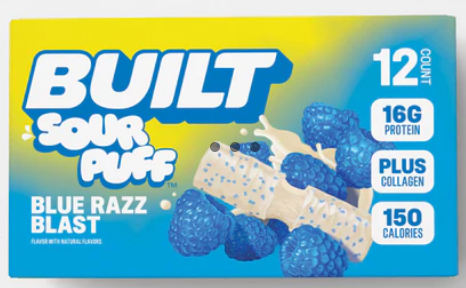
Sour puff snacks occupy an odd middle. The texture is closer to a marshmallow that has been pulled, aerated, and dusted with a sour coating that delivers an immediate acid bite before the soft interior takes over, somewhere between a Peep and an old-school Sour Punch straw. A single serving typically runs 16 grams of protein, between 150 and 180 calories, and 4 to 6 grams of sugar depending on the brand.
A standard movie theater sour candy can carry 40 grams of sugar in the same calorie band with no protein at all, which is more or less the entire pitch. Reviewers who explore Built Bar and similar product lines tend to focus on mouthfeel, since the rubbery protein gummies that dominated the category in 2020 and 2021 trained most shoppers to expect disappointment.
The flavors lean tropical and citrus-forward because sourness pairs poorly with chocolate or vanilla, the two flavors that carried protein bars for two decades. Mango, watermelon, pink lemonade, green apple, and blue raspberry all carry an acidic profile that the sour coating amplifies. That probably explains why flavor lineups are expanding rather than consolidating, though it also means the category will hit a ceiling once every plausible fruit has been claimed.
The nutrition argument, honestly assessed
A bar labeled as a protein bar that contains 20 grams of protein, 18 grams of sugar, and 350 calories is not a health food in any meaningful sense, and pretending otherwise is how the category earned its reputation for marketing theater in the first place. Plenty of products on the shelf today still fit that description.
The better ones are doing something more interesting. Protein is the most satiating macronutrient, and a 2020 meta-analysis in the American Journal of Clinical Nutrition by Kim and colleagues found that higher protein intake during weight loss preserved more lean mass and reduced hunger ratings compared to standard protein intakes. Trading a 250-calorie candy bar with 2 grams of protein for a 170-calorie puff snack with 16 grams of protein is, by that math, a defensible swap for someone trying to cut calories without feeling deprived.
The complication is that protein candy is still candy in terms of behavior. It is engineered to be eaten quickly, and the protein content does not particularly suppress the urge to keep going once the box is open. Hyperpalatability does not care about macros, and there is something a little dishonest about a product that solves the satiety problem on paper while undermining it in practice.
Sugar alcohols are the other concern. Many of these products rely on maltitol, erythritol, or allulose. Allulose appears to be well tolerated by most people. Maltitol famously is not, and a long drive after a 12-pack is the kind of mistake people only make once.
What the category gets right, and what it still gets wrong
Texture has improved, flavor is no longer an afterthought, and the split between protein snacks for athletes and protein snacks for everyone else has been quietly acknowledged in the formulation work. That is not nothing.
Pricing, on the other hand, is hard to defend. A 12-count box of sour puffs frequently runs near 30 dollars, putting the per-serving cost above 2 dollars for something that takes about half a minute to eat. Manufacturing complexity explains some of that, brand premium explains the rest, and until one of those changes the category will remain a discretionary purchase for a fairly narrow shopper.
Labeling deserves its own complaint. The front of a package advertises 16 grams of protein in font sizes visible from across a room while the serving size hides in 6-point type on the back, and some products that look like single servings are actually two. The math the shopper thinks they are doing is often off by a factor.
Where the category is heading
The candy framing is going to keep winning. Brands that moved away from gym aesthetics and toward bright, playful packaging are growing faster than the ones still selling tubs of powder, and the texture science has finally caught up with the flavor profiles consumers actually want. The next wave of innovation will probably layer in collagen, prebiotic fiber, and electrolytes, partly because those ingredients work and partly because protein alone has stopped being a sufficient story for a new launch.
For roughly forty years, protein products were sold on the implicit promise that suffering through flavor was part of the discipline. That premise is gone, and good riddance. What replaces it is messier: a shelf full of products that are sometimes meaningfully better than the candy they imitate, sometimes barely distinguishable, and almost always more expensive than either deserves to be. Reading the label closely enough to tell the difference is the only real skill the category demands.