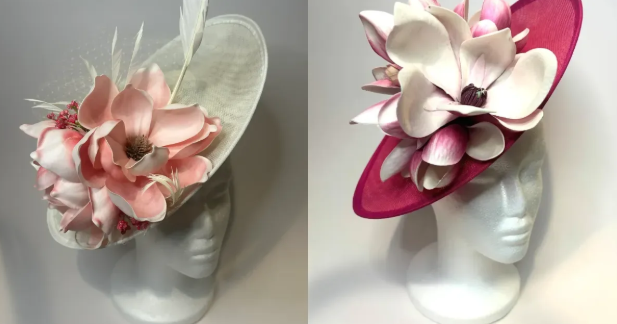
The first time I wore a fascinator I felt a little out of place.. It was a small sculptural thing, black sinamay, perched at an angle on the side of my head with a single comb that kept sliding, and I spent most of the event convinced it was about to fall into someone’s drink. It didn’t.. A few people asked where I got it. I’ve been wearing them ever since and I still can’t fully explain the appeal except that they do something to an outfit that nothing else does quite the same way.
Most people think of fascinators as a Kentucky Derby thing, or a Royal Ascot thing — something you wear once a year to a specific event and then put in a box. And that’s fine, plenty of people use them that way. But that framing undersells what a fascinator actually is and what it can do outside of a racetrack.
What a Fascinator Actually Is (Because the Definition Is Fuzzier Than You’d Think)
Look, there’s genuine disagreement about where the line is between a fascinator and a hat.
The short version: a fascinator is a small headpiece, typically attached with a comb, clip, or elastic, that sits on the head rather than sitting on top of it the way a full hat does. It can be anything from a small cluster of feathers to an elaborate sculptural piece that projects six inches in every direction. The defining feature is that it’s attached to a small base rather than having a full brim or crown structure. Philip Treacy, who is arguably the most famous milliner working today and who has made some of the most extreme fascinators you’ve ever seen, would probably have opinions about this definition that I’m not qualified to represent.
What doesn’t count as a fascinator: a full hat, even a small one. A headband with a bow. A barrette, however elaborate. The fascinator sits in its own category, between “hair accessory” and “hat,” which is part of why the etiquette around them gets complicated.
(There’s also a category called a “cocktail hat” which is bigger than a fascinator but smaller than a full hat and I genuinely don’t know where the boundaries are. I’ve been calling things fascinators for years that might technically be cocktail hats. I’ve decided not to care about this.)
The History Part, Which I Find More Interesting Than I Expected To
Fascinators as a distinct category are relatively recent — the word in its current fashion sense probably became standard sometime in the 1990s, I think, though small decorative headpieces have existed in various forms for centuries.
The thing that’s interesting to me is the relationship between fascinators and the hat rules that formal events used to enforce. British royal events, certain race days, church occasions — these historically required women to wear hats. As full hats fell out of everyday fashion through the 20th century, fascinators emerged partly as a workaround: technically headwear, technically complying with dress codes, but much smaller and easier to wear than a proper hat. Royal Ascot famously tightened its rules at some point in the 2000s — I want to say 2012 but I might be wrong — to specify that fascinators needed to have a base of at least four inches, because the “fascinator” category had started including things that were essentially just a feather glued to a clip. Whether this was necessary or just stuffy depends on who you ask.
Anyway. The point is the fascinator has always existed in a slightly negotiated relationship with hat formality, which is part of what makes it interesting as a fashion object.
Why They Work for More Than Just Racing Events
This is the part I actually wanted to get to.
A fascinator adds height and visual interest to a look without the weight and structure of a full hat. That’s the practical case for it. A hat changes your silhouette significantly and can be hard to wear for a full day, especially indoors — you end up taking it off and then carrying it around, which is annoying. A fascinator stays put, doesn’t interfere with sitting down, and can go from ceremony to reception without becoming a burden.
The occasions where a fascinator actually makes sense are broader than most people use them for. Weddings, obviously — as a guest, not a bride, though I’ve seen brides pull it off. Garden parties. Outdoor lunches. Any occasion that’s formal enough to want something on your head but not formal enough to warrant a full hat. That covers more of life than you’d think, especially in spring and summer.
I’ve also started seeing them at events that wouldn’t have considered them ten years ago — art openings, certain charity dinners, evening events where someone wants to make a visual statement without committing to the full costume-y energy of an elaborate hat. That’s a different use case than the Derby crowd and it requires a different kind of fascinator: simpler, more sculptural, less “garden party at the palace.”
How to Actually Pick One That Works For Your Face
This is where most buying guides go very generic and I’ll try not to.
The attachment point matters more than people think. A fascinator that sits at the crown of your head reads differently than one worn to the side, which reads differently than one worn toward the front. Side placement is the most common and most forgiving. Crown placement tends to look more traditional and slightly more formal. Front placement is the trickiest — it can look either very intentional or like you forgot to take something out of your hair, depending on the piece and the person.
Face shape gets discussed a lot in fascinator guides and I’m somewhat skeptical of the rigid rules you see. “Oval faces can wear anything,” “round faces should avoid circular shapes,” etc. These are guidelines, not laws. What I’d actually say is: if you can try it on before buying, do. A fascinator that photographs beautifully on someone else might look completely wrong on you for reasons that have nothing to do with face shape — it’s more about proportions, hair volume, and honestly just the vibe you’re going for.
Size is a genuine consideration. A very large, elaborate fascinator is a commitment. You’re making a statement and you need to be confident enough to wear the thing without spending the whole event self-conscious about it. If that’s not you, start smaller. A well-made smaller fascinator in good sinamay or with a single interesting detail — a good feather, a clean sculptural shape, quality millinery flowers — will do more for an outfit than an oversized piece you’re not comfortable in.
Materials, Briefly
Sinamay is the most common. It’s a plant-fiber fabric that holds its shape well, dyes beautifully, and can be manipulated into almost any form. Most of what you’ll find at mid-range price points is sinamay and there’s nothing wrong with that.
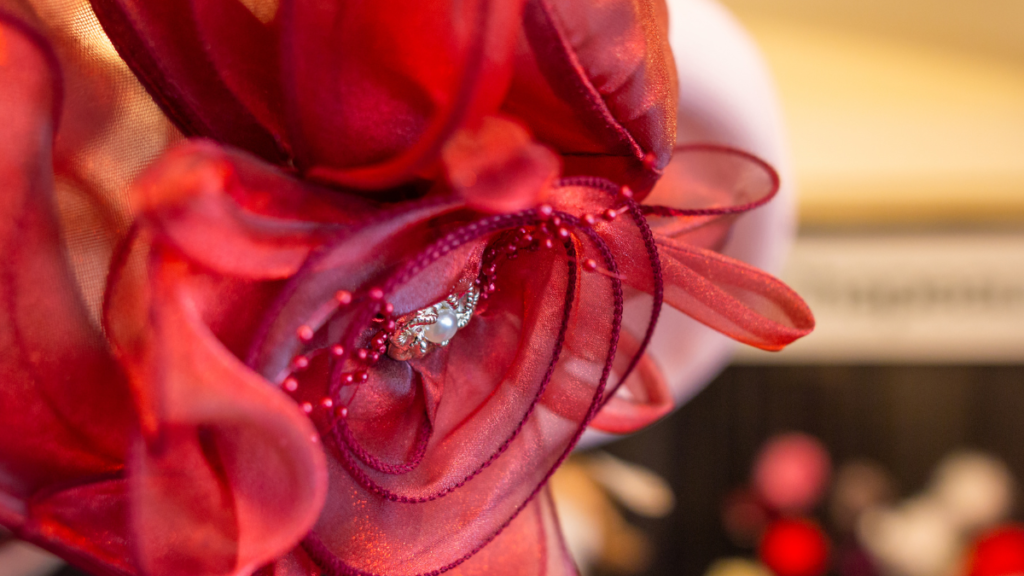
Felt is warmer and more structured, used more in autumn and winter fascinators. Velvet shows up too, usually in more formal or evening pieces. Feathers are used as trim on almost everything, and the quality of the feathers — how they’re cleaned, how they’re mounted, whether they’ve been dyed or left natural — is one of the things that separates a well-made fascinator from a cheap one. Badly mounted feathers droop. Good ones hold their position.
I know very little about the actual millinery craft and I’m aware I’m at the edge of what I can say usefully here. If you want to understand how these things are made properly, there are millinery courses and a whole world of hand-blocking and wire framing that I haven’t gotten into. I just wear them.
One Thing That Doesn’t Get Said Enough
A fascinator is not inherently a costume. That’s the mental block a lot of people have, and I had it too — the idea that wearing one means performing a certain kind of performative Englishness or that you’ll look like you’re going to a themed party.
You won’t. A well-chosen fascinator at the right occasion looks intentional and pulled-together, not theatrical. The theatrical ones exist and they’re great for the right setting, but the whole spectrum runs from “small cluster of feathers that you’d barely notice” to “sculptural statement piece the size of a dinner plate,” and most of life is lived somewhere in the middle of that range.
Anyway. They’re not just for the Derby. That’s really all I wanted to say.