
Cities That Reveal Themselves Through Use
Amsterdam and Brussels don’t present themselves as finished compositions. They feel occupied, adjusted, and reused rather than arranged for display. You sense it immediately in how streets behave — how they bend, pause, resume. These are cities shaped by trade, administration, and daily negotiation, not by spectacle. Meaning here doesn’t arrive through landmarks alone. It accumulates through repetition, through the quiet familiarity of places that have been passed through for centuries without needing to be reintroduced.
Movement as a Gentle Preparation
Travel across the Low Countries tends to soften expectations before any city comes into view. The Amsterdam to Brussels train route feels less like a transition and more like an extension of urban rhythm. Suburbs loosen gradually. Flat land stretches without asking for interpretation. Canals and fields trade places quietly. Speed exists, but it doesn’t insist on being noticed. By the time arrival registers, movement has already adjusted posture and attention, making the city feel entered rather than reached.
Amsterdam’s Relationship With Water
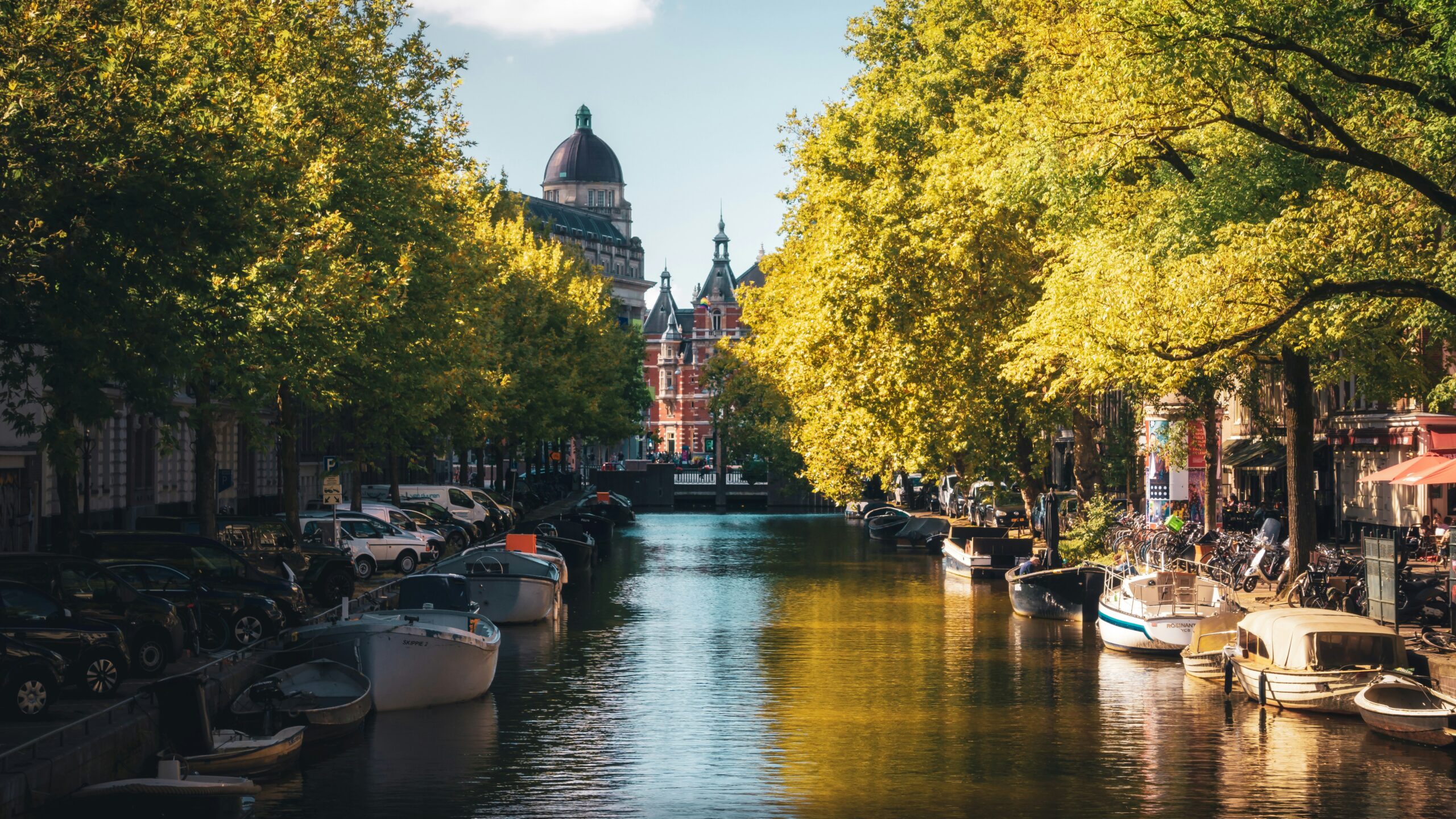
Amsterdam doesn’t separate itself from its canals. They are not scenic interruptions. They are structural. Streets run alongside water as though it were another form of pavement. Houses lean slightly, bearing the marks of long use. Boats pass without ceremony. The city’s historic core doesn’t feel preserved so much as maintained. You don’t stop constantly to look. You move, cross bridges, double back, and realise later how often water has quietly redirected your path.
Approach Without a Sense of Departure
That same continuity carries in from farther south. The Paris to Amsterdam line doesn’t frame arrival as a climax. It unfolds steadily, allowing one environment to thin and another to gather without contrast. Borders fade into routine. Fields flatten, then disappear into denser patterns of movement. You arrive without the sense of having crossed into something unfamiliar. The city receives you as though you were already expected.
Living With the Past, Not Beside It
What defines Amsterdam isn’t age, but integration. History isn’t set apart. It operates alongside everyday routines — cycling, deliveries, conversations carried over water and lost again. Buildings aren’t treated as statements. They are used, adjusted, leaned on. The canal houses don’t insist on admiration. They tolerate presence. Over time, this familiarity replaces any initial sense of awe. Grandeur becomes background.
Brussels and the Language of Detail
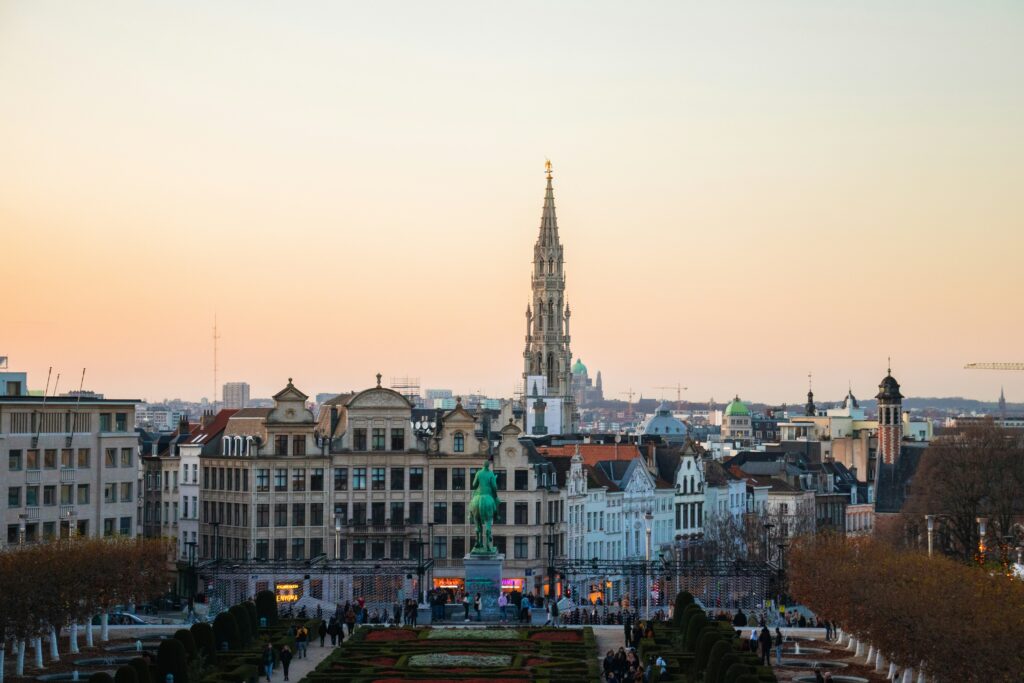
Brussels speaks more quietly, but with density. Its Art Nouveau buildings don’t dominate streets. They surface unexpectedly — a curve here, a patterned window there, ironwork repeating itself just enough to be recognised. You encounter them while going somewhere else. They don’t ask you to stop. They reward noticing. Ornament here feels less like decoration and more like habit, a preference for detail that found its way into daily architecture rather than monumental spaces.
Art Nouveau as Urban Texture
In Brussels, detail accumulates through proximity. Doorways curve gently. Balconies repeat motifs without symmetry. Stone and metal coexist without hierarchy. The style doesn’t announce itself as an era. It lingers as texture. You begin to notice it more after you’ve stopped trying to find it. Like the canals in Amsterdam, these details guide movement indirectly, shaping how long you pause, where your eye rests, how you move down a street without deciding to slow.
Two Cities, One Shared Temperament
Despite their differences, Amsterdam and Brussels share an underlying restraint. Neither city rushes to define itself. Both trust familiarity over spectacle. One expresses it through openness and water, the other through interiority and surface. Over time, the contrast softens. You stop comparing. You start recognising patterns — how cities shaped by trade learned to value continuity, repetition, and adjustment more than declaration.
When Travel Becomes Background
After moving between these places, travel itself loses definition. You stop remembering durations. Stations blur. What stays are sensations — flat land stretching longer than expected, streets bending without explanation, the ease with which you passed from one environment into another. The journey doesn’t feel completed. It feels absorbed.
What Lingers Between Canals and Curves
Later, Amsterdam’s canals and Brussels’ Art Nouveau details don’t return as images. They return as instincts — a comfort with cities that don’t explain themselves, an appreciation for environments shaped slowly and used continuously. The Low Countries don’t resolve into contrast or hierarchy. They remain open, unfinished, quietly persuasive. The experience doesn’t conclude. It loosens, leaving behind a softer way of moving through cities that were never meant to be summarised.