
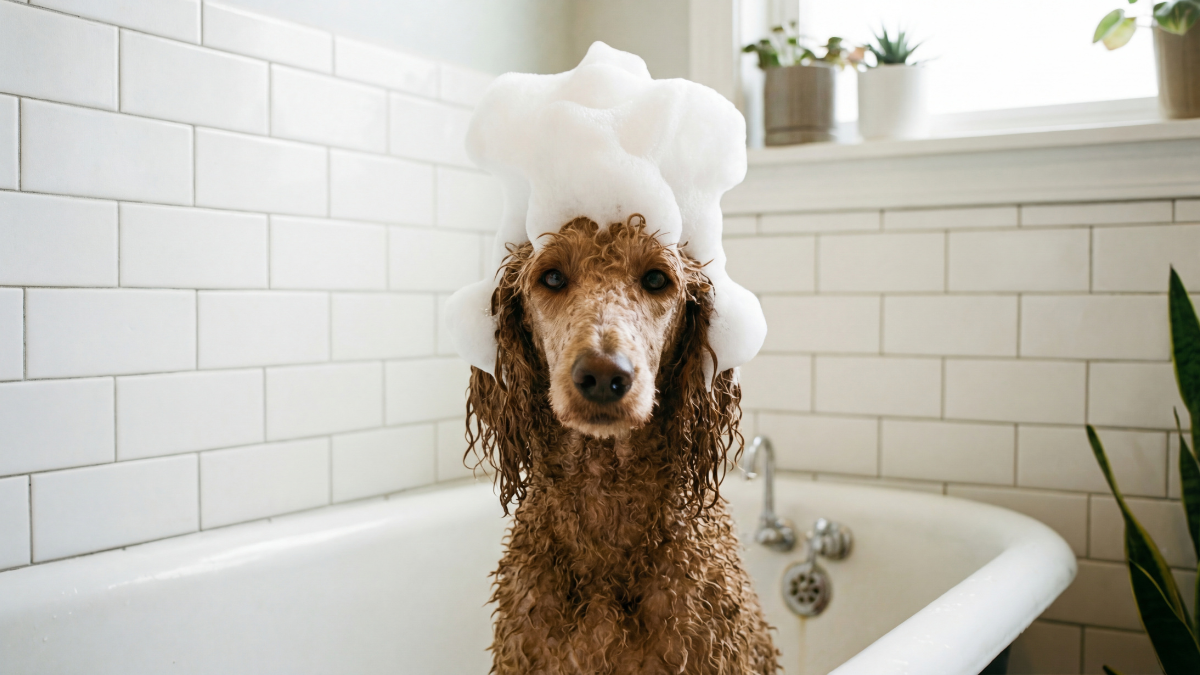
My dog Biscuit smells like a bag of Fritos when he’s clean and something considerably worse when he’s not. I’ve made peace with the Fritos thing — apparently it’s a yeast thing with paws and a lot of dogs do it — but the “not clean” version took me a while to solve and the answer was embarrassingly simple once I found it.
I’d been using whatever shampoo was on sale. Generic stuff, sometimes the same brand for months, sometimes something completely different. It worked in the sense that Biscuit was technically washed. But two days later he’d be back to smelling like he’d rolled in something, which he hadn’t, as far as I could tell. It took me longer than I’d like to admit to figure out that the shampoo was the problem.
Why Regular Dog Shampoo Often Doesn’t Fix Odor
Look, regular dog shampoo is mostly designed to clean. Get the dirt off, leave the coat looking okay, maybe add a “fresh scent” that fades in about six hours. That’s fine if your dog doesn’t have an odor problem. If they do, you’re basically just masking the smell temporarily and then wondering why it keeps coming back.
The best dog shampoo for odor works differently. Instead of covering the smell, it’s going after what’s causing it — bacteria, yeast, skin oils that build up and go rancid, that kind of thing. There are a few different approaches: enzyme-based formulas that break down the organic compounds causing the odor, shampoos with specific antibacterial ingredients, and ones that adjust the pH of the skin to make it harder for odor-causing bacteria to thrive. They’re not all the same thing even if they’re all marketed as “odor control.”
I didn’t know any of this when I started trying to fix Biscuit’s smell problem. I just kept buying different shampoos and hoping.
The Ingredient Thing (Which I Find More Confusing Than It Probably Should Be)
Okay so the ingredients list on dog shampoo is genuinely hard to parse unless you have a chemistry background, which I don’t. But there are a few things worth knowing.
Enzymes — specifically protease and lipase enzymes — are what a lot of the better odor shampoos use. Proteases break down proteins, lipases break down fats, and since odor is largely caused by bacteria eating proteins and fats in your dog’s skin oils and then producing waste products that smell bad (I realize this is a lot, sorry), enzymes that break down the source material before bacteria can get to it actually do something. Whether they do it fast enough in a rinse-off shampoo is a reasonable question. Leave-in sprays with the same ingredients probably work better for maintenance between baths, honestly.
Oatmeal shows up in a lot of dog shampoos and it’s mostly there for sensitive skin, not odor. If your dog has both itchy skin and a smell problem then sure, but don’t pick a shampoo primarily because it has oatmeal and expect it to solve an odor issue.
Chlorhexidine is an antibacterial ingredient you’ll see in medicated shampoos, usually vet-recommended ones. It works well for bacterial skin issues but it’s strong and not meant for regular use on most dogs — more of a “my vet said use this for six weeks” situation than an every-bath thing.
Baking soda and tea tree oil show up in a lot of natural options. Baking soda does neutralize some odors. Tea tree oil is antimicrobial but also toxic to dogs if they ingest it, which they will if they lick themselves after a bath, so I personally avoid it even though you’ll see it everywhere. That’s just my call.
How Often You Should Actually Be Bathing Your Dog
This is the thing nobody seems to agree on and I’ve read approximately fifteen different answers, ranging from once a week to once every three months, and most of them are either vague or trying to sell you something.
The honest answer is it depends on the dog. Short-coated breeds who spend their time inside don’t need bathing as often as dogs who are outside a lot or swimming. Dogs with certain skin conditions sometimes need more frequent bathing, sometimes less — again, vet territory. For a medium-coated indoor-outdoor dog like Biscuit, I’ve landed on every three weeks, maybe every two if he’s been particularly disgusting, and that seems to work.
Overbathing is a real thing. Strips the natural oils, dries out the skin, can actually make odor worse over time because dry irritated skin produces more oil to compensate and that oil is what bacteria feed on. So more baths isn’t always better, which I learned the hard way during the phase where I was bathing Biscuit weekly trying to fix the smell problem and making it worse.
What I Actually Look For Now When Buying Dog Shampoo for Odor
I’m not going to give you a ranked list of specific products because formulas change, things get discontinued, and honestly what works for Biscuit might not work for your dog depending on what’s causing the smell in the first place. But here’s the rough filter I use.
Enzyme-based formula is the first thing I look for. Something that says it targets the source of the odor rather than just masking it. I check the active ingredients list, not just the marketing on the front.
Fragrance level matters more than people think. A shampoo that’s very heavily scented is usually compensating for something. The good ones don’t smell like a candle. They smell like not much, which is what you actually want your dog to smell like.
I look for something pH-balanced for dogs, which sounds obvious but a lot of cheaper shampoos aren’t — dog skin is less acidic than human skin and human shampoo, or shampoo formulated like human shampoo, messes with the skin barrier over time.
And I try to find something without a twenty-ingredient list full of things I can’t pronounce and don’t recognize. Fewer ingredients, cleaner formula, usually better result in my experience. Though I’ll admit I don’t fully understand why that is, it’s just a pattern I’ve noticed.
The Smell Between Baths Problem
Even with the right shampoo, most dogs start getting a bit ripe before bath day rolls around. This is normal. A few things help.
Brushing regularly actually does a lot — it distributes oils more evenly and removes the dead skin cells and debris that bacteria break down into odor. I didn’t start doing this consistently until pretty recently and the difference was noticeable.
Dry shampoo or odor-neutralizing sprays for dogs are useful for between-bath freshening. They’re not a replacement for actual bathing but for a dog who rolled in something three days after their last bath, a spray is better than nothing. The enzyme-based ones work better than the heavily-scented ones, same logic as the shampoo.
Ears and mouth are often where the smell is actually coming from, by the way, not the coat. A dog can have a perfectly clean body and smell terrible because of ear yeast or dental issues. If you’re bathing your dog regularly with a decent shampoo and the smell isn’t getting better, it’s worth looking there before assuming the shampoo is the problem. I say this as someone who spent two months trying different shampoos before my vet mentioned Biscuit had a mild ear infection. Felt a bit foolish about that.
One Other Thing That Helped More Than I Expected
Diet. I know this sounds like a stretch but it genuinely isn’t. Dogs with chronic skin odor issues — the kind where they smell bad even right after a bath — often have something going on internally. Food allergies, poor gut health, too much processed filler in the food. Switching Biscuit to a higher-protein food with fewer grains made a noticeable difference over a few months. Not an overnight fix. But worth mentioning because no shampoo in the world is going to fully solve a problem that’s coming from the inside.
Anyway. The short version: find a shampoo that actually targets odor at the source rather than covering it up, don’t overbath, brush more than you think you need to, check the ears, maybe look at the food. That combination solved a problem I’d been throwing single-ingredient solutions at for a year.