
Some cities carry their history loudly. Others keep it close, folded into daily life so thoroughly that you can walk past centuries without noticing at first. Seoul and Kyoto belong firmly to the second group. Their heritage doesn’t sit apart from the modern world — it exists inside it, sometimes quietly, sometimes unexpectedly, but rarely as something separate.
You don’t arrive in either city and feel as though you’ve stepped into the past. Instead, the past keeps appearing beside you, unannounced, while life continues at full speed around it.
Entering Seoul Without Leaving the Present
Seoul is often introduced through its scale — its population, its pace, its energy. But the first thing you might notice instead is how quickly the city shifts tone. One street hums with traffic and signage; the next opens into space, symmetry, and calm.
The palaces don’t sit on the edge of the city. They sit inside it. Office buildings rise nearby. Buses pass. People hurry to work. And yet, once you step through a palace gate, the noise softens without fully disappearing.
This coexistence feels intentional, even if it isn’t staged.
The Palaces as Working Space
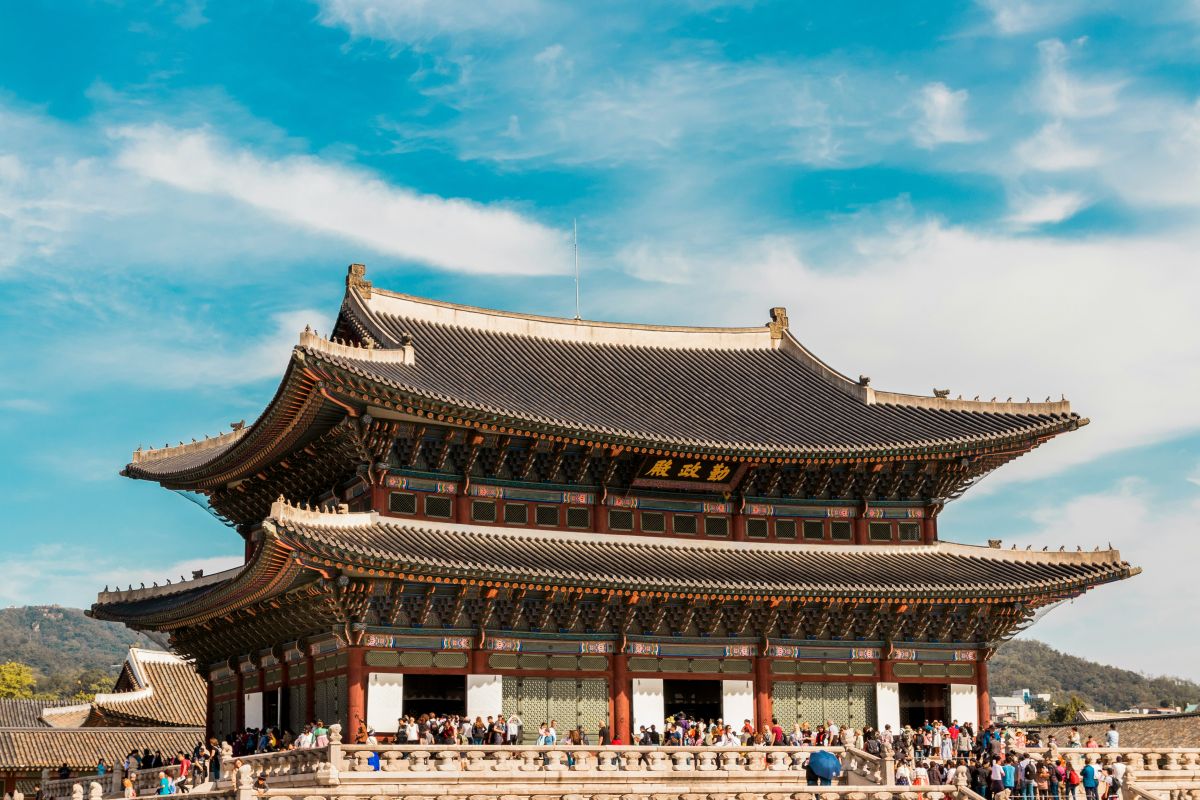
At places like Gyeongbokgung Palace, scale matters, but so does restraint. The buildings spread outward rather than upward. Courtyards open gradually. Lines are clear, but not ornamental.
Walking through these spaces doesn’t feel ceremonial. It feels habitual, as though movement has been practiced here for a very long time. You’re not pushed along a route. You’re allowed to wander, pause, and double back.
This sense of freedom is part of what makes the palaces feel alive rather than preserved.
Context Before Contrast
Many travellers encounter Seoul through structured itineraries, including South Korea tour packages, which can be useful not for direction, but for context. Understanding why these palaces sit where they do — and how they survived cycles of rebuilding — changes how you move through them.
The structures themselves are calm. It’s the surrounding city that makes them feel remarkable. Glass towers frame wooden roofs. Traffic hums beyond stone walls. Nothing is hidden. Nothing is isolated.
History here doesn’t demand silence. It absorbs sound and carries on.
Changdeokgung and the Feeling of Use
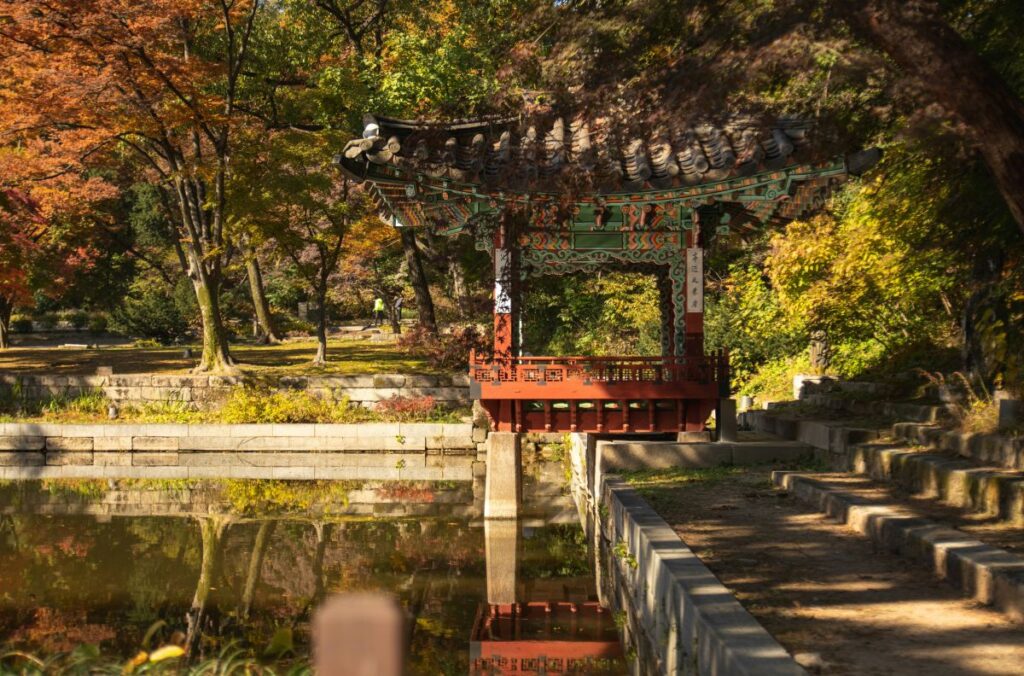
Changdeokgung feels less formal than its scale suggests. Paths curve. Gardens unfold unevenly. Nothing forces symmetry where the land doesn’t support it.
This lack of rigidity makes the space feel inhabited, even when it’s quiet. You get the sense that the palace adapted to its surroundings rather than reshaping them. Buildings follow terrain. Nature is not ornamental — it’s structural.
Time behaves differently here. You might stay longer than planned without realising why.
Leaving Seoul Without a Clean Break
Transitioning from Seoul to Kyoto doesn’t feel like moving between opposites. It feels like adjusting focus. The density changes. The sound changes. The sense of space shifts inward.
People often approach Kyoto through Japan tours, expecting something distinctly traditional. What surprises many is how modern the city feels — not in appearance, but in rhythm. Life moves forward here without hesitation, even as temples remain firmly in place.
The shift is subtle, but it stays with you.
Kyoto’s Temples Don’t Announce Themselves
Kyoto doesn’t funnel you toward its temples. You come across them while doing other things — walking down a narrow street, turning a corner, passing through a neighbourhood that feels entirely ordinary until it doesn’t.
At places like Kiyomizu-dera, the experience builds quietly. You don’t arrive all at once. You move upward gradually. The city remains visible behind you.
There’s no attempt to isolate the sacred from the everyday. Both are present at the same time.
Repetition as Design
What stands out in Kyoto’s temples is not scale, but repetition. Rooflines echo one another. Stones are placed with restraint. Pathways guide movement without dictating it.
This repetition doesn’t dull the experience. It focuses it. You begin to notice small differences — the way light hits a surface, the sound of footsteps, the spacing between objects.
The temples don’t reward speed. They respond to attention.
Two Cities, One Approach to Time
Seoul and Kyoto treat time similarly, even if they look different. Neither city freezes history. Neither city rushes past it.
In Seoul, palaces absorb the city’s energy and remain steady. In Kyoto, temples sit quietly while the city flows around them. In both places, heritage adapts rather than retreats.
The result is continuity without nostalgia.
Heritage Without Performance
What makes these cities compelling isn’t how old their sites are, but how unremarkable they sometimes feel. Not in importance — in presentation.
There’s no expectation that you react a certain way. No insistence on awe. You’re trusted to notice what matters to you.
That trust creates space for genuine experience rather than prescribed reaction.
Remembering Without Summarising
Later, what returns aren’t facts or dates. It’s moments. The sound of gravel underfoot. A roofline framed by modern buildings. The way a courtyard opened unexpectedly.
These memories don’t arrive as conclusions. They surface gradually, often when you’re no longer thinking about travel at all.
Seoul’s palaces and Kyoto’s temples don’t try to explain themselves. They allow you to spend time alongside them — long enough to sense how the past and present coexist without argument.
Urban Heritage as Daily Practice
In both cities, heritage isn’t protected by distance. It’s protected by use. People pass through these spaces daily. They’re maintained because they remain relevant.
That relevance doesn’t come from spectacle. It comes from continuity — from allowing history to stay where it is, while life continues around it.
And that may be the quiet lesson both Seoul and Kyoto offer: preservation doesn’t require separation. Sometimes, it simply requires attention.